• Fri frakt över 249 kr
  • •
  • Snabba leveranser
  • •
  • Billiga böcker
Kundservice

Du är på sajten för privatpersoner.

Företag, bibliotek eller offentlig verksamhet?

Du handlar på classic.bokus.com, där alla dina funktioner finns intakta.
Till classic.bokus.com
Bokus logotyp. Gå till startsidan.
  • Erbjudanden
  • Nyheter
  • Student
  • Topplistor
  • Barn & ungdom
  • Bokus Play
  • E-böcker
  • Pocketböcker
  • Spel & pussel

10% rabatt på allt med kod NYSTART10 →

Sidfot

Mina sidor

    Hjälp

    • Kundservice
    • Vanliga frågor och svar
    • Frakt och leverans
    • Retur vid ångerrätt
    • Reklamera vara
    • Betalning
    • Köpvillkor
    • Allmänna villkor
    • Information om webbplatsens tillgänglighet

    Om Bokus

    • Om oss
    • Pressrum
    • För studenter
    • För företag
    • För bibliotek och offentlig verksamhet
    • För leverantörer
    • Hållbarhet

    Populärt

    • Aktuella erbjudanden
    • Presentkort
    • Studentlitteratur
    • Nya böcker
    • Topplistor
    • Signerade böcker
    • Engelska böcker

    Inspiration

    • Boktips
    • BookTok
    • Populära bokserier
    • Barnbokskaraktärer
    • Populära författare
    Logotyp för Bokus
    Följ oss på Facebook (extern länk)Följ oss på Instagram (extern länk)Följ oss på YouTube (extern länk)Följ oss på TikTok (extern länk)
    bokus @ CookiesAnpassa cookiesIntegritetspolicyKöpvillkor
    Till Citymail hemsida (extern länk)Till Budbee hemsida (extern länk)Till Postnord hemsida (extern länk)Till Schenker hemsida (extern länk)Till Early Bird hemsida (extern länk)Till Walleys hemsida (extern länk)
    1. Historia och arkeologi
    2. Arkeologi

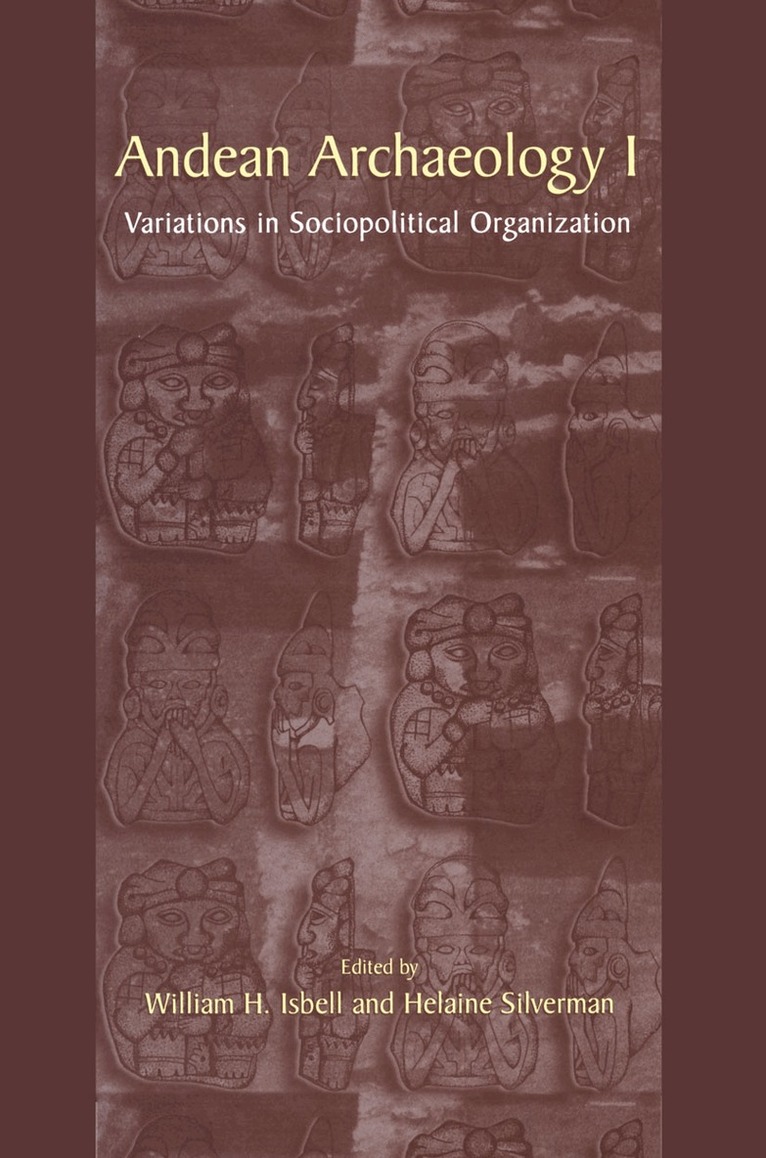
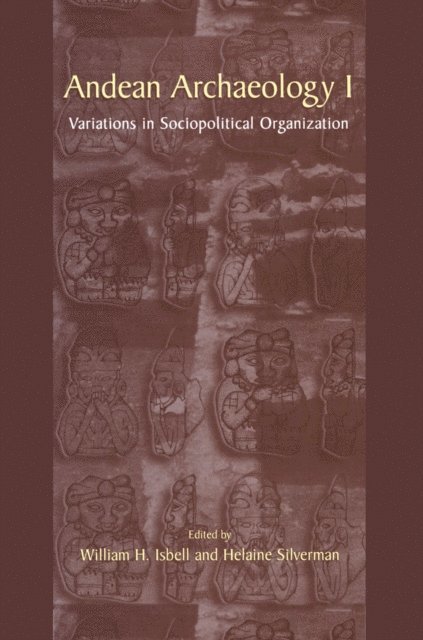
    Andean Archaeology I

    Variations in Sociopolitical Organization

    AvWilliam H. Isbell,William H. Isbell

    Inbunden, Engelska, 2002

    1 672 kr

    Beställningsvara. Skickas inom 10-15 vardagar. Fri frakt över 249 kr.

    Beskrivning

    Study of the origin and development of civilization is of unequaled importance for understanding the cultural processes that create human societies. Is cultural evolution directional and regular across human societies and history, or is it opportunistic and capricious? Do apparent regularities come from the way inves­ tigators construct and manage knowledge, or are they the result of real constraints on and variations in the actual processes? Can such questions even be answered? We believe so, but not easily. By comparing evolutionary sequences from different world civilizations scholars can judge degrees of similarity and difference and then attempt explanation. Of course, we must be careful to assess the influence that societies of the ancient world had on one another (the issue of pristine versus non-pristine cultural devel­ opment: see discussion in Fried 1967; Price 1978). The Central Andes were the locus of the only societies to achieve pristine civilization in the southern hemi­ sphere and only in the Central Andes did non-literate (non-written language) civ­ ilization develop. It seems clear that Central Andean civilization was independent on any graph of archaic culture change. Scholars have often expressed appreciation of the research opportunities offered by the Central Andes as a testing ground for the study of cultural evolu­ tion (see, e. g. , Carneiro 1970; Ford and Willey 1949: 5; Kosok 1965: 1-14; Lanning 1967: 2-5).

    Produktinformation

    • Utgivningsdatum:2002-06-30
    • Mått:155 x 235 x 31 mm
    • Vikt:812 g
    • Format:Inbunden
    • Språk:Engelska
    • Antal sidor:390
    • Förlag:Springer Science+Business Media
    • ISBN:9780306467721

    Utforska kategorier

    • Arkeologi inom Historia och arkeologi

    Recensioner i media

    From the Reviews: "[...]these volumes stand as an excellent overview of current Andean archaeological research, outside the confines of a particular school or perspective. This is, to my knowledge, the first English-language edited overview of Andean archaeology to be produced in at least 10 years. Both volumes should be on the shelves of all Andean prehistorians and university libraries, and could also provide an introduction to current Andean research for archaeologists working in other places. For those who teach an undergraduate course on the prehistory of the Andes either or both books would provide an excellent, and conveniently packaged, selection of in-depth materials that could accompany a more general text. Those with a general interest in the prehistory of the Andes will find much detail in Silverman and Isbell's volumes. The authors are to be congratulated on such a wide-ranging collection, and here is hoping that their wish to add further volumes to the series is realized in the near future." (Ross W. Jamieson, Canadian Journal of Latin American and Caribbean Studies)

    Innehållsförteckning

    • I. Introduction.- 1. Theorizing Variations in Andean Sociopolitical Organization.- II. Early Andean Civilizations.- 2. The Sechín Alto Complex and Its Place Within Casma Valley Initial Period Development.- 3. Out in the Streets of Moche: Urbanism and Sociopolitical Organization at a Moche IV Urban Center.- 4. Power and Social Ranking at the End of the Formative Period: The Lower Lurín Valley Cemeteries.- 5. Nasca Settlement and Society on the Hundredth Anniversary of Uhle's Discovery of the Nasca Style.- III. Traditions of Imperialism in the Andes.- 6. Tiwanaku Political Economy.- 7. Iwawi and Tiwanaku.- 8. Imperial Interaction in the Andes: Huari and Tiwanaku at Cerro Baúl.- 9. The Huaro Archaeological Site Complex: Rethinking the Huari Occupation of Cuzco.- 10. The Archaeology of Inca Origins: Excavations at Chokepukio, Cuzco, Peru.- 11. Catequil: The Archaeology, Ethnohistory, and Ethnography of a Major Provincial Huaca.- IV. Solving Puzzles of the Past.- 12. Tracking the Source of Quispisisa Obsidian from Huancavelica to Ayacucho.- V. Conclusion.- 13. Writing the Andes with a Capital 'A'.