• Fri frakt över 249 kr
  • •
  • Snabba leveranser
  • •
  • Billiga böcker
Kundservice

Du är på sajten för privatpersoner.

Företag, bibliotek eller offentlig verksamhet?

Du handlar på classic.bokus.com, där alla dina funktioner finns intakta.
Till classic.bokus.com
Bokus logotyp. Gå till startsidan.
  • Erbjudanden
  • Nyheter
  • Student
  • Topplistor
  • Barn & ungdom
  • Bokus Play
  • E-böcker
  • Pocketböcker
  • Spel & pussel

10% rabatt på allt med kod NYSTART10 →

Sidfot

Mina sidor

    Hjälp

    • Kundservice
    • Vanliga frågor och svar
    • Frakt och leverans
    • Retur vid ångerrätt
    • Reklamera vara
    • Betalning
    • Köpvillkor
    • Allmänna villkor
    • Information om webbplatsens tillgänglighet

    Om Bokus

    • Om oss
    • Pressrum
    • För studenter
    • För företag
    • För bibliotek och offentlig verksamhet
    • För leverantörer
    • Hållbarhet

    Populärt

    • Aktuella erbjudanden
    • Presentkort
    • Studentlitteratur
    • Nya böcker
    • Topplistor
    • Signerade böcker
    • Engelska böcker

    Inspiration

    • Boktips
    • BookTok
    • Populära bokserier
    • Barnbokskaraktärer
    • Populära författare
    Logotyp för Bokus
    Följ oss på Facebook (extern länk)Följ oss på Instagram (extern länk)Följ oss på YouTube (extern länk)Följ oss på TikTok (extern länk)
    bokus @ CookiesAnpassa cookiesIntegritetspolicyKöpvillkor
    Till Citymail hemsida (extern länk)Till Budbee hemsida (extern länk)Till Postnord hemsida (extern länk)Till Schenker hemsida (extern länk)Till Early Bird hemsida (extern länk)Till Walleys hemsida (extern länk)
    1. Historia och arkeologi
    2. Arkeologi
    3. Arkeologi: metod och teknik

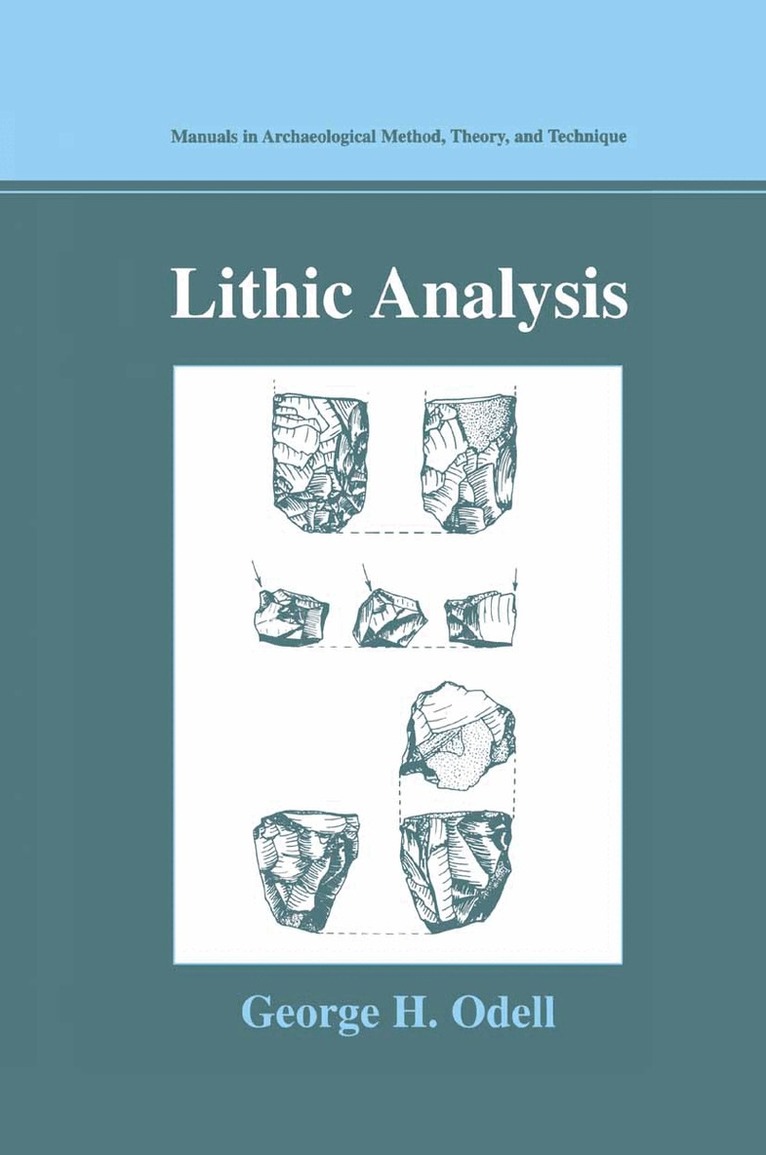
    Lithic Analysis

    AvGeorge H. Odell

    Inbunden, Engelska, 2003

    Del i serien Manuals in Archaeological Method, Theory and Technique

    673 kr

    Beställningsvara. Skickas inom 10-15 vardagar. Fri frakt över 249 kr.

    Fler format och utgåvor

    Häftad

    673 kr

    E-bok

    861 kr

    Beskrivning

    Procedures by which archaeological stone tools have been analyzed have tradition­ ally operated on an apprenticeship model, whereby a novice acquires competency at the elbow of a grizzled but revered expert in the field. After shuffling through literally thousands of stones and asking hundreds of questions, the neophite even­ tually reaches a level at which he or she can fly solo, requiring less and less attention from the Master. While this pedagogical model has been frequently tried and tested, it is not always the most efficient method, it is very labor-intensive, and it requires a resident lithics expert, a situation that often does not exist in reality. Learning the ropes would clearly be more practical if there were a manual to consult, a book that provides information and direction so that the Master might at least be spared the most elemental questions and would not have to be available all the time. For years no such manual existed, but recently the ice has been bro­ ken by Bill Andrefsky's Lithics: Macroscopic Approaches to Analysis, and Brian Kooyman's Understanding Stone Toolsand Archaeological Sites. These are good books, and can profitably be employed by fledgling lithic analysts. My own interest in writing a manual for stone tool analysts derives initially from the way I was trained-literally at the knees of two Masters (in this case, revered but not grizzled):Dr. Raymond R. Newell in typological and technological matters, and Dr. Ruth E. Tringham in functional studies.

    Produktinformation

    • Utgivningsdatum:2003-12-31
    • Mått:152 x 229 x 21 mm
    • Vikt:568 g
    • Format:Inbunden
    • Språk:Engelska
    • Serie:Manuals in Archaeological Method, Theory and Technique
    • Antal sidor:262
    • Upplaga:2004
    • Förlag:Springer Science+Business Media
    • ISBN:9780306480676

    Utforska kategorier

    • Arkeologi: metod och teknik inom Historia och arkeologi

    Innehållsförteckning

    • 1. History Of Stone Tool Research.- Procurement.- Tool Manufacture.- Assemblage Variability.- Tool Use.- Behavioral Questions.- Perspectives.- 2. Procurement.- Formation Of Rock.- Igneous Rocks.- Sedimentary Rocks.- Metamorphic Rocks.- Summary.- Geomorphic Processes.- Defining The Problem.- Is This Material Local?.- What is the Source of the Material?.- Visual Characterization.- Hand Specimens.- Petrographic Techniques.- Geochemical Techniques.- Neutron Activation Analysis.- X-Ray Fluorescence Analysis.- PIXE and Similar Techniques.- Other Instrumental Types of Analysis.- General Remarks.- 3. Tool Manufacture.- Fracture Mechanics.- General Principles.- Types of Fracture.- Fracture Features.- Types Of Flaking And Flakers.- Percussion Flaking.- Pressure Flaking.- Primary And Secondary Modification.- Primary Modification.- Secondary Modification.- Ground Stone.- Manufacture-Ground Specimens.- Use-Ground Specimens.- Analyzing Ground Stone Tools.- 4. Assemblage Variability.- Detecting Vectors Of Information.- Raw Material.- Technology: Basic Partitioning.- Technology: Distinguishing Trajectories.- Morphology: Characterizing Shape.- Function.- Comparing Assemblages.- Comparing Class Structure.- Comparing Specific Classes.- Analyzing Unretouched Debris.- Individual Flake Analysis.- Mass Analysis.- Summary.- 5. Toolfunction.- Use-Wear Analysis.- Background.- Techniques.- Summary.- Residue Analysis.- Plant Remains.- Blood Residues.- Summary.- 6. Ecountering Pehistoric Bhavior.- Subsistence.- Food Procurement.- Food Processing.- Shelter, Facilities And Clothing.- Structures and Facilities.- Clothing.- Organization Of Mobility And Technology.- Tool Design.- Raw Material Procurement, Supply, and Use.- Complex Societies.- Production of Surplus Goods.- Material Replacement.- Concluding Remarks.- References.