• Fri frakt över 249 kr
  • •
  • Snabba leveranser
  • •
  • Billiga böcker
Kundservice

Du är på sajten för privatpersoner.

Företag, bibliotek eller offentlig verksamhet?

Du handlar på classic.bokus.com, där alla dina funktioner finns intakta.
Till classic.bokus.com
Bokus logotyp. Gå till startsidan.
  • Erbjudanden
  • Nyheter
  • Student
  • Topplistor
  • Barn & ungdom
  • Bokus Play
  • E-böcker
  • Pocketböcker
  • Spel & pussel

10% studentrabatt med kod TERM26

Sidfot

Mina sidor

    Hjälp

    • Kundservice
    • Vanliga frågor och svar
    • Frakt och leverans
    • Retur vid ångerrätt
    • Reklamera vara
    • Betalning
    • Köpvillkor
    • Allmänna villkor
    • Information om webbplatsens tillgänglighet

    Om Bokus

    • Om oss
    • Pressrum
    • För studenter
    • För företag
    • För bibliotek och offentlig verksamhet
    • För leverantörer
    • Hållbarhet

    Populärt

    • Aktuella erbjudanden
    • Presentkort
    • Studentlitteratur
    • Nya böcker
    • Topplistor
    • Signerade böcker
    • Engelska böcker

    Inspiration

    • Boktips
    • BookTok
    • Populära bokserier
    • Barnbokskaraktärer
    • Populära författare
    Logotyp för Bokus
    Följ oss på Facebook (extern länk)Följ oss på Instagram (extern länk)Följ oss på YouTube (extern länk)Följ oss på TikTok (extern länk)
    bokus @ CookiesAnpassa cookiesIntegritetspolicyKöpvillkor
    Till Citymail hemsida (extern länk)Till Budbee hemsida (extern länk)Till Postnord hemsida (extern länk)Till Schenker hemsida (extern länk)Till Early Bird hemsida (extern länk)Till Walleys hemsida (extern länk)
    1. Historia och arkeologi
    2. Arkeologi
    3. Arkeologiska perioder och områden

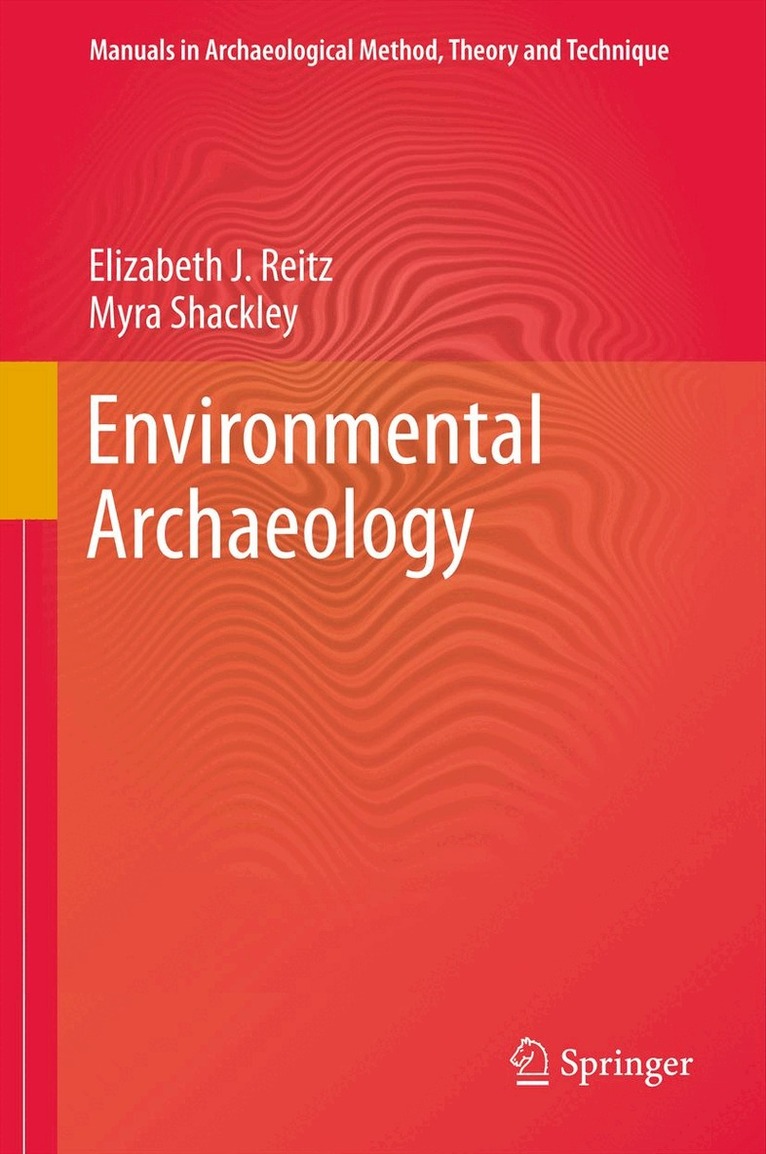
    Environmental Archaeology

    AvElizabeth Reitz,Myra Shackley

    Inbunden, Engelska, 2012

    Del i serien Manuals in Archaeological Method, Theory and Technique

    1 236 kr

    Beställningsvara. Skickas inom 10-15 vardagar. Fri frakt över 249 kr.

    Fler format och utgåvor

    Häftad

    1 013 kr

    Beskrivning

    One of the most significant developments in archaeology in recent years is the emergence of its environmental branch: the study of humans’ interactions with their natural surroundings over long periods and of organic remains instead of the artifacts and household items generally associated with sites. With the current attention paid to human responsibility for environmental change, this innovative field is recognized by scientists, conservation and heritage managers and policymakers worldwide. In this context comes Environmental Archaeology by Elizabeth Reitz and Myra Shackley, updating the seminal 1981 text Environmental Archaeology by Myra Shackley. Rigorously detailed yet concise and accessible, this volume surveys the complex and technical field of environmental archaeology for researchers interested in the causes, consequences and potential future impact of environmental change and archaeology. Its coverage acknowledges the multiple disciplines involved in the field, expanding the possibilities for using environmental data from archaeological sites in enriching related disciplines and improving communication among them. Introductory chapters explain the processes involved in the formation of sites, introduce research designs and field methods and walk the reader through biological classifications before focusing on the various levels of biotic and abiotic materials found at sites, including: Sediments and soils. Viruses, bacteria, archaea, protists and fungi. Bryophytes and vascular plants. Wood, charcoal, stems, leaves and roots. Spores, pollen and other microbotanical remains. Arthropods, molluscs, echinoderms and vertebrates. Stable isotopes, elements and biomolecules. The updated Environmental Archaeology is a major addition to the resource library of archaeologists, environmentalists, historians, researchers, policymakers—anyone involved in studying, managing or preserving historical sites. The updated Environmental Archaeology is a majoraddition to the resource library of archaeologists, environmentalists, historians, researchers, policymakers—anyone involved in studying, managing, or preserving historical sites.

    Produktinformation

    • Utgivningsdatum:2012-05-24
    • Mått:155 x 235 x 33 mm
    • Vikt:998 g
    • Format:Inbunden
    • Språk:Engelska
    • Serie:Manuals in Archaeological Method, Theory and Technique
    • Antal sidor:516
    • Upplaga:2012
    • Förlag:Springer-Verlag New York Inc.
    • ISBN:9781461433378

    Utforska kategorier

    • Arkeologiska perioder och områden inom Historia och arkeologi
    • Miljövetenskap och miljöpolitik inom Naturvetenskap och teknik

    Mer om författaren

    Dr. Elizabeth Reitz is a Professor of Anthropology at the University of Georgia. She is also a member of the Executive Committee, International Council on Archaeozoology, and the International Committee, International Council on Archaeozoology. She is currently the Director of the University of Georgia's Center for Archaeological Sciences. Dr. Myra Shackley is affiliated with the Nottingham Business School at Nottingham Trent University. She is a former head of the Centre for Tourism and Visitor Management at Nottingham Business School.

    Recensioner i media

    From the reviews: "This handbook by Reitz (anthropology, Univ. of Georgia) and Shackley (Culture Resource Management, Nottingham Business School, UK) is a revised and dramatically enlarged update of Shackley's 1981 Environmental Archaeology ... . Each chapter concludes with a section on applications followed by a complete, up-to-date bibliography. ... this handbook will be of most value to serious students and professionals. Summing Up: Recommended. Upper-division undergraduates and above." (W. Kotter, Choice, Vol. 50 (4), December, 2012)

    Innehållsförteckning

    • Introduction to Environmental Archaeology.- Factors Affecting the Composition of an Assemblage.- Research Designs and Field Methods.- Classification and Nomenclature.- Sediments and Soils.- Seeds, Fruits, Nuts and Tubers.- Woods and Charcoal.- Pollen.- Phytoliths, Starch Grains and Spores.- Micro-organisms.- Arthropods: Spiders and Mites, fleas, Chironomids, Lice, Beetles, Rickettsiae, Ostracods, Nematode Worms, Crabs, Shrimp.- Echinoderms and Molluscs.- Vertebrate Bones and Teeth.- Other Vertebrate Tissues.- Stable Isotopes, Trace Elements, Ancient Genetics and Enzymes.- Conclusion.