• Fri frakt över 249 kr
  • •
  • Snabba leveranser
  • •
  • Billiga böcker
Kundservice

Du är på sajten för privatpersoner.

Företag, bibliotek eller offentlig verksamhet?

Du handlar på classic.bokus.com, där alla dina funktioner finns intakta.
Till classic.bokus.com
Bokus logotyp. Gå till startsidan.
  • Erbjudanden
  • Nyheter
  • Student
  • Topplistor
  • Barn & ungdom
  • Bokus Play
  • E-böcker
  • Pocketböcker
  • Spel & pussel

10% rabatt på allt med kod: NYSTART10 →

Sidfot

Mina sidor

    Hjälp

    • Kundservice
    • Vanliga frågor och svar
    • Frakt och leverans
    • Retur vid ångerrätt
    • Reklamera vara
    • Betalning
    • Köpvillkor
    • Allmänna villkor
    • Information om webbplatsens tillgänglighet

    Om Bokus

    • Om oss
    • Pressrum
    • För studenter
    • För företag
    • För bibliotek och offentlig verksamhet
    • För leverantörer
    • Hållbarhet

    Populärt

    • Aktuella erbjudanden
    • Presentkort
    • Studentlitteratur
    • Nya böcker
    • Topplistor
    • Signerade böcker
    • Engelska böcker

    Inspiration

    • Boktips
    • BookTok
    • Populära bokserier
    • Barnbokskaraktärer
    • Populära författare
    Logotyp för Bokus
    Följ oss på Facebook (extern länk)Följ oss på Instagram (extern länk)Följ oss på YouTube (extern länk)Följ oss på TikTok (extern länk)
    bokus @ CookiesAnpassa cookiesIntegritetspolicyKöpvillkor
    Till Citymail hemsida (extern länk)Till Budbee hemsida (extern länk)Till Postnord hemsida (extern länk)Till Schenker hemsida (extern länk)Till Early Bird hemsida (extern länk)Till Walleys hemsida (extern länk)
    1. Naturvetenskap och teknik
    2. Matematik och naturvetenskap
    3. Fysik

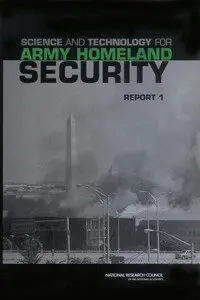
    Science and Technology for Army Homeland Security

    Report 1

    AvNational Research Council,Division on Engineering and Physical Sciences

    Häftad, Engelska, 2003

    741 kr

    Tillfälligt slut

    Beskrivning

    The confluence of the September 11, 2001 terrorist attack and the U.S. Armya (TM)s historic role to support civil authorities has resulted in substantial new challenges for the Army. To help meet these challenges, the Assistant Secretary of the Army for Research and Technology requested the National Research Council (NRC) carry out a series of studies on how science and technology could assist the Army prepare for its role in homeland security (HLS). The NRCa (TM)s Board on Army Science and Technology formed the Committee on Army Science and Technology for Homeland Security to accomplish that assignment. The Committee was asked to review relevant literature and activities, determine areas of emphasis for Army S&T in support of counter terrorism and anti-terrorism, and recommend high-payoff technologies to help the Army fulfill its mission. The Department of Defense Counter-Terrorism Technology Task Force identified four operational areas in reviewing technical proposals for HLS operations: indications and warning; denial and survivability; recovery and consequence management; and attribution and retaliation.The study sponsor asked the Committee to use these four areas as the basis for its assessment of the science and technology (S&T) that will be important for the Armya (TM)s HLS role. Overall, the Committee found that: - There is potential for substantial synergy between S&T work carried out by the Army for its HLS responsibilities and the development of the next generation Army, the Objective Force. - The Army National Guard (ARNG) is critical to the success of the Armya (TM)s HLS efforts.

    Produktinformation

    • Utgivningsdatum:2003-04-08
    • Mått:152 x 229 x 25 mm
    • Format:Häftad
    • Språk:Engelska
    • Antal sidor:184
    • Förlag:National Academies Press
    • ISBN:9780309087018

    Utforska kategorier

    • Fysik inom Naturvetenskap och teknik

    Mer om författaren

    Committee on Army Science and Technology for Homeland Defense, National Research Council

    Innehållsförteckning

    • 1 Front Matter; 2 Executive Summary; 3 1. U.S. Army Role in Homeland Security; 4 2. Indications and Warning Technologies; 5 3. Denial and Survivability Technologies; 6 4. Recovery and Consequence Management Technologies; 7 5. Attribution and Retaliation Technologies; 8 6. Committee Observations; 9 7. Complete List of Findings, Conclusions, and Recommendations; 10 Appendix A: Biographical Sketches of Committee Members; 11 Appendix B: Committee Meetings; 12 Appendix C: Criteria for Technology Readiness Levels; 13 Appendix D: Federal Response Plan Responsibilities