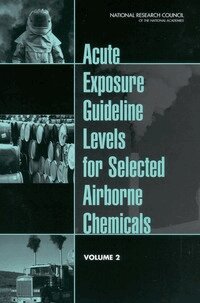
The Bhopal Disaster of 1984 resulted in the death of around 2,000 residents living near chemical plants and irreversible injuries to more than 20,000 other residents. These numbers can be attributed to the community's lack of awareness concerning the chemicals' existence, dangers and effects, and/or how to react in case of emergency. The disaster emphasized the need for governments to identify hazardous substances and to aid local communities in developing plans for emergency exposures. As a result, the United States government issued the Superfund Amendments and Reauthorization Act (SARA) of 1986; requiring the identification of extremely hazardous substances (EHSs) by the Environmental Protection Agency (EPA). EPA was also tasked with assisting Local Emergency Planning Committees (LEPCs) in conducting health-hazard assessments to develop emergency-response plans for sites where EHSs are produced, stored, transported, or used. The EPA identified nearly 400 EHSs in terms of their immediate danger to life and health (IDLH) as their first step in assisting these LEPCs.In 1991 the EPA went on to request that the National Research Council (NRC) Committee on Toxicology (COT) develop criteria and methods for developing emergency exposure levels for EHSs for the general population. The COT, who had published many reports on emergency exposure guidance levels at the time, designated the task to a subcommittee. The subcommittee focused on Guidelines for Developing Community Emergency Exposure Levels for Hazardous Substances. Four years later the National Advisory Committee for Acute Exposure Guideline Levels for Hazardous Substances (NAC) was created with a focus on identifying, reviewing, and interpreting relevant toxicologic and other scientific data and developing acute exposure guideline levels (AEGLs) for high-priority, acutely toxic chemicals. In Acute Exposure Guideline Levels for Selected Airborne Chemicals:Volume 4, the NAC outlines acute exposure guideline levels for chlorine, hydrogen chloride, toluene 2,4, hydrogen fluoride, 2,6-diisocyanate, and uranium hexafluoride.