• Fri frakt över 249 kr
  • •
  • Snabba leveranser
  • •
  • Billiga böcker
Kundservice

Du är på sajten för privatpersoner.

Företag, bibliotek eller offentlig verksamhet?

Du handlar på classic.bokus.com, där alla dina funktioner finns intakta.
Till classic.bokus.com
Bokus logotyp. Gå till startsidan.
  • Erbjudanden
  • Nyheter
  • Student
  • Topplistor
  • Barn & ungdom
  • Bokus Play
  • E-böcker
  • Pocketböcker
  • Spel & pussel

10% rabatt på allt med kod: NYSTART10 →

Sidfot

Mina sidor

    Hjälp

    • Kundservice
    • Vanliga frågor och svar
    • Frakt och leverans
    • Retur vid ångerrätt
    • Reklamera vara
    • Betalning
    • Köpvillkor
    • Allmänna villkor
    • Information om webbplatsens tillgänglighet

    Om Bokus

    • Om oss
    • Pressrum
    • För studenter
    • För företag
    • För bibliotek och offentlig verksamhet
    • För leverantörer
    • Hållbarhet

    Populärt

    • Aktuella erbjudanden
    • Presentkort
    • Studentlitteratur
    • Nya böcker
    • Topplistor
    • Signerade böcker
    • Engelska böcker

    Inspiration

    • Boktips
    • BookTok
    • Populära bokserier
    • Barnbokskaraktärer
    • Populära författare
    Logotyp för Bokus
    Följ oss på Facebook (extern länk)Följ oss på Instagram (extern länk)Följ oss på YouTube (extern länk)Följ oss på TikTok (extern länk)
    bokus @ CookiesAnpassa cookiesIntegritetspolicyKöpvillkor
    Till Citymail hemsida (extern länk)Till Budbee hemsida (extern länk)Till Postnord hemsida (extern länk)Till Schenker hemsida (extern länk)Till Early Bird hemsida (extern länk)Till Walleys hemsida (extern länk)
    1. Samhälle och politik
    2. Politik och statsskick
    3. Centralt styre och förvaltning

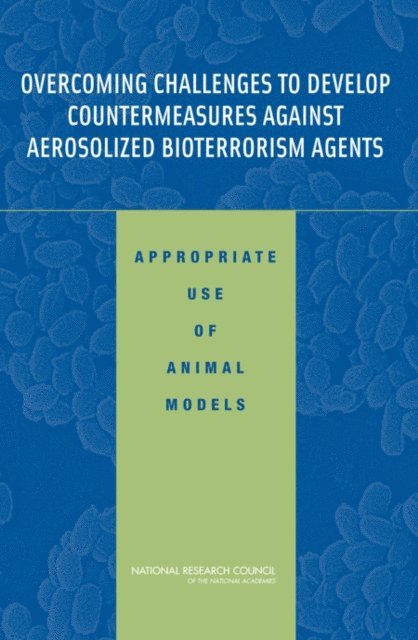
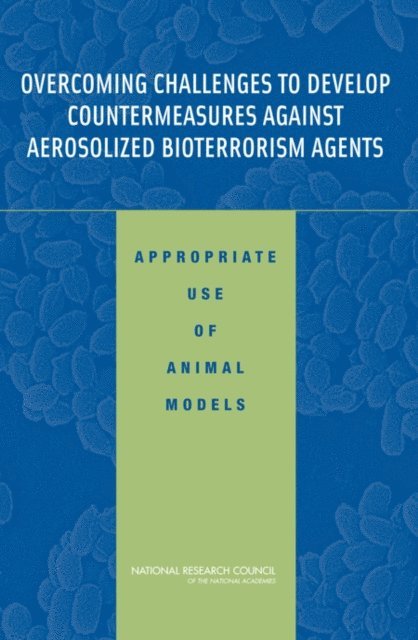
    Overcoming Challenges to Develop Countermeasures Against Aerosolized Bioterrorism Agents

    Appropriate Use of Animal Models

    AvNational Research Council,Division on Earth and Life Studies

    Häftad, Engelska, 2006

    494 kr

    Tillfälligt slut

    Beskrivning

    The National Institute of Allergy and Infectious Diseases (NIAID) gives the highest priority to developing countermeasures against bioterrorism agents that are highly infective when dispersed in aerosol form. Developing drugs to prevent or treat illnesses caused by bioterrorism agents requires testing their effectiveness in animals since human clinical trials would be unethical. At the request of NIAID, the National Academies conducted a study to examine how such testing could be improved. Overcoming Challenges to Develop Countermeasures Against Aerosolized Bioterrorism Agents provides recommendations to researchers on selecting the kinds of animal models, aerosol generators, and bioterrorism agent doses that would produce conditions that most closely mimic the disease process in humans. It also urges researchers to fully document experimental parameters in the literature so that studies can be reproduced and compared. The book recommends that all unclassified data on bioterrorism agent studies--including unclassified, unpublished data from U.S. Army Medical Research Institute of Infectious Diseases (USAMRIID)--be published in the open literature. The book also calls on the U.S.Food and Drug Administration to improve the process by which bioterrorism countermeasures are approved based on the results of animal studies.


    Produktinformation

    • Utgivningsdatum:2006-08-07
    • Mått:152 x 229 x 25 mm
    • Format:Häftad
    • Språk:Engelska
    • Antal sidor:87
    • Förlag:National Academies Press
    • ISBN:9780309102117

    Utforska kategorier

    • Centralt styre och förvaltning inom Samhälle och politik

    Mer om författaren

    Committee on Animal Models for Testing Interventions Against Aerosolized Bioterrorism Agents, National Research Council

    Innehållsförteckning

    • 1 Front Matter; 2 Summary; 3 1 Introduction; 4 2 Selection or Development of an Animal Model; 5 3 Generation and Characterization of Aerosolized Agents; 6 4 Dosimetry Considerations; 7 5 Experimental Design; 8 6 Resource Issues; 9 References; 10 About the Authors; 11 Appendix A: Public Workshop Agenda and Biographical Information About the Speakers