• Fri frakt över 249 kr
  • •
  • Snabba leveranser
  • •
  • Billiga böcker
Kundservice

Du är på sajten för privatpersoner.

Företag, bibliotek eller offentlig verksamhet?

Du handlar på classic.bokus.com, där alla dina funktioner finns intakta.
Till classic.bokus.com
Bokus logotyp. Gå till startsidan.
  • Erbjudanden
  • Nyheter
  • Student
  • Topplistor
  • Barn & ungdom
  • Bokus Play
  • E-böcker
  • Pocketböcker
  • Spel & pussel

10% rabatt på allt med kod NYSTART10 →

Sidfot

Mina sidor

    Hjälp

    • Kundservice
    • Vanliga frågor och svar
    • Frakt och leverans
    • Retur vid ångerrätt
    • Reklamera vara
    • Betalning
    • Köpvillkor
    • Allmänna villkor
    • Information om webbplatsens tillgänglighet

    Om Bokus

    • Om oss
    • Pressrum
    • För studenter
    • För företag
    • För bibliotek och offentlig verksamhet
    • För leverantörer
    • Hållbarhet

    Populärt

    • Aktuella erbjudanden
    • Presentkort
    • Studentlitteratur
    • Nya böcker
    • Topplistor
    • Signerade böcker
    • Engelska böcker

    Inspiration

    • Boktips
    • BookTok
    • Populära bokserier
    • Barnbokskaraktärer
    • Populära författare
    Logotyp för Bokus
    Följ oss på Facebook (extern länk)Följ oss på Instagram (extern länk)Följ oss på YouTube (extern länk)Följ oss på TikTok (extern länk)
    bokus @ CookiesAnpassa cookiesIntegritetspolicyKöpvillkor
    Till Citymail hemsida (extern länk)Till Budbee hemsida (extern länk)Till Postnord hemsida (extern länk)Till Schenker hemsida (extern länk)Till Early Bird hemsida (extern länk)Till Walleys hemsida (extern länk)
    1. Samhälle och politik
    2. Samhälle och kultur

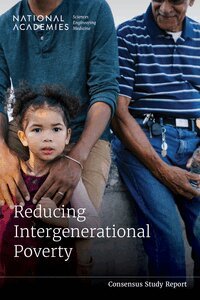
    Reducing Intergenerational Poverty

    Avand Medicine National Academies of Sciences, Engineering,Division of Behavioral and Social Sciences and Education

    Häftad, Engelska, 2024

    458 kr

    Tillfälligt slut

    Beskrivning

    Experiencing poverty during childhood can lead to lasting harmful effects that compromise not only children's health and welfare but can also hinder future opportunities for economic mobility, which may be passed on to future generations. This cycle of economic disadvantage weighs heavily not only on children and families experiencing poverty but also the nation, reducing overall economic output and placing increased burden on the educational, criminal justice, and health care systems.Reducing Intergenerational Poverty examines key drivers of long- term, intergenerational poverty, including the racial disparities and structural factors that contribute to this cycle. The report assesses existing research on the effects on intergenerational poverty of income assistance, education, health, and other intervention programs and identifies evidence-based programs and policies that have the potential to significantly reduce the effects of the key drivers of intergenerational poverty. The report also examines the disproportionate effect of disadvantage to different racial/ethnic groups. In addition, the report identifies high-priority gaps in the data and research needed to help develop effective policies for reducing intergenerational poverty in the United States.

    Produktinformation

    • Utgivningsdatum:2024-05-01
    • Mått:152 x 229 x 25 mm
    • Vikt:821 g
    • Format:Häftad
    • Språk:Engelska
    • Antal sidor:516
    • Förlag:National Academies Press
    • ISBN:9780309703666

    Utforska kategorier

    • Samhälle och kultur inom Samhälle och politik
    • Sociologi inom Samhälle och politik

    Innehållsförteckning

    • Front MatterSummary1 Introduction2 A Demographic Portrait of Intergenerational Child Poverty3 Racial Disparities in Intergenerational Poverty4 Children's Education5 Child and Maternal Health6 Children's Family Income, Wealth, and Parental Employment7 Children's Family Structure8 Children's Housing and Neighborhood Environments9 Neighborhood Crime and the Criminal Justice System10 Child Maltreatment11 Research and Data Needs for Understanding and Ameliorating Intergenerational PovertyAppendix A: BiosketchesAppendix B: Perspectives on Intergenerational PovertyAppendix C: Appendices to ChaptersReferences