E-bok, Engelska, 2002
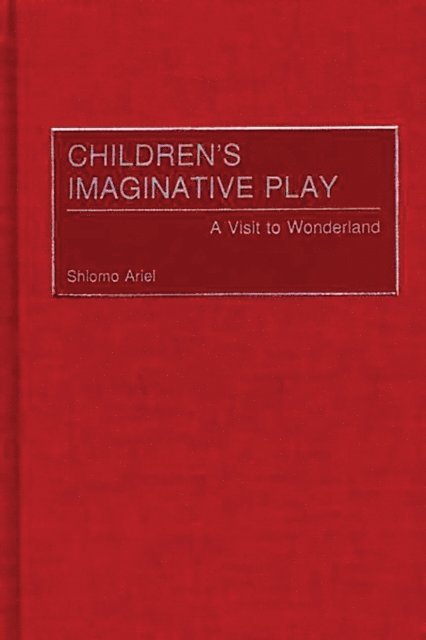
Children's Imaginative Play
Av Shlomo Ariel
1112 kr
Läs direkt i Bokus Reader – eller ladda ned till din enhet (PDF kräver ofta zoom och scroll på små skärmar).
Beskrivning
In this visit to the wonderland of children's imaginative, make-believe play, readers are be exposed to both a general, bird's-eye view of the whole of this fascinating realm, and to a closer look at its diverse regions. This volume examines the borderlines between make-believe play and akin phenomena such as dreams, drama, and rituals. Readers will become acquainted with the secret codes of make-believe play. These codes are activated in both covert and overt power struggles among children as well as in the child's internal theater of emotions. Readers will have the opportunity to examine these uses by looking at real-life sociodramatic play scenes. Also, the development of make-believe play and its interface with the child's general cognitive and socioemotional development is traced. This volume enables readers to consider children of various cultures at play, and investigates whether make-believe play and its characteristics are universal or culture-specific.
Make-believe play has been investigated across fields including cognitive, clinical, developmental, and social psychology, as well as linguistics, anthropology, and sociology. In this book, a comprehensive, integrative model is proposed, in which all of these approaches are synthesized into a single, coherent whole. The unifying hypothesis behind this synthesis is that make-believe play is a semiotic system, a body of signs and symbols, a language by means of which children express themselves and communicate. This language enables children to regulate and balance both their inner emotional life and their social life. Another central hypothesis is therefore that make-believe play functions as an homeostatic feedback mechanism for controlling the level of arousal around the child's central concerns, as well as the level of interpersonal conflict around issues of social proximity and power. Therapeutic and education applications of make-believe play are derived from these hypotheses and their ramifications.
Make-believe play has been investigated across fields including cognitive, clinical, developmental, and social psychology, as well as linguistics, anthropology, and sociology. In this book, a comprehensive, integrative model is proposed, in which all of these approaches are synthesized into a single, coherent whole. The unifying hypothesis behind this synthesis is that make-believe play is a semiotic system, a body of signs and symbols, a language by means of which children express themselves and communicate. This language enables children to regulate and balance both their inner emotional life and their social life. Another central hypothesis is therefore that make-believe play functions as an homeostatic feedback mechanism for controlling the level of arousal around the child's central concerns, as well as the level of interpersonal conflict around issues of social proximity and power. Therapeutic and education applications of make-believe play are derived from these hypotheses and their ramifications.
Produktinformation
- Utgivningsdatum: 2002-06-30
- Språk: Engelska
- Antal sidor: 224
- Filformat: PDF
- Kopieringsskydd: LCP
- ISBN: 9780313012617
- Förlag: Bloomsbury Publishing Plc
- Serie: Child Psychology and Mental Health
Utforska kategorier
Betyg & recensioner
0 recensioner
Inga recensioner tillgängliga.