Child Psychology and Mental Health – serie
Visar alla böcker i serien Child Psychology and Mental Health. Handla med fri frakt och snabb leverans.
12 produkter
12 produkter
Inbunden, Engelska, 2002
1 014 kr
Skickas inom 10-15 vardagar
In this visit to the wonderland of children's imaginative, make-believe play, readers are be exposed to both a general, bird's-eye view of the whole of this fascinating realm, and to a closer look at its diverse regions. This volume examines the borderlines between make-believe play and akin phenomena such as dreams, drama, and rituals. Readers will become acquainted with the secret codes of make-believe play. These codes are activated in both covert and overt power struggles among children as well as in the child's internal theater of emotions. Readers will have the opportunity to examine these uses by looking at real-life sociodramatic play scenes. Also, the development of make-believe play and its interface with the child's general cognitive and socioemotional development is traced. This volume enables readers to consider children of various cultures at play, and investigates whether make-believe play and its characteristics are universal or culture-specific.Make-believe play has been investigated across fields including cognitive, clinical, developmental, and social psychology, as well as linguistics, anthropology, and sociology. In this book, a comprehensive, integrative model is proposed, in which all of these approaches are synthesized into a single, coherent whole. The unifying hypothesis behind this synthesis is that make-believe play is a semiotic system, a body of signs and symbols, a language by means of which children express themselves and communicate. This language enables children to regulate and balance both their inner emotional life and their social life. Another central hypothesis is therefore that make-believe play functions as an homeostatic feedback mechanism for controlling the level of arousal around the child's central concerns, as well as the level of interpersonal conflict around issues of social proximity and power. Therapeutic and education applications of make-believe play are derived from these hypotheses and their ramifications.
E-bok
PDF, Engelska, 20021 103 kr
Läs direkt efter köp
In this visit to the wonderland of children's imaginative, make-believe play, readers are be exposed to both a general, bird's-eye view of the whole of this fascinating realm, and to a closer look at its diverse regions. This volume examines the borderlines between make-believe play and akin phenomena such as dreams, drama, and rituals. Readers will become acquainted with the secret codes of make-believe play. These codes are activated in both covert and overt power struggles among children as well as in the child's internal theater of emotions. Readers will have the opportunity to examine these uses by looking at real-life sociodramatic play scenes. Also, the development of make-believe play and its interface with the child's general cognitive and socioemotional development is traced. This volume enables readers to consider children of various cultures at play, and investigates whether make-believe play and its characteristics are universal or culture-specific.Make-believe play has been investigated across fields including cognitive, clinical, developmental, and social psychology, as well as linguistics, anthropology, and sociology. In this book, a comprehensive, integrative model is proposed, in which all of these approaches are synthesized into a single, coherent whole. The unifying hypothesis behind this synthesis is that make-believe play is a semiotic system, a body of signs and symbols, a language by means of which children express themselves and communicate. This language enables children to regulate and balance both their inner emotional life and their social life. Another central hypothesis is therefore that make-believe play functions as an homeostatic feedback mechanism for controlling the level of arousal around the child's central concerns, as well as the level of interpersonal conflict around issues of social proximity and power. Therapeutic and education applications of make-believe play are derived from these hypotheses and their ramifications.
E-bok
PDF, Engelska, 2003935 kr
Läs direkt efter köp
Candace Newmaker was an adopted girl whose mother felt the child suffered from an emotional disorder that prevented loving attachment. The mother sought attachment therapy—a fringe form of psychotherapy—for the child and was present at her death by suffocation during that therapy. This text examines the beliefs of the girl's mother and the unlicensed therapists, showing that the death, though unintentional, was a logical outcome of this form of treatment.The authors explain legal factors that make it difficult to ban attachment therapy, despite its significant dangers. Much of the text's material is drawn from court testimony from the therapists' trial, and from 11 hours of videotape made while Candace was forcibly held beneath a blanket by several adults during the therapy. This book also presents history connecting attachment therapy to century-old fringe treatments, explaining why they may appeal to an unsophisticated public. This book will appeal to general readers, such as parents and adoption educators, as well as to scholars and students in clinical psychology, child psychiatry, and social work.
E-bok
PDF, Engelska, 2007852 kr
Läs direkt efter köp
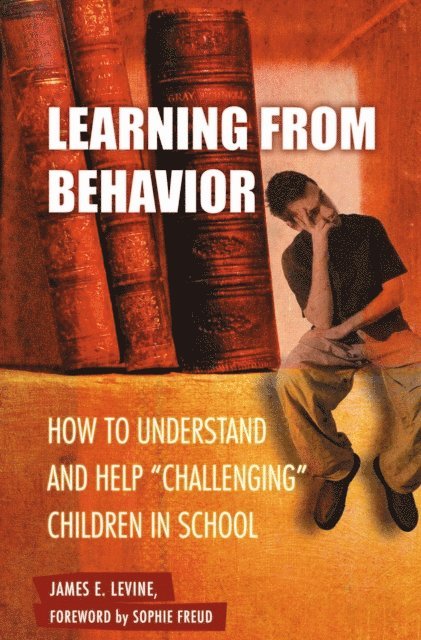
Levine shows us how to observe, question, and think about children's problem behaviors in school from the child's perspective so we can understand what is motivating children to act as they do before we intervene. Cases included in this book range from noncompliance and poor academic performance to disinhibition, suspected ADHD, PTSD, and injury-caused acting out.Understanding children's problem behaviors in school— seeing beyond the surface actions to reveal and name the root needs fueling those actions—is vital to helping the child. Yet, whether teachers in schools or parents at home, adults often make quick, cursory assessments, then an intervention is sprung. Explanations might be sought from the child, who often resists and becomes more distant. Punishment can occur and things are taken away, but the behavior worsens. These scenarios and similar occurrences frustrate parents, teachers, and other school professionals alike. In Learning from Behavior, Levine shows us how to observe, question, and think about problem behaviors in such a way that we can understand what is motivating the children to act as they do. Behavior, after all, often represents what the child cannot communicate, due to language limitations, level of psychological development, or traumatic experience. Children think differently; they are not small adults. We need to understand the behavior from the child's perspective before we can intervene to change the behavior. Author Levine shows us, incorporating illustrative vignettes, how to do that.Step by step, Levine, a clinical social worker experienced as a consultant to dozens of schools, helps us take the astute advice cited in one children's song we've all heard: stop, look and listen, to first understand the behavior. Question the causes. Cases included in this book range from noncompliance and poor academic performance to disinhibition, suspected ADHD, PTSD, and injury-caused acting out. We hear about the history of behavioral interventions, listen as children tell us how they perceive these interventions, and look over the social worker's shoulder as effective helping strategies are put into action. As Levine explains, Given the challenges we share communally in helping children, we should do everything possible to learn more about children's behavior, enhance our methods for reaching out to them, and refine our approaches to intervention. All of us—teachers, parents, clinicians, researchers, and administrators, along with the children we serve—must participate in this vital endeavor.
E-bok
PDF, Engelska, 20111 357 kr
Läs direkt efter köp
A team of expert academics and practitioners examines the life circumstances that impact Latino/a youth growing up in two cultures—their native culture and that of the United States.What effect does growing up in an ethnic minority and perhaps in an immigrant family have on development? That is the overarching question Latina and Latino Children's Mental Health sets out to answer. The work examines all of the myriad physical, psychological, social, and environmental factors that undermine or support healthy development in Latino American children, from biology to economics to public policy. The first volume of this two-volume set focuses on early-life experiences and the second on youth/adolescent issues, treating such topics as children's development of a sense of self, development of linguistic skills, peer relationships, sexual orientation, and physical development. The work analyzes familial relationships, often an important resource that helps young people build resilience despite the stresses of migration. And it looks at patterns of behavior, social status, and social-goal orientations that differentiate Latino/a children and adolescents from their African American and European American peers.
E-bok
PDF, Engelska, 20111 109 kr
Läs direkt efter köp
This unprecedented set examines the most prominent factors that harm or support healthy development in children outside the United States, from abuse and economics to social injustice and poor public policy.In International Perspectives on Children and Mental Health, expert contributors from around the world examine the forces affecting the psychological well-being of children in regions worldwide. They consider such factors as family conditions and economic status, including single parents, poverty, disease, war, child abuse, substance abuse in the home, and a loss of community stability. And they look at political, religious, national, and global matters, including racism and class inequality. Since education is key to children's success, the essays consider these factors largely in the context of how they affect educational readiness and academic adjustment.Volume 1 of the set considers development and context, while volume 2 focuses on prevention and treatment. Specific examples enable readers to better understand the often-horrific challenges to child development and mental health across nations. But the work is not limited to exploring problems. It also looks at various programs and actions that mitigate risks, helping children to be mentally healthy despite the odds.
E-bok
PDF, Engelska, 20111 309 kr
Läs direkt efter köp
This first-of-its-kind, two-volume set examines physical, psychological, social, and environmental factors that undermine—or support—healthy development in Asian American children.How do skin color, culture, racial and ethnic identities, politics, economics, and environment influence children's mental health and academic success? Asian American and Pacific Islander Children and Mental Health spotlights these forces and more. This unique, two-volume work examines a wide range of factors that affect children, including family conditions and economic status, child abuse, substance abuse, gangs, and community stability, as well as prejudices such as the common expectation that Asian Americans are a "model minority" and their children "whiz kids."Since education is key to success, contributors consider the factors affecting Asian American children largely in the context of educational readiness and academic adjustment. However, the set is not limited to exploring problems. It also looks at factors that help Asian American children be mentally healthy, engaged, and successful at school and in later life. Volume one of the set explores development and context, while volume two looks at prevention and treatment.
E-bok
PDF, Engelska, 20111 281 kr
Läs direkt efter köp
This groundbreaking two-volume set examines the psychological, social, physical, and environmental factors that undermine or support healthy development in African American children while considering economic, historical, and public policies.How does one go about shifting the psychology of a people whose sense of worth, purpose, and potential have been denigrated and disenfranchised for decades? What specific factors conspire to douse African American children's dreams before they reach adolescence? And what can we learn from African American families determined to help their children beat the odds and succeed?This unique two-volume set examines the forces affecting psychological development and achievement motivation in African American children today. These books address the current political, global, economic, and social contexts as they impact African American families and tackle the tough issues of genes, environment, and race. Experts from leading universities, research institutes, federal agencies, and nonprofit organizations discuss factors such as parenting beliefs and practices, peer influences, school and community environments, racial profiling, race and ethnicity, spirituality, and immigrant status.
Inbunden, Engelska, 2011
861 kr
Skickas inom 10-15 vardagar
This unique book examines the physical, psychological, social, and environmental factors that support or undermine healthy development in American Indian children, including economics, biology, and public policies.The reasons for mental health issues among American Indian and Alaska Native children have not been well understood by investigators outside of tribal communities. Developing appropriate methodological approaches and evidence-based programs for helping these youths is an urgent priority in developmental science. This work must be done in ways that are cognizant of how the negative consequences of colonization contribute to American Indian and Alaska Native tribal members' underutilization of mental health services, higher therapy dropout rates, and poor response to culturally insensitive treatment programs.This book examines the forces affecting psychological development and mental health in American Indian children today. Experts from leading universities discuss factors such as family conditions, economic status, and academic achievement, as well as political, social, national, and global influences, including racism. Specific attention is paid to topics such as the role of community in youth mental health issues, depression in American Indian parents, substance abuse and alcohol dependency, and the unique socioeconomic characteristics of this ethnic group.
E-bok
PDF, Engelska, 2011902 kr
Läs direkt efter köp
This unique book examines the physical, psychological, social, and environmental factors that support or undermine healthy development in American Indian children, including economics, biology, and public policies.The reasons for mental health issues among American Indian and Alaska Native children have not been well understood by investigators outside of tribal communities. Developing appropriate methodological approaches and evidence-based programs for helping these youths is an urgent priority in developmental science. This work must be done in ways that are cognizant of how the negative consequences of colonization contribute to American Indian and Alaska Native tribal members' underutilization of mental health services, higher therapy dropout rates, and poor response to culturally insensitive treatment programs.This book examines the forces affecting psychological development and mental health in American Indian children today. Experts from leading universities discuss factors such as family conditions, economic status, and academic achievement, as well as political, social, national, and global influences, including racism. Specific attention is paid to topics such as the role of community in youth mental health issues, depression in American Indian parents, substance abuse and alcohol dependency, and the unique socioeconomic characteristics of this ethnic group.
E-bok
Engelska, 20181 518 kr
Läs direkt efter köp
This updated edition of the groundbreaking first edition identifies changes in U.S. children and adolescents'' obesity levels within the past decade, examining factors contributing to obesity in this younger generation as well as possible solutions.This comprehensive review of obesity in childhood and adolescence describes the many factors that contribute to obesity, how to prevent it, and how to manage it in those who already experience its effects. Written by specialists in biological, psychological, social, and behavioral fields, these volumes take an interdisciplinary approach to the subject, offering readers a broad understanding of the systemic complexity of obesity from a public health perspective. The public must be aware of the deep and extensive roots of the problem in order to make informed decisions about policies related to school and nutritional practices, health care costs, and more. Factors contributing to obesity in children and adolescents range from obvious ones such as quantity of food consumed and amount of physical exercise undertaken to how friendly the neighborhood environment is for outdoor activities and the affordability of nutritional foods such as fruits and vegetables. With the information in these volumes, readers will feel empowered to help their clients, families, and communities.
E-bok
Engelska, 20181 551 kr
Läs direkt efter köp
This updated edition of the groundbreaking first edition identifies changes in U.S. children and adolescents'' obesity levels within the past decade, examining factors contributing to obesity in this younger generation as well as possible solutions.This comprehensive review of obesity in childhood and adolescence describes the many factors that contribute to obesity, how to prevent it, and how to manage it in those who already experience its effects. Written by specialists in biological, psychological, social, and behavioral fields, these volumes take an interdisciplinary approach to the subject, offering readers a broad understanding of the systemic complexity of obesity from a public health perspective. The public must be aware of the deep and extensive roots of the problem in order to make informed decisions about policies related to school and nutritional practices, health care costs, and more. Factors contributing to obesity in children and adolescents range from obvious ones such as quantity of food consumed and amount of physical exercise undertaken to how friendly the neighborhood environment is for outdoor activities and the affordability of nutritional foods such as fruits and vegetables. With the information in these volumes, readers will feel empowered to help their clients, families, and communities.