E-bok, Engelska, 2001
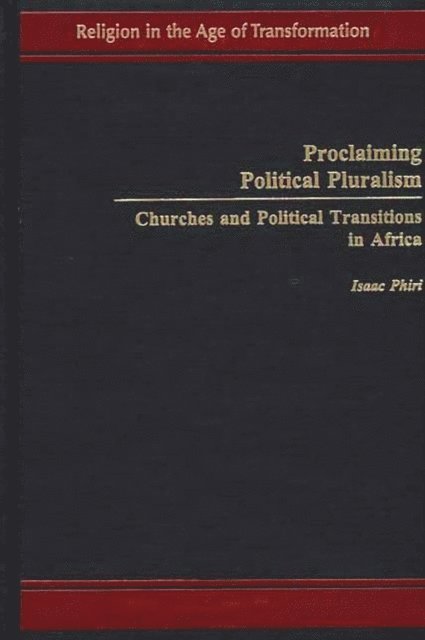
Proclaiming Political Pluralism
Av Isaac Phiri
1169 kr
Läs direkt i Bokus Reader – eller ladda ned till din enhet (PDF kräver ofta zoom och scroll på små skärmar).
Beskrivning
As the population of Africa increasingly converts to Christianity, the church has stepped up its involvement in secular affairs revolving around the transition to democracy in nations such as Zambia, Zimbabwe, and South Africa. Comparative in approach, the author analyzes patterns of church-state relations in various sub-Saharan countries, and contends that churches become more active and politically prominent when elements and organizations of civil society are repressed by political factors or governing bodies, providing services to maintain the well-being of civil society in the absence of those organizations being repressed. The author concludes, that once political repression subsides, churches tend to withdraw from a confrontation with the state and their political role becomes unclear. This unique book advances the idea that in pluralist Africa, churches should focus their influence and resources on nurturing the fragile multiparty democracies and promoting peace and reconciliation.
In his analysis of church-state relations in sub-Saharan Africa, Phiri shows how churches are drawn into confrontation with the state by the repression of civil society and that once civil society is liberated, direct church-state confrontation diminishes. In South Africa, churches led by figures such as Bishop Desmond Tutu assumed a major role after nationalist movements such as Nelson Mandela's African National Congress were banned and their leaders jailed. In Zimbabwe, the church assumed a confrontational role in 1965 after political movements were banned and their leaders exiled. In Zambia, churches became confrontational when the single-party rule repressed all opposition and supported the rise of the prodemocracy movement that ended Kenneth Kaunda's twenty-seven-year rule. Examining these situations and others in different parts of Africa, Phiri illuminates the major issues and conflicts and suggests ways in which the church can continue to help promote smooth transitions to democracy.
In his analysis of church-state relations in sub-Saharan Africa, Phiri shows how churches are drawn into confrontation with the state by the repression of civil society and that once civil society is liberated, direct church-state confrontation diminishes. In South Africa, churches led by figures such as Bishop Desmond Tutu assumed a major role after nationalist movements such as Nelson Mandela's African National Congress were banned and their leaders jailed. In Zimbabwe, the church assumed a confrontational role in 1965 after political movements were banned and their leaders exiled. In Zambia, churches became confrontational when the single-party rule repressed all opposition and supported the rise of the prodemocracy movement that ended Kenneth Kaunda's twenty-seven-year rule. Examining these situations and others in different parts of Africa, Phiri illuminates the major issues and conflicts and suggests ways in which the church can continue to help promote smooth transitions to democracy.
Produktinformation
- Utgivningsdatum: 2001-09-30
- Språk: Engelska
- Antal sidor: 184
- Filformat: PDF
- Kopieringsskydd: LCP
- ISBN: 9780313075421
- Förlag: Bloomsbury Publishing Plc
- Serie: Religion in the Age of Transformation
Utforska kategorier
Betyg & recensioner
0 recensioner
Inga recensioner tillgängliga.