• Fri frakt över 249 kr
  • •
  • Snabba leveranser
  • •
  • Billiga böcker
Kundservice

Du är på sajten för privatpersoner.

Företag, bibliotek eller offentlig verksamhet?

Du handlar på classic.bokus.com, där alla dina funktioner finns intakta.
Till classic.bokus.com
Bokus logotyp. Gå till startsidan.
  • Erbjudanden
  • Nyheter
  • Student
  • Topplistor
  • Barn & ungdom
  • Bokus Play
  • E-böcker
  • Pocketböcker
  • Spel & pussel

Må bättre, för mindre! Upp till 50% rabatt på hälsoböcker

Sidfot

Mina sidor

    Hjälp

    • Kundservice
    • Vanliga frågor och svar
    • Frakt och leverans
    • Retur vid ångerrätt
    • Reklamera vara
    • Betalning
    • Köpvillkor
    • Allmänna villkor
    • Information om webbplatsens tillgänglighet

    Om Bokus

    • Om oss
    • Pressrum
    • För studenter
    • För företag
    • För bibliotek och offentlig verksamhet
    • För leverantörer
    • Hållbarhet

    Populärt

    • Aktuella erbjudanden
    • Presentkort
    • Studentlitteratur
    • Nya böcker
    • Topplistor
    • Signerade böcker
    • Engelska böcker

    Inspiration

    • Boktips
    • BookTok
    • Populära bokserier
    • Barnbokskaraktärer
    • Populära författare
    Logotyp för Bokus
    Följ oss på Facebook (extern länk)Följ oss på Instagram (extern länk)Följ oss på YouTube (extern länk)Följ oss på TikTok (extern länk)
    bokus @ CookiesAnpassa cookiesIntegritetspolicyKöpvillkor
    Till Citymail hemsida (extern länk)Till Budbee hemsida (extern länk)Till Postnord hemsida (extern länk)Till Schenker hemsida (extern länk)Till Early Bird hemsida (extern länk)Till Walleys hemsida (extern länk)
    1. Naturvetenskap och teknik
    2. Geovetenskap
    3. Miljövetenskap och miljöpolitik

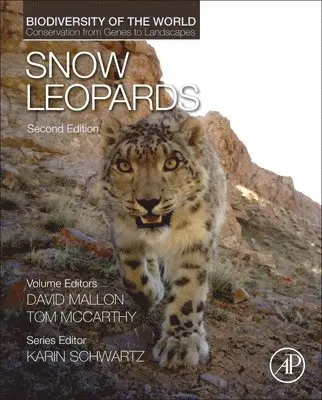
    Snow Leopards

    Inbunden, Engelska, 2023

    Del i serien Biodiversity of the World: Conservation from Genes to Landscapes

    1 249 kr

    Beställningsvara. Skickas inom 10-15 vardagar. Fri frakt över 249 kr.

    Beskrivning

    Snow Leopards, Second Edition provides a foundational, comprehensive overview of the biology, ecology and conservation of this iconic species. This updated edition incorporates all the recent information from range-wide surveys and conservation projects, the results of technical and advances particularly in genetics, camera trapping and satellite tracking, and evaluates emerging threats. New chapters synthesize the novel scientific methods and statistical analyses used to develop density and population estimates and how they inform conservation and management estimates. Sections cover historical information, the main biogeographic patterns, evolutionary trends, conservational efforts, and cultural significance.

    Status and distribution are fully updated for all 12 countries where snow leopards occur. Other sections describe established and emerging threats, including human-wildlife conflict, illegal trade, infrastructure development, and climate change along with conservation solutions used to address these threats. The book concludes with a final section on global snow leopard initiatives and future potentials.


    • Offers a complete and thorough update on snow leopard ecology, conservation, research techniques and population trends, among other topic
    • Presents the results of the latest scientific research and conservation measures
    • Edited by recognized experts with contributions from 240 of the world’s leading experts throughout the snow leopard’s range

    Produktinformation

    • Utgivningsdatum:2023-10-13
    • Mått:191 x 235 x 40 mm
    • Vikt:1 590 g
    • Format:Inbunden
    • Språk:Engelska
    • Serie:Biodiversity of the World: Conservation from Genes to Landscapes
    • Antal sidor:702
    • Upplaga:2
    • Förlag:Elsevier Science
    • ISBN:9780323857758

    Utforska kategorier

    • Miljövetenskap och miljöpolitik inom Naturvetenskap och teknik
    • Sociala och etiska frågor inom Samhälle och politik
    • Zoologi inom Naturvetenskap och teknik

    Mer om författaren

    Dr. Tom McCarthy, Panthera’s Director of Snow Leopard Programs, began his conservation career studying brown bears, black bears, mountain goats and caribou in Alaska in the early 1980s. A strong interest in international conservation led him to Mongolia in 1992, where, under the guidance of Dr. George Schaller (known as “one of the founding fathers of wildlife conservation”), he took over the management of a long-term snow leopard research project. He was the first biologist to use satellite radio-collars on snow leopards. McCarthy became the Science and Conservation Director of the Snow Leopard Trust in 2000 and has since led their extensive science and community-based conservation programs across much of snow leopard range in Asia. From 2002-2009, Dr. McCarthy served as Executive Director of the Snow Leopard Network, a global consortium of more than 200 professionals involved in snow leopard research and conservation. Among other research initiatives, Dr. McCarthy is leading both a range-wide assessment of snow leopard genetics that seeks to identify movement corridors which are critical to maintaining the health and genetic diversity of the species, and a revision of methods by which snow leopard populations can be monitored over time, including such novel non-invasive approaches as fecal genetics, camera trapping and statistical modeling based on sign surveys. Dr. David Mallon is not only a recognized expert on snow leopards, he is extremely knowledgeable on the conservation status of Central Asia as a whole. He conducted some of the early assessments of the status of snow leopards in Mongolia and has done surveys in many of the Himalayan range states. He has more than 25 years of field work experience in the Himalaya, Tibetan Plateau, Mongolia, Central Asia and Arabia, mainly focused on large mammals, and involving species surveys, biodiversity assessment, habitat assessment, camera trapping, training, capacity building, and training local partners in census and monitoring techniques. He is a Fellow of the Royal Geographical Society and the Zoological Society of London, as well as a member of the International Editorial Board for Oryx, the International Journal of Conservation. He has been a Steering Committee member of the Snow Leopard Network since its inception in 2003 and is currently the elected Chairman of that 400 member organization, which represents nearly every biologist and conservationist now active in the snow leopard world. He is highly respected among his peers as an expert on this cat. Dr. Karin R. Schwartz is a long-standing conservation professional with extensive experience in data management as applied to conservation programs within zoological institutions as well as for regional cooperative animal management programs and in situ conservation efforts. Her dissertation research focused on linking in situ and ex situ data management processes for endangered species recovery programs through the Species360 Zoological Information Management System. She initiated and led the development of the Association of Zoos and Aquariums (AZA) records-training programs for use of Species360 software and was Co-Administrator of the Institutional Records-Keeping Course for 19 years. She has international training experience through the presentation of records training sessions for the regional zoo associations in Argentina, India, and South Korea, and for individual zoos in Ecuador, Hawaii, New York, and South Korea. Dr. Schwartz has extensive experience in international conservation efforts through involvement in IUCN/Species Survival Commission’s Conservation Planning, Conservation Translocation, Tapir, Otter, and Wildlife Health Specialist Groups. She serves as the Ex Situ/In Situ Liaison on the Management Committee of the IUCN Otter Specialist Group. She was a chapter author and editor for two books in the Biodiversity of the World series: Cheetahs: Biology and Conservation and Tree Kangaroos: Science and Conservation. These experiences led to the role of Series Editor for the Biodiversity of the World book series to oversee the development of new books on relevant endangered species.

    Innehållsförteckning

    • I: Defining the snow leopard1. Taxonomy, morphology and phylogeny2. Behavior and ecology3. Biogeography and status overview4. Snow leopard diet and preyII: Conservation concerns5. Livestock predation by snow leopards: conflicts and the search for solutions6. Living on the edge: Depletion of wild prey and survival of the snow leopard7. Illegal killing and trade8. Climate change impacts on snow leopard range9. Diseases of wild snow leopards and their wild ungulate prey10.Emerging threats to snow leopards from energy and mineral development11. Linear infrastructure and snow leopard conservation12. Harvest of caterpillar fungus and wood by local people13. Snow leopard, common leopard, and wolf: Are they good neighbors?14. Promoting coexistence through improved understanding of human perceptions, attitudes, and behavior toward snow leopardsIII: Conservation solutions in situ15. The role of mountain communities in snow leopard conservation16. Building community governance structures and institutions for snow leopard conservation17. Incentive and reward programs in snow leopard conservation18. Livestock husbandry and snow leopard conservation19. Religion and cultural impacts on snow leopards conservation20. Trophy hunting as a conservation tool for snow leopards21. Environmental education for snow leopard conservation22. Law enforcement in snow leopard conservation23. Transboundary initiatives and snow leopard conservation24. Corporate business and the conservation of the snow leopard: Worlds that need not collideIV: Conservation solutions ex situ25. Management of captive snow leopards in the EAZA region26. Role of zoos in snow leopard conservation: The Species Survival Plan in North America27. Captive snow leopards as ambassadors of wild kin28. Rescue, rehabilitation, translocation, reintroduction, and captive rearing: Lessons from the other big catsV: Techniques and technologies for the study of a cryptic felid29. Snow leopard research—A historical perspective30. From VHF to satellite GPS collars—Advancements in snow leopard telemetry31. Conservation genetics of snow leopards32.Camera trapping-Advancing the technology33. Drones for snow leopard conservation34. PAW: Population assessment of the world’s snow leopardsVI: Snow leopard status and conservation: Regional reviews and updates35. Snow leopard status and conservation in Afghanistan36. The snow leopard in Kyrgyzstan37. Conservation of snow leopards in Kazakhstan38. The snow leopard in Tajikistan39. The snow leopard in Uzbekistan40. Snow leopard conservation in Bhutan41. Securing India’s snow leopards: Status, threats, and conservation42. Conservation of snow leopard in Nepal43. The current state of snow leopard conservation in Pakistan44. Current status and conservation of snow leopards in Mongolia45. Snow leopard conservation in Russia46. Snow leopard status and conservation in ChinaVII: The future of snow leopards47. Sharing the conservation message48. Global strategies for snow leopard conservation: a spot-joining synthesis49. The global snow leopard and ecosystem protection program50. Future prospects for snow leopard survival