• Fri frakt över 249 kr
  • •
  • Snabba leveranser
  • •
  • Billiga böcker
Kundservice

Du är på sajten för privatpersoner.

Företag, bibliotek eller offentlig verksamhet?

Du handlar på classic.bokus.com, där alla dina funktioner finns intakta.
Till classic.bokus.com
Bokus logotyp. Gå till startsidan.
  • Erbjudanden
  • Nyheter
  • Student
  • Topplistor
  • Barn & ungdom
  • Bokus Play
  • E-böcker
  • Pocketböcker
  • Spel & pussel

10% rabatt på allt med kod: NYSTART10 →

Sidfot

Mina sidor

    Hjälp

    • Kundservice
    • Vanliga frågor och svar
    • Frakt och leverans
    • Retur vid ångerrätt
    • Reklamera vara
    • Betalning
    • Köpvillkor
    • Allmänna villkor
    • Information om webbplatsens tillgänglighet

    Om Bokus

    • Om oss
    • Pressrum
    • För studenter
    • För företag
    • För bibliotek och offentlig verksamhet
    • För leverantörer
    • Hållbarhet

    Populärt

    • Aktuella erbjudanden
    • Presentkort
    • Studentlitteratur
    • Nya böcker
    • Topplistor
    • Signerade böcker
    • Engelska böcker

    Inspiration

    • Boktips
    • BookTok
    • Populära bokserier
    • Barnbokskaraktärer
    • Populära författare
    Logotyp för Bokus
    Följ oss på Facebook (extern länk)Följ oss på Instagram (extern länk)Följ oss på YouTube (extern länk)Följ oss på TikTok (extern länk)
    bokus @ CookiesAnpassa cookiesIntegritetspolicyKöpvillkor
    Till Citymail hemsida (extern länk)Till Budbee hemsida (extern länk)Till Postnord hemsida (extern länk)Till Schenker hemsida (extern länk)Till Early Bird hemsida (extern länk)Till Walleys hemsida (extern länk)
    1. Naturvetenskap och teknik
    2. Teknik och industri
    3. Maskinteknik och material

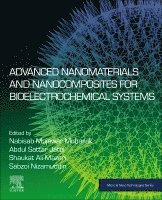
    Advanced Nanomaterials and Nanocomposites for Bioelectrochemical Systems

    AvNabisab Mujawar Mubarak,Abdul Sattar

    Häftad, Engelska, 2023

    Del i serien Micro and Nano Technologies

    2 119 kr

    Beställningsvara. Skickas inom 10-15 vardagar. Fri frakt över 249 kr.

    Beskrivning

    Advanced Nanomaterials and Nanocomposites for Bioelectrochemical Systems covers advancements in nanomaterial and nanocomposite applications for microbial fuel cells. One of the advantages of using microbial fuel cells is the simultaneous treatment of wastewater and the generation of electricity from complex organic waste and biomass, which demonstrates that microbial fuel cells are an active area of frontier research. The addition of microorganisms is essential to enhance the reaction kinetics. This type of fuel cell helps to convert complex organic waste into useful energy through the metabolic activity of microorganisms, thereby generating energy.

    By incorporating nano-scale fillers into the nanocomposite matrix, the performance of the anode material can be improved. This is an important reference source for materials scientists and engineers who want to learn more about how nanotechnology is being used to create more efficient fuel cells.


    • Describes the major nanomaterials and nanocomposites used in microbial fuel cells
    • Explains how microbial fuel cells are being used in renewable energy applications
    • Assesses the challenges of manufacturing nanomaterials for microbial fuel cells on an industrial scale

    Produktinformation

    • Utgivningsdatum:2023-03-21
    • Mått:191 x 235 x 23 mm
    • Vikt:880 g
    • Format:Häftad
    • Språk:Engelska
    • Serie:Micro and Nano Technologies
    • Antal sidor:424
    • Förlag:Elsevier Science
    • ISBN:9780323904049

    Utforska kategorier

    • Maskinteknik och material inom Naturvetenskap och teknik

    Mer om författaren

    Dr. Nabisab Mujawar Mubarak is an Associate Professor in the Departmentof Chemical Engineering, College of Engineering, Imam Mohammad Ibn Saud Islamic University (IMSIU), Riyadh 11432, Saudi Arabia.He is a scientific reviewer for numerous Chemical EngineeringandNanotechnology journals. In research, Dr.Mubarak has publishedover 450 journal papers and 40 conference proceedings, authored 85book chapters, and has an H-index of 87. His areas of interest includethe synthesis of carbon nanomaterials, the production of magneticbiochar using microwaves, and wastewater treatment utilizing advancedmaterials. He received the Curtin Malaysia Most Productive Research Award, the Outstanding Faculty of Chemical Engineering Award, the Best Scientific Research Award in London, and the Exceptional ScientistAward in publication and citation byi-Proclaim, Malaysia. Since 2020, he has also been listed among the top 2% of the world’s most influential scientists in the fields of chemistry and energy. The List of the Top 2% of Scientists inthe World, compiled and published by Stanford University, is based on international scientificpublications, the number of scientific citations for research, and participation in the review andediting of scientific research. Dr. Mubarak is a Fellow Member of the Institution of EngineersAustralia, a Chartered Professional Engineer of The Institution of Engineers Australia, and aChartered Chemical Engineer of the Institute of Chemical Engineering, UK. He has published11 books and is coeditor for ongoing Elsevier-edited books: 1) Nanomaterials for CarbonCapture and Conversion Technique, 2) Advanced Nanomaterials and Nanocomposites for Bioelectrochemical Systems, 3) Water Treatment Using Engineered Carbon Nanotubes,4)Hybrid Nanomaterials for Sustainable Applications: Case Studies and Applications, 5), SustainableNanotechnology for Environmental Remediation, 6) Nanotechnology for BiomedicalApplications,7) Nanotechnology for Electronic Applications, 8) Application of Bio-Additivesfor the Food Industry, 9) Contemporary Nanomaterials inMaterial Engineering Applications,10)Fundamentals of Biomaterials: ASupplementary Textbook, 11) EmergingWater Pollutants:Concerns and Remediation Technologies. Abdul Sattar is Assistant Professor in the Chemical Engineering Department at Dawood University, Karachi, Pakistan. His area of research is coal cleaning and their uses for energy production, fermentation technologies, modeling and simulation, microbial fuel cells, and immobilization technology. Shaukat Ali Mazari is Assistant Professor in the Department of Chemical Engineering, Dawood University, Karachi, Pakistan. His research interests are purification and separation processes, the evaluation of amines stability for CO2 capture, biofuels from biomass, electrochemical CO2 reduction and preparation and characterization of electrodes, etc. Sabzoi Nizamuddin is currently working as a Research Fellow in Civil and Infrastructure Engineering at RMIT University (Australia). He received his PhD in 2019 from RMIT University. He was awarded the Research Excellence Award from RMIT University’s School of Engineering, based on the high quality and quantity of papers he published during his PhD. To date, he has been the author of more than 75 articles in peer-reviewed Scopus/SCI/ESCI-indexed journals, 5 book chapters for Elsevier and Springer, and has presented his findings at domestic and international conferences. Currently, he is a co-editor for 'Frontiers in Energy Research' and the 'International Journal of Environmental Research and Public Health'.

    Innehållsförteckning

    • 1. Introduction to themicrobial electrochemical system2. Electricity generation with the use of microbial electrochemical systems3. Overview of wastewater treatment approaches related to the microbial electrochemical system4. Synthesis and application of nanocompositematerial formicrobial fuel cells5. Classification of nanomaterials and nanocomposites for anode material6. Properties of nanomaterials for microbial fuel cell application7. Advanced nanocompositematerial for wastewater treatment in microbial fuel cells8. Nanostructured electrode materials in bioelectrocommunication systems9. Nanomaterials supporting biotic processes in bioelectrochemical systems10. Nanomaterials supporting direct electron transport11. Nanomaterials supporting oxygen reduction in bio-electrochemical systems12. Nanomaterials for ion-exchange membranes13. Nanomaterials supporting indirect electron transport14. Techno-economic analysis ofmicrobial fuel cells using different nanomaterials15. Synthesis and application of carbon-based nanomaterials for bioelectrochemical systems16. Synthesis and application of graphene-based nanomaterials for microbial fuel cells17. Future development, prospects, and challenges in application of nanomaterials and nanocomposites