
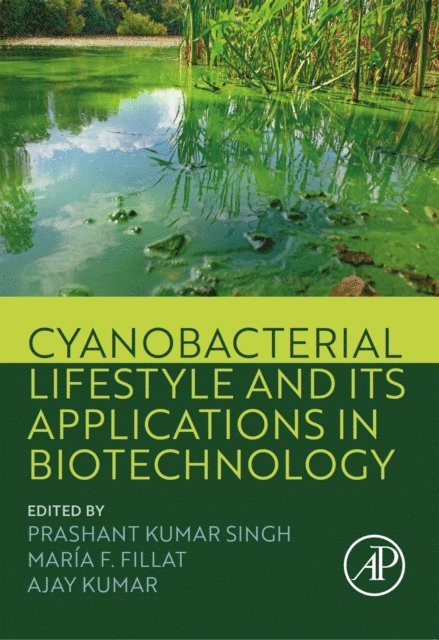
Cyanobacterial Lifestyle and its Applications in Biotechnology
Ajay Kumar, Maria F. Fillat, Prashant Kumar Singh
E-bok
20212 780 kr
AvPrashant Kumar Singh,Maria F. Fillat
1 953 kr
Beställningsvara. Skickas inom 10-15 vardagar. Fri frakt över 249 kr.
Environmental change is affecting the world's agricultural productivity. This is coupled with an increase in population: according to the United Nations Department for Economic and Social Affairs, the global population is estimated to reach 9.7 billion by 2050.� Therefore, the current situation requires that we develop climate-smart technologies to improve crop productivity to sustain the ever-rising global population.� Current-day farmers are introducing a considerable amount of agrochemicals to enhance crop productivity.� Indiscriminate agrochemical application has altered not only the soil's physic-chemical and biological properties but also affected human health through food chain contamination.� Cyanobacteria, under these changing environmental conditions, may help to resolve the problem significantly without changing the natural soil properties.� In spite of their well-known stress tolerance potential, most of the cyanobacterial stress management and signaling pathways are yet to be fully characterized.� Therefore, there is an urgent need to explore cyanobacterial metabolism under stress as well as their regulatory pathways to exploit them for sustainable agriculture.� In recent decades, the application of cyanobacteria has attracted scientists because of uniqueness, better adaptability, and synthetic products.
Diverse cyanobacterial communities with the ability to fix atmospheric nitrogen, together with their photosynthetic properties, have demonstrated their application under field conditions.� Several cyanobacterial species have thus been exploited to enhance soil fertility, mitigate biotic and abiotic stress, and contamination management.
Cyanobacterial Lifestyle and its Applications in Biotechnology has been designed to discuss different aspects of cyanobacterial physiology with the aim of helping to provide a better understanding of advanced cyanobacterial molecular biology and their metabolism to uncover the potential of cyanobacteria in the tailoring of stress smart crops for sustainable agriculture.� Chapters include valuable information about the role of cyanobacteria in the evolution of life, cyanobacterial photosynthesis, stress-tolerant cyanobacterium, biological nitrogen fixation, circadian rhythms, genetics and molecular biology of abiotic stress responses.
Ajay Kumar, Maria F. Fillat, Prashant Kumar Singh
2 780 kr
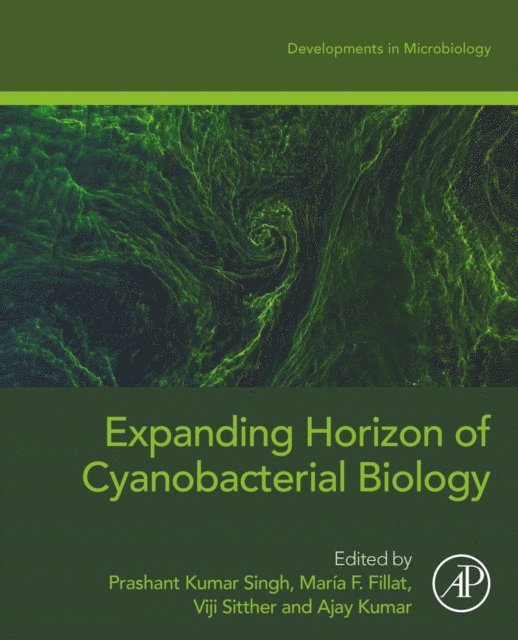
Ajay Kumar, Viji Sitther, Maria F. Fillat, Prashant Kumar Singh
2 422 kr
Prashant Kumar Singh, Maria F. Fillat, Viji Sitther, Ajay Kumar
Häftad, 2022
1 890 kr
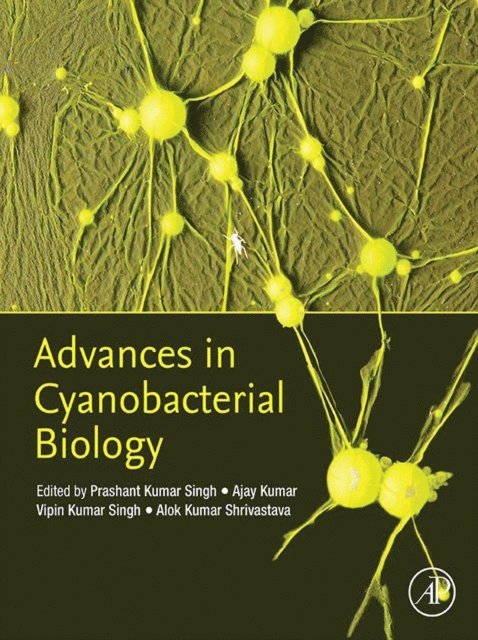
Alok Kumar Shrivistava, Vipin Kumar Singh, Ajay Kumar, Prashant Kumar Singh
2 780 kr
Prashant Kumar Singh, Ajay Kumar, Vipin Kumar Singh, Alok Kumar Shrivistava
Häftad, 2020
1 978 kr

Ajay Kumar, Prashant Kumar Singh, Josef Elster, Michel Rodrigo Zambrano Passarini, Alysson Wagner Fernandes Duarte
2 833 kr
Brett Neilan, Michel Rodrigo Zambrano Passarini, Prashant Kumar Singh, Ajay Kumar
Inbunden, 2023
1 985 kr
Alysson Wagner Fernandes Duarte, Michel Rodrigo Zambrano Passarini, Josef Elster, Prashant Kumar Singh, Ajay Kumar
Inbunden, 2025
2 205 kr
Prashant Kumar Singh, Joginder Singh Panwar, Ajay Kumar, Josef Elster
Inbunden, 2025
1 676 kr
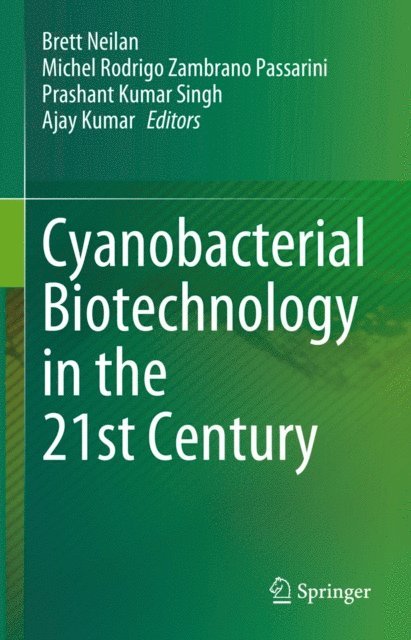
Ajay Kumar, Prashant Kumar Singh, Michel Rodrigo Zambrano Passarini, Brett Neilan
2 551 kr
AvPrashant Kumar Singh,Maria F. Fillat
1 953 kr
Beställningsvara. Skickas inom 10-15 vardagar. Fri frakt över 249 kr.
Environmental change is affecting the world's agricultural productivity. This is coupled with an increase in population: according to the United Nations Department for Economic and Social Affairs, the global population is estimated to reach 9.7 billion by 2050.� Therefore, the current situation requires that we develop climate-smart technologies to improve crop productivity to sustain the ever-rising global population.� Current-day farmers are introducing a considerable amount of agrochemicals to enhance crop productivity.� Indiscriminate agrochemical application has altered not only the soil's physic-chemical and biological properties but also affected human health through food chain contamination.� Cyanobacteria, under these changing environmental conditions, may help to resolve the problem significantly without changing the natural soil properties.� In spite of their well-known stress tolerance potential, most of the cyanobacterial stress management and signaling pathways are yet to be fully characterized.� Therefore, there is an urgent need to explore cyanobacterial metabolism under stress as well as their regulatory pathways to exploit them for sustainable agriculture.� In recent decades, the application of cyanobacteria has attracted scientists because of uniqueness, better adaptability, and synthetic products.
Diverse cyanobacterial communities with the ability to fix atmospheric nitrogen, together with their photosynthetic properties, have demonstrated their application under field conditions.� Several cyanobacterial species have thus been exploited to enhance soil fertility, mitigate biotic and abiotic stress, and contamination management.
Cyanobacterial Lifestyle and its Applications in Biotechnology has been designed to discuss different aspects of cyanobacterial physiology with the aim of helping to provide a better understanding of advanced cyanobacterial molecular biology and their metabolism to uncover the potential of cyanobacteria in the tailoring of stress smart crops for sustainable agriculture.� Chapters include valuable information about the role of cyanobacteria in the evolution of life, cyanobacterial photosynthesis, stress-tolerant cyanobacterium, biological nitrogen fixation, circadian rhythms, genetics and molecular biology of abiotic stress responses.
Ajay Kumar, Maria F. Fillat, Prashant Kumar Singh
2 780 kr
Ajay Kumar, Viji Sitther, Maria F. Fillat, Prashant Kumar Singh
2 422 kr
Prashant Kumar Singh, Maria F. Fillat, Viji Sitther, Ajay Kumar
Häftad, 2022
1 890 kr
Alok Kumar Shrivistava, Vipin Kumar Singh, Ajay Kumar, Prashant Kumar Singh
2 780 kr
Prashant Kumar Singh, Ajay Kumar, Vipin Kumar Singh, Alok Kumar Shrivistava
Häftad, 2020
1 978 kr
Ajay Kumar, Prashant Kumar Singh, Josef Elster, Michel Rodrigo Zambrano Passarini, Alysson Wagner Fernandes Duarte
2 833 kr
Brett Neilan, Michel Rodrigo Zambrano Passarini, Prashant Kumar Singh, Ajay Kumar
Inbunden, 2023
1 985 kr
Alysson Wagner Fernandes Duarte, Michel Rodrigo Zambrano Passarini, Josef Elster, Prashant Kumar Singh, Ajay Kumar
Inbunden, 2025
2 205 kr
Prashant Kumar Singh, Joginder Singh Panwar, Ajay Kumar, Josef Elster
Inbunden, 2025
1 676 kr
Ajay Kumar, Prashant Kumar Singh, Michel Rodrigo Zambrano Passarini, Brett Neilan
2 551 kr