• Fri frakt över 249 kr
  • •
  • Snabba leveranser
  • •
  • Billiga böcker
Kundservice

Du är på sajten för privatpersoner.

Företag, bibliotek eller offentlig verksamhet?

Du handlar på classic.bokus.com, där alla dina funktioner finns intakta.
Till classic.bokus.com
Bokus logotyp. Gå till startsidan.
  • Erbjudanden
  • Nyheter
  • Student
  • Topplistor
  • Barn & ungdom
  • Bokus Play
  • E-böcker
  • Pocketböcker
  • Spel & pussel

Må bättre, för mindre! Upp till 50% rabatt på hälsoböcker

Sidfot

Mina sidor

    Hjälp

    • Kundservice
    • Vanliga frågor och svar
    • Frakt och leverans
    • Retur vid ångerrätt
    • Reklamera vara
    • Betalning
    • Köpvillkor
    • Allmänna villkor
    • Information om webbplatsens tillgänglighet

    Om Bokus

    • Om oss
    • Pressrum
    • För studenter
    • För företag
    • För bibliotek och offentlig verksamhet
    • För leverantörer
    • Hållbarhet

    Populärt

    • Aktuella erbjudanden
    • Presentkort
    • Studentlitteratur
    • Nya böcker
    • Topplistor
    • Signerade böcker
    • Engelska böcker

    Inspiration

    • Boktips
    • BookTok
    • Populära bokserier
    • Barnbokskaraktärer
    • Populära författare
    Logotyp för Bokus
    Följ oss på Facebook (extern länk)Följ oss på Instagram (extern länk)Följ oss på YouTube (extern länk)Följ oss på TikTok (extern länk)
    bokus @ CookiesAnpassa cookiesIntegritetspolicyKöpvillkor
    Till Citymail hemsida (extern länk)Till Budbee hemsida (extern länk)Till Postnord hemsida (extern länk)Till Schenker hemsida (extern länk)Till Early Bird hemsida (extern länk)Till Walleys hemsida (extern länk)
    1. Naturvetenskap och teknik
    2. Matematik och naturvetenskap
    3. Biologi
    4. Biovetenskap

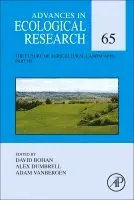
    The Future of Agricultural Landscapes, Part III

    AvDavid Bohan,Alex Dumbrell

    Inbunden, Engelska, 2021

    Del 65 i serien Advances in Ecological Research

    2 390 kr

    Beställningsvara. Skickas inom 10-15 vardagar. Fri frakt över 249 kr.

    Beskrivning

    The Future of Agricultural Landscapes, Part III, Volume 65 in the Advances in Ecological Research serial, highlights new advances in the field, with this update including contributions from an international board of authors who cover Designing farmer-acceptable rotations that assure ecosystem service provision in the face of climate change, Building a shared vision of the future for multifunctional agricultural landscapes: Lessons from a Long Term Socio-Ecological Research site in south-western France, Vineyard landscapes and biocontrol, Pollinators, Next generation biomonitoring, Diversification of botanical resources in landscapes, Conflict resolution in agricultural landscapes, Addressing the Unanswered Questions in landscape-moderated biodiversity and ecosystem functioning, and more.

    • Provides the authority and expertise of leading contributors from an international board of authors
    • Presents the latest release in the Advances in Ecological Research series
    • Updated release includes the latest information on the Future of Agricultural Landscapes

    Produktinformation

    • Utgivningsdatum:2021-11-25
    • Mått:152 x 229 x 28 mm
    • Vikt:1 000 g
    • Format:Inbunden
    • Språk:Engelska
    • Serie:Advances in Ecological Research
    • Antal sidor:454
    • Förlag:Elsevier Science
    • ISBN:9780323915038

    Utforska kategorier

    • Biovetenskap inom Naturvetenskap och teknik
    • Miljöteknik inom Naturvetenskap och teknik

    Mer om författaren

    Dave Bohan is an agricultural ecologist with an interest in predator-prey regulation interactions. Dave uses a model system of a carabid beetle predator and two agriculturally important prey; slugs and weed seeds. He has shown that carabids find and consume slug prey, within fields, and that this leads to regulation of slug populations and interesting spatial ‘waves’ in slug and carabid density. The carabids also intercept weed seeds shed by weed plants before they enter the soil, and thus carabids can regulate the long-term store of seeds in the seedbank on national scales. What is interesting about this system is that it contains two important regulation ecosystem services delivered by one group of service providers, the carabids. This system therefore integrates, in miniature, many of the problems of interaction between services.Dave has most recently begun to work with networks. He developed, with colleagues, a learning methodology to build networks from sample date. This has produced the largest, replicated network in agriculture. One of his particular interests is how behaviours and dynamics at the species level, as studied using the carabid-slug-weed system, build across species and their interactions to the dynamics of networks at the ecosystem level. Dr Alex Dumbrell works at the School of Biological Sciences, University of Essex, UK.

    Innehållsförteckning

    • Socio-ecosystems and conflict1. Conflicts between agriculture and biodiversity conservation in Europe: Looking to the future by learning from the past2. Building a shared vision of the future for multifunctional agricultural landscapes. Lessons from a long term socio-ecological research site in south-western FranceEmpirical needs3. Broadening the scope of empirical studies to answer persistent questions in landscape-moderated effects on biodiversity and ecosystem functioning4. Promoting crop pest control by plant diversification in agricultural landscapes: A conceptual framework for analysing feedback loops between agro-ecological and socio-economic effectsGlobal change5. Designing farmer-acceptable rotations that assure ecosystem service provision in the face of climate change6. Multiple global change impacts on parasitism and biocontrol services in future agricultural landscapes7. Harnessing biodiversity and ecosystem services to safeguard multifunctional vineyard landscapes in a global change contextMonitoring8. Effective biodiversity monitoring could be facilitated by networks of simple sensors and a shift to incentivising results 9. Coupling ecological network analysis with high-throughput sequencing-based surveys: Lessons from the Next-Generation Biomonitoring project