• Fri frakt över 249 kr
  • •
  • Snabba leveranser
  • •
  • Billiga böcker
Kundservice

Du är på sajten för privatpersoner.

Företag, bibliotek eller offentlig verksamhet?

Du handlar på classic.bokus.com, där alla dina funktioner finns intakta.
Till classic.bokus.com
Bokus logotyp. Gå till startsidan.
  • Erbjudanden
  • Student
  • Topplistor
  • Barn & ungdom
  • Bokus Play
  • E-böcker
  • Ljudböcker
  • Pocketböcker
  • Spel och pussel

Pocketfynda! Hundratals böcker för 49 kr/st →

Sidfot

Mina sidor

    Hjälp

    • Kundservice
    • Vanliga frågor och svar
    • Frakt och leverans
    • Retur vid ångerrätt
    • Reklamera vara
    • Betalning
    • Köpvillkor
    • Allmänna villkor
    • Information om webbplatsens tillgänglighet

    Om Bokus

    • Om oss
    • Pressrum
    • För studenter
    • För företag
    • För bibliotek och offentlig verksamhet
    • För leverantörer
    • Hållbarhet

    Populärt

    • Aktuella erbjudanden
    • Presentkort
    • Studentlitteratur
    • Nya böcker
    • Topplistor
    • Signerade böcker
    • Engelska böcker

    Inspiration

    • Boktips
    • BookTok
    • Barnbokskaraktärer
    • Populära författare
    Logotyp för Bokus
    Följ oss på Facebook (extern länk)Följ oss på Instagram (extern länk)Följ oss på YouTube (extern länk)Följ oss på TikTok (extern länk)
    bokus @ CookiesAnpassa cookiesIntegritetspolicyKöpvillkor
    Till Citymail hemsida (extern länk)Till Budbee hemsida (extern länk)Till Postnord hemsida (extern länk)Till Schenker hemsida (extern länk)Till Early Bird hemsida (extern länk)Till Walleys hemsida (extern länk)
    1. Naturvetenskap och teknik
    2. Matematik och naturvetenskap
    3. Biologi

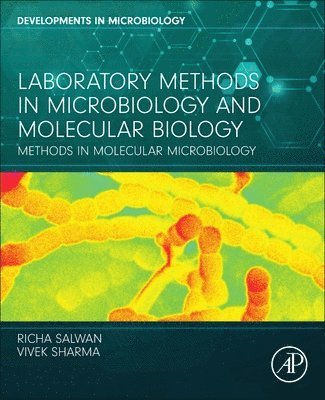
    Laboratory Methods in Microbiology and Molecular Biology

    Methods in Molecular Microbiology

    AvRicha Salwan,Vivek Sharma

    Häftad, Engelska, 2023

    Del i serien Developments in Microbiology

    1 689 kr

    Beställningsvara. Skickas inom 10-15 vardagar. Fri frakt över 249 kr.

    Beskrivning

    Laboratory Methods in Microbiology and Molecular Biology describes various microbiological, biochemical, and molecular methods employed for the characterization, identification, and analysis of actinomycetes, bacteria and fungi. The book details general guidelines, expectations, and responsibilities for good lab practices and consists of chapters that covers basic microbiological, physiological, biochemical, and molecular aspects as well as in silico analysis using various bioinformatic tools. Other topics in the book include how to make solutions, microscopy and imaging of microorganisms, sero-diagnostics, and basic concepts of phylogeny, physiology, biotechnology, soil, food, and environmental microbiology while working in laboratory. Laboratory Methods in Microbiology and Molecular Biology is an informative update to current practices and future perspectives for the field of microbial biotechnology. It aims to facilitate professors, researchers, and graduate students in monitoring the precision and accuracy of the qualitative and quantitative methods in their research.


    • Involves various procedures in diverse disciplines, from microbiology to genetics, molecular biology and biochemistry
    • Lists the principles and facts underlying practical applications of bacteria and fungi which have prospects in various technologies
    • Includes the questions 'how' and 'why' as an explanation for novice students and researchers to modify protocols
    • Facilitates students, teachers and researchers to monitor the precision and accuracy of their qualitative and quantitative methods practically

    Produktinformation

    • Utgivningsdatum:2023-06-16
    • Mått:191 x 235 x 14 mm
    • Vikt:440 g
    • Format:Häftad
    • Språk:Engelska
    • Serie:Developments in Microbiology
    • Antal sidor:206
    • Förlag:Elsevier Science
    • ISBN:9780323950787

    Utforska kategorier

    • Biologi inom Naturvetenskap och teknik

    Mer om författaren

    Dr. Richa Salwan is currently an Assistant Professor of microbiology at the College of Horticulture and Forestry (Dr. YS Parmar University of Horticulture and Forestry), Neri, Hamirpur, Himachal Pradesh, India. Dr. Salwan’s research interests and contributions are on the diversity of psychrotrophic bacteria from the Western Himalayas and their utilization for industrial applications. She has also worked on the exploration of extremophiles for industrially relevant enzymes and plant beneficial microbes for agricultural benefits. She has published two books and numerous research papers in several international journals. Dr. Salwan serves as an Academic Editor for PLOS ONE and is also a recognized reviewer for several journals including MDPI Genes, MDPI Diversity, MDPI Foods, BMC Microbiology, Journal of Plant Growth Regulation, and Microbial Ecology. Dr. Vivek Sharma is currently an Assistant Professor at the University Centre for Research and Development at Chandigarh University, Mohali (PB). He has more than 12 years of research experience exploring molecular attributes of Trichoderma. His research also involves examining the molecular aspects of microbes beneficial to plants such as Streptomyces and Bacillus. He has published several research papers in international journals, serves as an Academic Editor for PLOS ONE, a review editor for Frontiers in Bioengineering and Biotechnology, an associate editor of Chemical and Biological Technologies in Agriculture, and is also a member of the editorial board of Current Proteomics. He is also a recognized reviewer for the Journal of Advanced Research, Applied Microbiology and Biotechnology, Environmental Research, the Journal of Proteomics, BMC Genomics, BMC Plant Biology, AMB Express, Molecular Biotechnology, MDPI Pathogens, Folia Microbiology, Physiological and Molecular Plant Pathology and Archives of Microbiology.

    Innehållsförteckning

    • ContentsList of contributorsPrefaceAcknowledgementsIntroduction1. General guidelines, expectations, and responsibilities for inculcating good lab practicesRicha Salwan and Vivek Sharma1. Distributing/sharing lab responsibilities2. Awareing students/researchers for research ethics/Authorship claims3. Celebrations4. Lab meetings5. Reproducibility and data management6. Scientific collection/work life balance7. Handling reagents/Solutions and visiting fields8. Laboratory safety9. Personal safety10. Preparing standard solutions2. Preparations of laboratory solutionsRicha Salwan, Aditi Rana and Vivek Sharma1. Guidelines for preparing reagents, buffers, etc 2. General considerations for working with RNA 3. General terms and description for the preparation of reagents 4. Selection and preparation of buffer solution ReferencesFurther reading3. Basic concepts of microbiologyRicha Salwan, Aditi Rana and Vivek Sharma1. Aim: preparation of culture media for the routine cultivation of bacteria 2. Aim: general techniques for the isolation and cultivation of bacteria 3. Aim: to preserve bacterial and fungal cultures by using different methods Further reading 4. Microscopy and imaging analysis of microorganisms Richa Salwan, Aditi Rana and Vivek Sharma1. Aim: to prepare wet mount slide of the given sample2. Aim: to observe motility of bacteria using hanging drop experiment3. Aim: preparation of bacterial smear4. Aim: to prepare a slide for simple staining5. Aim: to perform negative staining of bacteria6. Aim: to prepare a slide for Gram’s staining7. Aim: capsule staining by anthony staining method 8. Aim: to perform capsule staining of the bacterial culture9. Aim: to stain flagella of a bacterial culture10. Aim: to perform spore staining of the given culture11. Aim: perform spore staining using Dorner’s method12. Aim: to stain the nuclear material and study the detailed morphology of the nucleus13. Aim: to perform lactophenol cotton blue staining of the give fungal culture 14. Aim: to perform staining of a given actinomycetes culture 15. Aim: to perform acid-fast staining of a given culture Further reading 5. Characterization of microbes using molecular methods Richa Salwan, Aditi Rana and Vivek Sharma1. Morphological characterization using Biolog 2. Microbial identification based on FAME 3. Electron microscopy 4. Molecular characterization of bacteria Further reading 6. Soil microbiology Vivek Sharma and Richa Salwan1. Aim: Isolation of Rhizobium from the given sample 2. Aim: To isolate Actinomycetes from the given soil sample 3. Aim: Isolation of Azotobacter from soil 4. Aim: To estimate soil microbial biomass by Chloroform fumigation extraction method 5. Aim: To estimate the quantity of various enzymes in soil samples 6. Aim: To study the effect of pH on the growth of microbes 7. Aim: To study the effect of temperature on growth of microbes 8. Aim: To study the effect of salt concentration on growth of microbes 9. Aim: To perform dual culture assay or direct confrontation assay References Further reading 7. Basic experiments in food microbiologyRicha Salwan, Aditi Rana and Vivek Sharma1. Aim: Evaluation of milk quality using methylene blue reduction test (MBRT) assay 2. Aim: Isolation of lactic acid bacteria 3. Aim: To prepare yogurt under laboratory conditions 4. Aim: Preparation of bread from wheat flour 5. Aim: To prepare alcohol from grape juice under laboratory conditions 6. Aim: To prepare sauerkraut from cabbage 7. Aim: To prepare cheese under laboratory conditions Further reading 8. Basic experiments in microbial biochemistry Richa Salwan, Aditi Rana and Vivek Sharma1. Aim: Qualitative screening of bacteria for amylase production 2. Aim: Qualitative screening of bacteria for lipase production 3. Aim: Qualitative screening of bacteria for protease production 4. Aim: Qualitative screening of bacteria for indole production 5. Aim: To perform methyl red (MR) test for detection of coliforms 6. Aim: To perform Voges-Proskauer test 7. Aim: Assessment of bacteria for utilization of sodium citrate as carbon source 8. Aim: To perform catalase test 9. Aim: Qualitative assessment of oxidase production 10. Aim: Assessment of carbohydrate fermentation 11. Aim: To perform oxidation-fermentation test 12. Aim: To perform nitrate reduction test 13. Aim: Qualitative assessment of urea hydrolysis 14. Aim: To perform triple sugar iron agar (TSIA) test Further reading 9. Analytical techniques in microbial genomics Vivek Sharma and Richa Salwan1. Isolation of nucleic acid (DNA and RNA) from microorganisms 2. Analysis of nucleic acid (DNA and RNA) from microorganisms References 10. Analytical techniques in proteomicsRicha Salwan and Vivek Sharma1. Basics of protein electrophoresis2. SDS-PAGE 3. Consumables 4. Equipments5. SDS-PAGE staining using Coomassie R250 or G2506. Silver staining7. Chemicals8. Equipments and per-requisite9. Method 10. Fluorescent silver staining11. Chemicals12. Equipments and per-requisite13. MethodFurther reading11. Analytical techniques in proteomicsRicha Salwan and Vivek Sharma1. Aim: Isolation and characterization of extracellular protein 2. Protein dialysis and ultrafiltration 3. Protein fractionation and desalting using gel filtration chromatography 4. Use of bioinformatics in planning a protein purification Further reading12. Expression of recombinant proteins in prokaryotic hostRicha Salwan and Vivek Sharma1. Aim: Cloning and transformation of gene of interest in expression vector2. Background of pET vector system and expression host3. Equipment and reagents for cloning and expression of genes4. Protocol5. Optimization of insert: vector molar ratiosFurther reading13. Sero-diagnostics in microbiologyRicha Salwan and Vivek Sharma1. Enzyme-linked immunosorbent assay (ELISA) and variants of ELISA2. Western blotting3. Immunoprecipitation/agglutination assay using blood sample4. To perform ouchterlony double diffusion or passive double immunodiffusion5. To perform radial immunodiffusion assayFurther reading14. Basic tools for next-generation DNA sequencing of bacterial genomeRicha Salwan and Vivek Sharma1. Background 2. Protocol 3. Reagents for illumina 4. Equipments 5. Protocol 6. Bioinformatic analyses Further reading Index