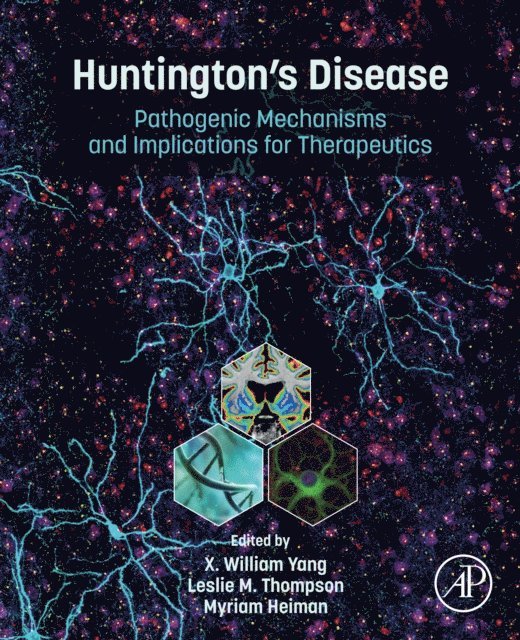
Huntington's Disease
Pathogenic Mechanisms and Implications for Therapeutics
AvX. William Yang,Myriam Heiman
Häftad, Engelska, 2024
1 479 kr
Beställningsvara. Skickas inom 10-15 vardagar. Fri frakt över 249 kr.
Fler format och utgåvor
Beskrivning
Huntington's disease (HD) is one of the most common dominantly inherited neurodegenerative disorders, characterized by a clinical triad of movement disorder, cognitive deficits, and psychiatric symptoms. Huntington’s Disease: Pathogenic Mechanisms and Implications for Therapeutics reviews the most up-do-date content on HD pathogenic mechanisms and cutting-edge thinking on therapeutic strategies for HD. Chapters explore areas that include the clinical features and genetic studies of HD, the cellular and molecular biology of normal huntingtin, a range of HD models, the diverse pathogenic mechanisms linked to mutant huntingtin, new approaches to HD pathogenesis, as well as emerging preclinical therapeutic approaches and clinical programs in the field.
- Reviews the clinical course and genetics of HD
- Reviews the biology of human huntingtin and HD-relevant cell types
- Reviews the wide range of pathobiology associated with mutant huntingtin
- Reviews genetic studies of HD and how these studies are informing the development of new therapeutic approaches
- Reviews new tools and model systems for basic and translational research in HD, including new human-derived model systems, as well as systems biology and artificial intelligence-driven approaches
- Provides an overview of new therapeutic approaches and current clinical programs in HD