• Fri frakt över 249 kr
  • •
  • Snabba leveranser
  • •
  • Billiga böcker
Kundservice

Du är på sajten för privatpersoner.

Företag, bibliotek eller offentlig verksamhet?

Du handlar på classic.bokus.com, där alla dina funktioner finns intakta.
Till classic.bokus.com
Bokus logotyp. Gå till startsidan.
  • Erbjudanden
  • Nyheter
  • Student
  • Topplistor
  • Barn & ungdom
  • Bokus Play
  • E-böcker
  • Pocketböcker
  • Spel & pussel

10% rabatt på allt med kod: NYSTART10 →

Sidfot

Mina sidor

    Hjälp

    • Kundservice
    • Vanliga frågor och svar
    • Frakt och leverans
    • Retur vid ångerrätt
    • Reklamera vara
    • Betalning
    • Köpvillkor
    • Allmänna villkor
    • Information om webbplatsens tillgänglighet

    Om Bokus

    • Om oss
    • Pressrum
    • För studenter
    • För företag
    • För bibliotek och offentlig verksamhet
    • För leverantörer
    • Hållbarhet

    Populärt

    • Aktuella erbjudanden
    • Presentkort
    • Studentlitteratur
    • Nya böcker
    • Topplistor
    • Signerade böcker
    • Engelska böcker

    Inspiration

    • Boktips
    • BookTok
    • Populära bokserier
    • Barnbokskaraktärer
    • Populära författare
    Logotyp för Bokus
    Följ oss på Facebook (extern länk)Följ oss på Instagram (extern länk)Följ oss på YouTube (extern länk)Följ oss på TikTok (extern länk)
    bokus @ CookiesAnpassa cookiesIntegritetspolicyKöpvillkor
    Till Citymail hemsida (extern länk)Till Budbee hemsida (extern länk)Till Postnord hemsida (extern länk)Till Schenker hemsida (extern länk)Till Early Bird hemsida (extern länk)Till Walleys hemsida (extern länk)
    1. Medicin
    2. Klinisk medicin och internmedicin
    3. Endokrinologi
    4. Medicin: diabetes

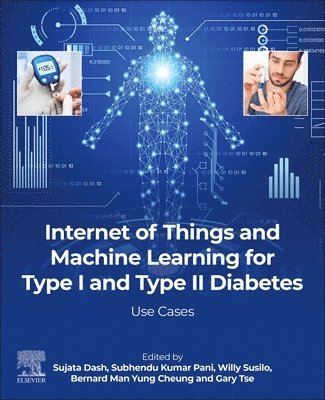
    Internet of Things and Machine Learning for Type I and Type II Diabetes

    Use cases

    AvSujata Dash,Subhendu Kumar Pani

    Häftad, Engelska, 2024

    1 620 kr

    Beställningsvara. Skickas inom 10-15 vardagar. Fri frakt över 249 kr.

    Beskrivning

    Internet of Things and Machine Learning for?Type I and Type II Diabetes: Use Cases provides a medium of exchange of expertise and addresses the concerns, needs, and problems associated with Type I and Type II diabetes. Expert contributions come from researchers across biomedical, data mining, and deep learning. This is an essential resource for both the AI and Biomedical research community, crossing various sectors for broad coverage of the concepts, themes, and instrumentalities of this important and evolving area. Coverage includes IoT, AI, Deep Learning, Machine Learning and Big Data Analytics for diabetes and health informatics.


    • Integrates many Machine learning techniques in biomedical domain to detect various types of diabetes to utilizing large volumes of available diabetes-related data for extracting knowledge
    • It integrates data mining and IoT techniques to monitor diabetes patients using their medical records (HER) and administrative data
    • Includes clinical applications to highlight contemporary use of these machine learning algorithms and artificial intelligence-driven models beyond research settings

    Produktinformation

    • Utgivningsdatum:2024-07-09
    • Mått:216 x 276 x undefined mm
    • Vikt:450 g
    • Format:Häftad
    • Språk:Engelska
    • Antal sidor:448
    • Förlag:Elsevier Science
    • ISBN:9780323956864

    Utforska kategorier

    • Medicin: diabetes inom Medicin
    • Systemvetenskap och AI inom Data och IT
    • Neurologi och klinisk neurofysiologi inom Medicin

    Mer om författaren

    Sujata Dash is a Professor of Information Technology at Nagaland University, India, and an IEEE Senior Member, with over three decades of academic and research experience. She holds a PhD in Computational Modeling and has also completed postdoctoral research at the University of Manitoba, Canada, where she later served as a Visiting Professor. Her research spans machine learning, deep learning, artificial intelligence, bioinformatics, natural language processing, and IoT, with applications across healthcare, data science, and smart systems. Dr. Dash has an extensive publication record with leading publishers including Elsevier, Springer, Wiley, and CRC Press, and serves on the editorial boards of several international journals. She has delivered keynote lectures and chaired sessions at numerous international conferences and has received several awards, including the Global Distinguished Award (IEEE IAS, 2023), Outstanding Scientist Award, and Best Researcher Award. Subhendu Kumar Pani received his PhD from Utkal University, Odisha, India, in 2013. He currently serves as Principal of Krupajal Engineering College, Bhubaneswar, India, and has over 17 years of teaching and research experience. A prolific author, he serves as Series Editor for CRC Press’ Advances in Computational Collective Intelligence, Apple Academic Press’ AAP Advances in Artificial Intelligence & Robotics, and Wiley-Scrivener’s Intelligent Data Analytics for Terror Threat Prediction, and is actively involved as an associate editor, editorial board member, and reviewer for several international journals. He also contributes to national and international conference communities. His research interests include data mining, big data analytics, web data analytics, fuzzy decision-making, and computational intelligence. He is a Fellow of SSARS (Canada) and a Life Member of several professional bodies, including IE, ISTE, ISCA, OBA, OMS, SMIACSIT, SMUACEE, and CSI. He has received multiple research awards in recognition of his contributions. Willy Susilo received his Ph.D. degree in Computer Science from the University of Wollongong, Australia. He is a Distinguished Professor the Head of the School of Computing and Information Technology and the director of the Institute of Cybersecurity and Cryptology (iC2) at the University of Wollongong. Recently, he was awarded an Australian Laureate Fellowship, which is the most prestigious award in Australia, due to his contribution in cloud computing security. He was previously awarded a prestigious ARC Future Fellow by the Australian Research Council (ARC) and the Researcher of the Year award in 2016 by the University of Wollongong. He is a Fellow of IEEE, Australian Computer Society (ACS), IET and AAAI. His main research interests include cybersecurity, cryptography and information security. His work has been cited more than 25,000 times in Google Scholar. He is the Editor-in-Chief of the Elsevier Computer Standards and Interfaces and the MDPI Information journal. He has served as a program committee member in dozens of international conferences. He is currently serving as an Associate Editor in several international journals, including IEEE Transactions in Dependable and Secure Computing. Previously, he has served in many top-tier journals, such as IEEE Transactions in Information Forensics and Security. He has published more than 500 research papers in the area of cybersecurity and cryptology. Bernard Cheung went to Sevenoaks School and studied Medicine at the University of Cambridge. He was Professor of Clinical Pharmacology and Therapeutics at the University of Birmingham before returning to Hong Kong and being appointed the Sun Chieh Yeh Heart Foundation Professor in Cardiovascular Therapeutics. He was a Consultant Physician of Queen Mary Hospital and the Director of the Phase 1 Clinical Trials Units in Queen Mary Hospital and the University of Hong Kong-Shenzhen Hospital. Currently, he is the Biotechnology Director in the Innovation and Technology Commission. He is also the President of the Federation of Medical Societies of Hong Kong and the Editor-in-Chief of Postgraduate Medical Journal. Prof Cheung’s main research interest is in cardiovascular diseases and risk factors, including hypertension and the metabolic syndrome. Gary Tse is a medical scientist focusing on personalized care, health informatics and big data analytics. He is a professor in Hong Kong Metropolitan University and holds a joint position as reader at the University of Kent and public health consultant at the Medway Council in local government, UK. He serves as a professor at the Department of Cardiology and principal investigator at the Tianjin Institute of Cardiology, Second Hospital of Tianjin Medical University, China. He is a visiting professor at the Faculty of Health and Medical Sciences, University of Surrey, and an honorary associate professor at the School of Pharmacy, University College London. He is an author of more than 500 scientific papers and an expert reviewer for >50 international journals in cardiology, cardiac electrophysiology, cardiovascular biology and epidemiology and five grant bodies from New Zealand, Poland, Sweden and the UK.

    Innehållsförteckning

    • Section 1: Diagnosis1. An Intelligent Diagnostic approach for diabetes Using rule-based Machine Learning techniques2. Ensemble Sparse Intelligent Mining Techniques for Diabetes Diagnosis3. Detection of Diabetic Retinopathy Using Neural Networks4. An Intelligent Remote Diagnostic Approach for Diabetes Using Machine Learning Techniques5. Diagnosis of Diabetic Retinopathy in Retinal Fundus Images Using Machine Learning and Deep Learning Models6. Diagnosis of Diabetes Mellitus using Deep Learning Techniques and Big DataSection 2: Glucose monitoring7. IoT and Machine Learning for Management of Diabetes Mellitus8. Prediction of glucose concentration in type 1 diabetes patients based on Machine learning techniques9. ML-Based PCA Methods to Diagnose Statistical Distribution of Blood Glucose Levels of Diabetic Patients Section 3: Prediction of complications and risk stratification10. Overview of New trends on deep learning models for diabetes risk prediction11. Clinical applications of deep learning in diabetes and its enhancements with future predictions12. Feature Classification and Extraction of Medical Data Related to Diabetes Using Machine Learning Techniques: A Review13. ML-based predictive model for type 2 diabetes mellitus using genetic and clinical data14. Applications of IoT and data mining techniques for diabetes monitoring15. Decision-making System for the Prediction of Type II Diabetes Using Data Balancing and Machine Learning Techniques16. Comparative Analysis of Machine Learning Tools in Diabetes Prediction17. Data Analytic models of patients dependent on insulin treatment18. Prediction of Diabetes using Hybridization of Radial Basis Function Network and Differential Evaluation based Optimization Technique19. An Overview of New Trends On Deep Learning Models For Diabetes Risk Prediction Section 4: Dialysis20. Progression and Identification of heart disease risk factors in diabetic patients from electronic health records21. An Intelligent Fog Computing-based Diabetes Prediction System for Remote Healthcare Applications22. Artificial intelligence approaches for risk stratification of diabetic kidney disease23. Computational Methods for predicting the occurrence of cardiac autonomic neuropathy24. Development of a Clinical Forecasting Model to Predict Comorbid Depression in Diabetes Patients and its Application in Policy Making for Depression ScreeningSection 5: Drug design and Treatment Response25. Enhancing Diabetic Maculopathy Classification through a Synergistic Deep Learning Approach by Combining Convolutional Neural Networks, Transfer Learning, and Attention Mechanisms26. Pharmacogenomics: the roles of genetic factors on treatment response and outcomes in diabetes27. Predicting treatment response in diabetes: the roles of machine learning-based models28. Antidiabetic Potential of Mangrove Plants: An Updated Review