• Fri frakt över 249 kr
  • •
  • Snabba leveranser
  • •
  • Billiga böcker
Kundservice

Du är på sajten för privatpersoner.

Företag, bibliotek eller offentlig verksamhet?

Du handlar på classic.bokus.com, där alla dina funktioner finns intakta.
Till classic.bokus.com
Bokus logotyp. Gå till startsidan.
  • Erbjudanden
  • Nyheter
  • Student
  • Topplistor
  • Barn & ungdom
  • Bokus Play
  • E-böcker
  • Pocketböcker
  • Spel & pussel

10% rabatt på allt med kod: NYSTART10 →

Sidfot

Mina sidor

    Hjälp

    • Kundservice
    • Vanliga frågor och svar
    • Frakt och leverans
    • Retur vid ångerrätt
    • Reklamera vara
    • Betalning
    • Köpvillkor
    • Allmänna villkor
    • Information om webbplatsens tillgänglighet

    Om Bokus

    • Om oss
    • Pressrum
    • För studenter
    • För företag
    • För bibliotek och offentlig verksamhet
    • För leverantörer
    • Hållbarhet

    Populärt

    • Aktuella erbjudanden
    • Presentkort
    • Studentlitteratur
    • Nya böcker
    • Topplistor
    • Signerade böcker
    • Engelska böcker

    Inspiration

    • Boktips
    • BookTok
    • Populära bokserier
    • Barnbokskaraktärer
    • Populära författare
    Logotyp för Bokus
    Följ oss på Facebook (extern länk)Följ oss på Instagram (extern länk)Följ oss på YouTube (extern länk)Följ oss på TikTok (extern länk)
    bokus @ CookiesAnpassa cookiesIntegritetspolicyKöpvillkor
    Till Citymail hemsida (extern länk)Till Budbee hemsida (extern länk)Till Postnord hemsida (extern länk)Till Schenker hemsida (extern länk)Till Early Bird hemsida (extern länk)Till Walleys hemsida (extern länk)
    1. Ekonomi och Ledarskap
    2. Nationalekonomi
    3. Internationell ekonomi

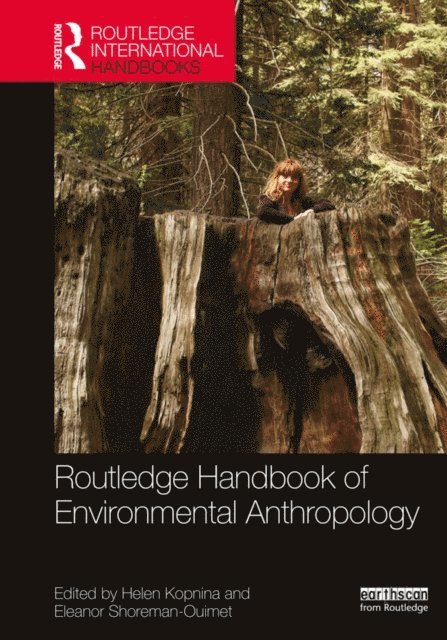
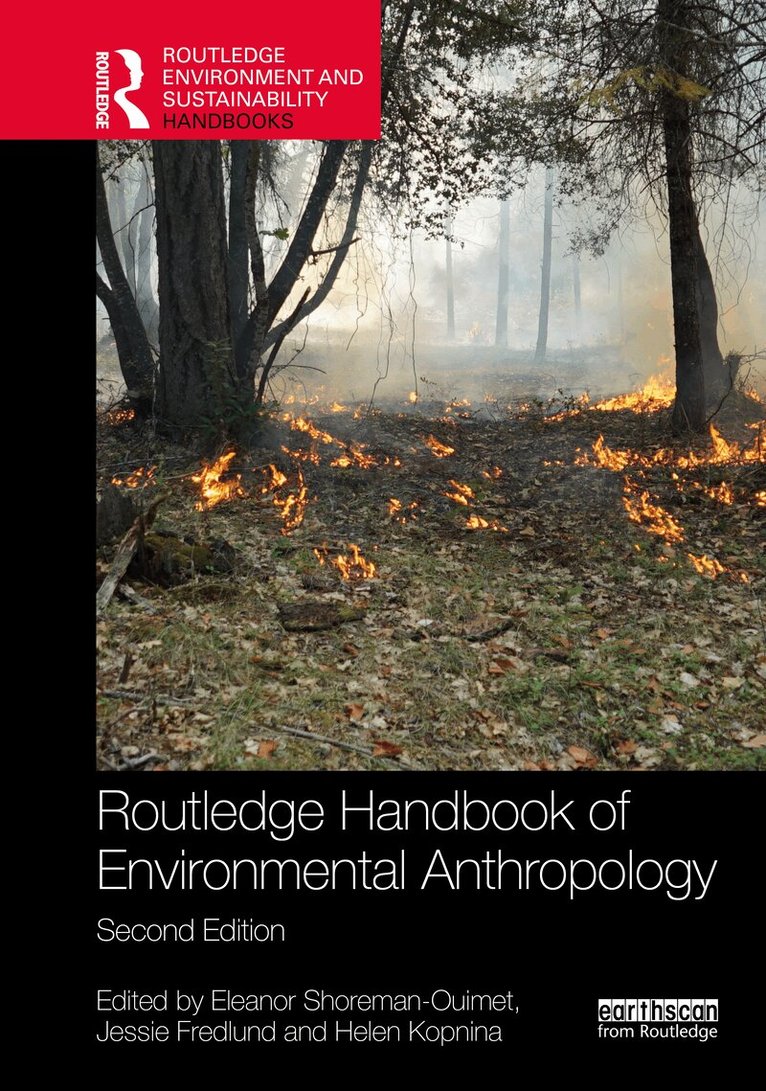
    Routledge Handbook of Environmental Anthropology

    AvEleanor Shoreman-Ouimet,Helen Kopnina

    Häftad, Engelska, 2019

    Del i serien Routledge Environment and Sustainability Handbooks

    751 kr

    Beställningsvara. Skickas inom 10-15 vardagar. Fri frakt över 249 kr.

    Beskrivning

    Environmental Anthropology studies historic and present human-environment interactions. This volume illustrates the ways in which today's environmental anthropologists are constructing new paradigms for understanding the multiplicity of players, pressures, and ecologies in every environment, and the value of cultural knowledge of landscapes. This Handbook provides a comprehensive survey of contemporary topics in environmental anthropology and thorough discussions on the current state and prospective future of the field in seven key sections. As the contributions to this Handbook demonstrate, the subfield of environmental anthropology is responding to cultural adaptations and responses to environmental changes in multiple and complex ways. As a discipline concerned primarily with human-environment interaction, environmental anthropologists recognize that we are now working within a pressure cooker of rapid environmental damage that is forcing behavioural and often cultural changes around the world. As we see in the breadth of topics presented in this volume, these environmental challenges have inspired renewed foci on traditional topics such as food procurement, ethnobiology, and spiritual ecology; and a broad new range of subjects, such as resilience, nonhuman rights, architectural anthropology, industrialism, and education. This volume enables scholars and students quick access to both established and trending environmental anthropological explorations into theory, methodology and practice.

    Produktinformation

    • Utgivningsdatum:2019-01-08
    • Mått:174 x 246 x 35 mm
    • Vikt:940 g
    • Format:Häftad
    • Språk:Engelska
    • Serie:Routledge Environment and Sustainability Handbooks
    • Antal sidor:508
    • Förlag:Taylor & Francis Ltd
    • ISBN:9780367027032

    Utforska kategorier

    • Internationell ekonomi inom Ekonomi och Ledarskap
    • Miljövetenskap och miljöpolitik inom Naturvetenskap och teknik
    • Miljöekonomi inom Ekonomi och Ledarskap

    Mer om författaren

    Helen Kopnina is assistant professor of environmental anthropology at the Institute of Cultural Anthropology and Development Sociology at Leiden University, the Netherlands. She is also a coordinator and lecturer within the Sustainable Business Program and researcher in the fields of environmental education and environmental social sciences at The Hague University of Applied Sciences, the Netherlands.Eleanor Shoreman-Ouimet is an environmental anthropologist and currently teaches in the Anthropology Department at the University of Connecticut, USA. Her research focuses on human–environment interactions, cross-cultural conservation practices, community response to natural hazards, and the effects of climate change.

    Recensioner i media

    "It is an informative and enlightening read for accomplished academics and new scholars in anthropology, ecology and conservation or similar related disciplines. Although geared primarily toward social anthropologists this book provides a plentiful source of up-to-date references and case studies for anyone with a general interest in environmental anthropology or wishing to delve deeper into associated subject areas, coming from a biological conservation or social science background. It offers a uniquely holistic overview of anthropology, taking as its point of departure pressing environmental challenges, whilst effectively conveying the message that anthropologists should look beyond their subject and adopt an interdisciplinary approach when exploring social and environmental issues."Hannah E.Parathian, Centre for Research in Anthropology, Lisbon.

    Innehållsförteckning

    • Part 1: The Development of Environmental Anthropology 1. Introduction 2. History and Scope of Environmental Anthropology 3. Ethnobiology and the New Environmental Anthropology 4. Anthropology and the Environment: Beginnings 5. Ethnoscientific implications of classification as a socio-cultural process Part 2: Investigations in sub-fields of environmental anthropology 6. Enviromateriality: Exploring the Links between Political Ecology and Material Culture Studies 7. Historical Ecology: Agency in Human-Environment Interaction 8. Architectural Anthropology: Developing methodological framework for Indigenous wellbeing 9. Beyond "nature": Towards more engaged and care-full ways of relating to the environment Part 3: Ecological Knowledge, Belief and Sustainability 10. An Anthropology of Nature – or an Industrialist Anthropology? 11. Spiritual Ecology, Sacred Places, and Biodiversity Conservation 12. The Bible, Religion, and the Environment 13. What’s ontology got to do with it? On the knowledge of nature and the nature of knowledge in environmental anthropology 14. Unsustainability in action: An ethnographic examination 15. Anthropological Approaches to Energy Part 4: Climate Change, Resilience and Vulnerability 16. Disasters and Their Impact: A Fundamental Feature of Environment 17. The Concepts of Adaptation, Vulnerability and Resilience in the Anthropology of Climate Change 18. Climate, Environment and Society in Northwest Greenland 19. Taking Responsibility for Climate Change: On Human Adaptation, Sustainable Consumption and Environmental Governance 20. Climate change adaptation and development planning: from resilience to transformation? Part 5: Justice, ethics, and governance 21. Justice for All: inconvenient truths and reconciliation in human-non-human relations 22. Environmental Ethics and Environmental Anthropology 23. Battle of the Ecologies–Deep vs. Political: An Investigation of Anthropocentrism in the Social Sciences 24. ‘Good governance’, corruption, and forest protection: critical insights from environmental anthropology 25. Cultural ecotourism as an indigenous modernity: Namibian Bushmen and two contradictions of capitalism Part 6: Health, Population, and Environment 26. Local and organic food movements 27. Anthropocentrism and the making of Environmental Health 28. Multi-Species Entanglements, Anthropology and Environmental Health Justice 29. Challenging the Conventional Wisdom: Breast Cancer and Environmental Health 30. Excessive Human Numbers in a World of Finite Limits: Confronting the Threshold of Collapse Part 7: Environment and Education 31. Children’s language about the environment 32. "You have to do it": Creating Agency for Environmental Sustainability through Experiential Education 33. Cognition and cultural modeling 34. Perceiving Nature’s Personhood: Anthropological Enhancements to Environmental Education 35. Schooling the World: Land-based pedagogies and the culture of schooling