• Fri frakt över 249 kr
  • •
  • Snabba leveranser
  • •
  • Billiga böcker
Kundservice

Du är på sajten för privatpersoner.

Företag, bibliotek eller offentlig verksamhet?

Du handlar på classic.bokus.com, där alla dina funktioner finns intakta.
Till classic.bokus.com
Bokus logotyp. Gå till startsidan.
  • Erbjudanden
  • Student
  • Topplistor
  • Barn & ungdom
  • Bokus Play
  • E-böcker
  • Ljudböcker
  • Pocketböcker
  • Spel och pussel

Skapa nya rutiner – hälsoböcker upp till 50% →

Sidfot

Mina sidor

    Hjälp

    • Kundservice
    • Vanliga frågor och svar
    • Frakt och leverans
    • Retur vid ångerrätt
    • Reklamera vara
    • Betalning
    • Köpvillkor
    • Allmänna villkor
    • Information om webbplatsens tillgänglighet

    Om Bokus

    • Om oss
    • Pressrum
    • För studenter
    • För företag
    • För bibliotek och offentlig verksamhet
    • För leverantörer
    • Hållbarhet

    Populärt

    • Aktuella erbjudanden
    • Presentkort
    • Studentlitteratur
    • Nya böcker
    • Topplistor
    • Signerade böcker
    • Engelska böcker

    Inspiration

    • Boktips
    • BookTok
    • Barnbokskaraktärer
    • Populära författare
    Logotyp för Bokus
    Följ oss på Facebook (extern länk)Följ oss på Instagram (extern länk)Följ oss på YouTube (extern länk)Följ oss på TikTok (extern länk)
    bokus @ CookiesAnpassa cookiesIntegritetspolicyKöpvillkor
    Till Citymail hemsida (extern länk)Till Budbee hemsida (extern länk)Till Postnord hemsida (extern länk)Till Schenker hemsida (extern länk)Till Early Bird hemsida (extern länk)Till Walleys hemsida (extern länk)
    1. Djur och Natur
    2. Naturböcker
    3. Växtböcker

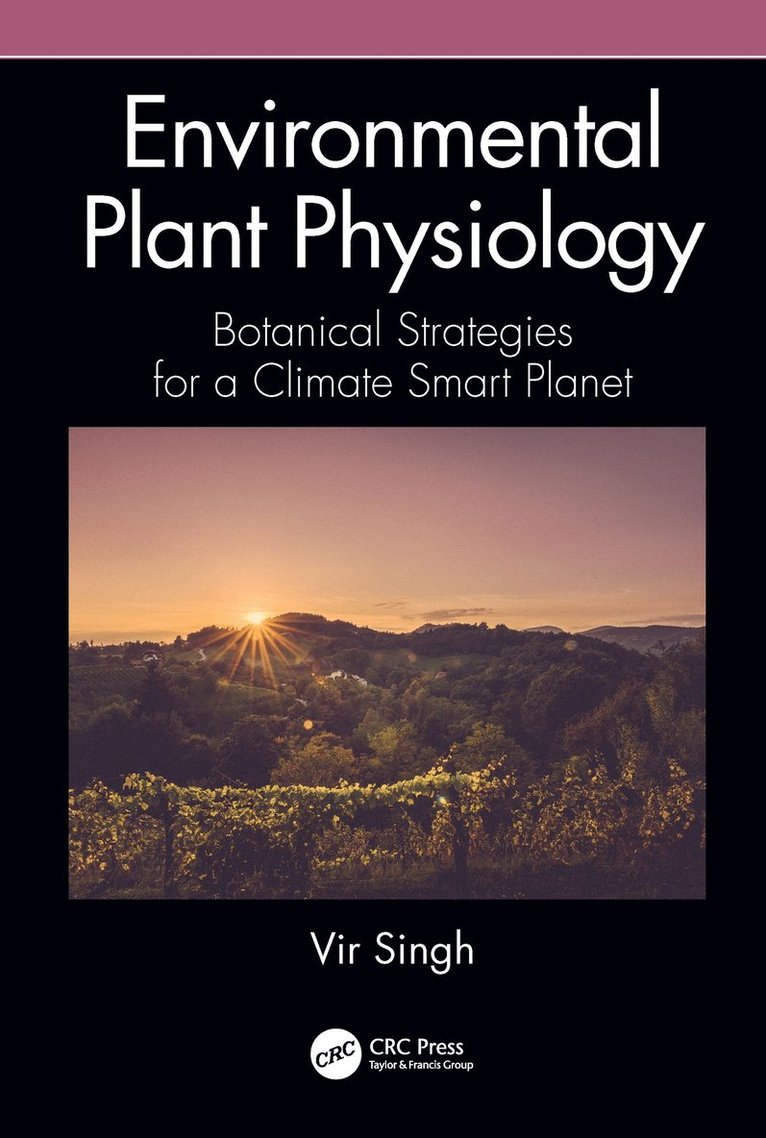
    Environmental Plant Physiology

    Botanical Strategies for a Climate Smart Planet

    AvVir Singh

    Inbunden, Engelska, 2020

    1 747 kr

    Beställningsvara. Skickas inom 10-15 vardagar. Fri frakt över 249 kr.

    Fler format och utgåvor

    E-bok

    989 kr

    E-bok

    989 kr

    Beskrivning

    Magnitude and quality of life as well as sustainable human progress inescapably depend on the state of our environment. The environment, in essence, is a common resource of all the living organisms in the biosphere as well as a vivacious basis of the evolution of life on Earth. A sustainable future broods over a sustainable environment—an environment encompassing life-originating, life-supporting, and life-sustaining uniqueness. A deteriorating environment haplessly sets in appalling conditions leading to shrinkage of life and a halt in human progress. The current global environment scenario is extremely dismal. Environmental disruptions, largely owing to anthropogenic activities, are steadily leading to awful climate change. Horribly advancing toward mass extinction in the near or distant future and posing a threat to our Living Planet, the unabatedly ongoing climate change, in fact, is an unprecedented issue of human concern about life in the recorded human history.How to get rid of the environmental mess and resolve environmental issues leading to climate change mitigation is the foremost challenge facing humanity in our times. There are several measures the whole world is resorting to. They are primarily focused on cutting down excessive carbon emissions by means of development of technological alternatives, for example, increasing mechanical efficiencies and ever-more dependence on clean-energy sources. These are of great importance, but there is yet a natural phenomenon that has been, and will unceasingly be, pivotal to maintain climate order of the Earth. For it to phenomenally boost, we need to explore deeper aspects of environmental science. It is the environmental plant physiology that links us with deeper roots of life.Environmental Plant Physiology: Botanical Strategies for a Climate-Smart Planet attempts to assimilate a relatively new subject that helps us understand the very phenomenon of life that persists in the planet’s environment and depends on, and is influenced by, a specific set of operating environmental factors. It is the subject that helps us understand adaptation mechanisms within a variety of habitats as well as the implications of the alterations of environmental factors on the inhabiting organisms, their populations, and communities. Further, this book can also be of vital importance for policy makers and organizations dealing with climate-related issues and committed to the cause of the earth. This book can be instrumental in formulating strategies that can lead us to a climate-smart planet.Features:• Provides ecological basis of environmental plant physiology• Discusses energy, nutrient, water, temperature, allelochemical, and altitude relations of plants• Reviews stress physiology of plants and plants’ adaptations to the changing climate• Examines climate-change effects on plant physiology• Elucidates evolving botanical strategies for a climate-smart planet

    Produktinformation

    • Utgivningsdatum:2020-02-03
    • Mått:178 x 254 x 18 mm
    • Vikt:453 g
    • Format:Inbunden
    • Språk:Engelska
    • Antal sidor:214
    • Förlag:Taylor & Francis Ltd
    • ISBN:9780367030421

    Utforska kategorier

    • Växtböcker inom Djur och Natur
    • Geovetenskap inom Naturvetenskap och teknik
    • Botanik inom Naturvetenskap och teknik

    Mer om författaren

    Dr. Vir Singh is Professor of Environmental Science at GB Pant University of Agriculture & Technology. He has more than three decades' experience of teaching and research in forest ecology, environmental science, agroecology, animal sciences, environmental physiology, and natural resources management. Holding triple Masters (M.Sc. Botany, M.Sc. Ag. Animal Nutrition, and M.A. Sociology) and dual Ph.D. degrees (Botany with specialization in Ecology, and Animal Sciences), he has been educated and trained in many universities and institutes: Meerut University (now Chaudhary Charan Singh University), GB Pant University of Agriculture & Technology, HNB Garhwal University, Indira Gandhi National Open University (IGNOU), MP Bhoj (O) University, and Galilee College in Israel (now GIMI, Israel). He has been a Research Fellow at International Centre for Integrated Mountain development (ICIMOD) based in Kathmandu and participated in courses in Geoinformatics at Friedrich Schiller University (FSU) based in Jena, Germany. He has worked on many projects in collaboration with international institutes including ICIMOD, ILRI and the INNO-ASIA project sponsored by the German Federal Ministry BMBF. He has conducted several national and international conferences, symposia and workshops. He has published several books, including recently in limelight, Fertilizing the Universe, and more than 200 research articles and book chapters. Prof. Vir Singh is also a Climate Reality Leader committed to creating awareness about the on-going climate change and its long-term implications on every walk of life and is also formulating programmes and projects for climate change mitigation.

    Recensioner i media

    Singh (Environmental Science, G. B. Pant University of Agriculture & Technology, India) has written a nine-chapter text summarizing the current and potential/future effects of climate change on plant environmental physiology. He presents a concise, highly distilled summary of major ideas and research for each chapter’s topics ("Environment and Ecosystems: Physiological Basis of Ecology," "Energy Relations," "Nutrient Relations," "Water Relations," "Temperature Relations," "Allelochemical Relations," "High-Altitude Physiology," "Stress Physiology," and "Physiological Effects of Climate Change"). The treatment does not concern only "wild plants" but also looks at agriculture, forestry, and general animal science topics. Each chapter concludes with a brief list of traditional resources for further reading, mostly summary articles and/or textbooks, including a section listing pertinent online resources (websites of reliable organizations and/or government organs). Each chapter contains various summarizing figures or tables, either of the author's own creation or based on ones found in the established literature, representing the relationships between plant growth and environmental factors. These characteristics together make the volume a summary reference for experienced scientists and not necessarily suitable for beginners.--S. T. Meiers, emerita, Western Illinois University, Choice, 2020 Vol. 58 No. 4

    Innehållsförteckning

    • ContentsPreface...............................................................................................................................................xiAcknowledgments .......................................................................................................................... xiiiAuthor ..............................................................................................................................................xvChapter 1 Environment and Ecosystems: Physiological Basis of Ecology ...................................1The Lumenosphere .......................................................................................................1The Biosphere ...............................................................................................................2The Organism-Environment Relationships ..................................................................3Energy and Nutrient Flows through Ecosystems ....................................................4Food Chains .............................................................................................................5Food Web .................................................................................................................6Ecological Pyramids ................................................................................................7Ecological Pyramid of Numbers ........................................................................7Ecological Pyramid of Biomass .........................................................................8Ecological Pyramid of Energy ...........................................................................9The Sixth Trophic Level ........................................................................................ 10The Seventh Trophic Level .................................................................................... 10What Is Environmental Physiology? .......................................................................... 11Climate and Its Changing Behavior ........................................................................... 12Scope of Environmental Plant Physiology ................................................................. 13Applications in Food Production ........................................................................... 13Environmental Physiology: The Basis for a Climate-Smart Planet ........................... 14Summary .................................................................................................................... 17References .................................................................................................................. 18Websites ...................................................................................................................... 18Chapter 2 Energy Relations ........................................................................................................ 19Energy and Life .......................................................................................................... 19Trophic Diversity in Nature ........................................................................................ 19The Light of Life ........................................................................................................20Leaf and Light ............................................................................................................ 21Leaf-Energy Balance .............................................................................................22Energy Inputs and Energy Outputs of a Leaf ...................................................24Net Radiation ....................................................................................................24Sensible Heat Loss (Conduction and Convection) ............................................25Latent and Chemical Energy ............................................................................25Photosynthetic Pathways ............................................................................................26C3 Photosynthesis ..................................................................................................27C4 Photosynthesis ..................................................................................................28CAM Photosynthesis .............................................................................................29E = mc2 in the Context of Earth’s Ecosystems...........................................................30Sun–Soil–Plant: The Evolutionary Ladder of Life .................................................... 31Photosynthesis and Soil Fertilization .................................................................... 32Energy from Inorganic Molecules ............................................................................. 33Energy from Organic Molecules ................................................................................ 35Chemical Composition vis-à-vis Nutrient Requirements ...................................... 35Herbivory ...............................................................................................................36Carnivory ...............................................................................................................36Detritivory ............................................................................................................. 37Energy Limitations .....................................................................................................38Optimal Foraging by Animals ..............................................................................38Optimal Foraging by Plants................................................................................... 39Energy Flow in the Biosphere .................................................................................... 39Summary .................................................................................................................... 41References .................................................................................................................. 42Websites ...................................................................................................................... 43Chapter 3 Nutrient Relations ....................................................................................................... 45The Pedosphere .......................................................................................................... 45Soil as an Ecosystem .................................................................................................. 45Diversity of the World’s Soils .....................................................................................46Soil Types .............................................................................................................. 47Soil Biodiversity .................................................................................................... 47Pedodiversity–Biodiversity Relations ....................................................................48Essential Elements ......................................................................................................49Sources of Plant Nutrients ..........................................................................................50Nutrient Availability for Plants .................................................................................. 51Interactions among Ions ............................................................................................. 51Cycles in the Soil ........................................................................................................ 53Ion-Uptake Physiology ...............................................................................................54Kinetics ..................................................................................................................54Internal Control ..................................................................................................... 58Morphological Responses .......................................................................................... 59Root:Shoot Ratio and Root:Weight Ratio .............................................................. 59Root Diameter and Root Hairs ..............................................................................60Root Density and Distribution ...............................................................................60Soil Microorganisms .................................................................................................. 61Rhizosphere ........................................................................................................... 61Impact on Nutrient Uptake .................................................................................... 62Nitrogen Fixation ................................................................................................... 62Influence of Environmental Factors ......................................................................63Mycorrhizas ...........................................................................................................64Summary ....................................................................................................................65References ..................................................................................................................66Websites ...................................................................................................................... 67Chapter 4 Water Relations ..........................................................................................................69The Water Planet as Home to Life .............................................................................69Water Properties Conducive to Life ...........................................................................69Water Availability to Organisms ................................................................................ 70Water in Air ........................................................................................................... 70Water Movement within Water .............................................................................. 71Water Potential ........................................................................................................... 72Plant Roots and Water Acquisition............................................................................. 74Water Relations of Plant Cells .................................................................................... 75Supply of Water by the Soil ........................................................................................ 76Water Planet a Climate-Smart Planet.........................................................................77Summary .................................................................................................................... 78References .................................................................................................................. 79Websites ...................................................................................................................... 79Chapter 5 Temperature Relations ................................................................................................ 81Microclimatic Variations and Temperatures .............................................................. 81Atmospheric Trends vis-à-vis Altitudes ..................................................................... 81Troposphere ...........................................................................................................84Stratosphere ...........................................................................................................85Mesosphere ............................................................................................................86Thermosphere ........................................................................................................86Exosphere ..............................................................................................................87Plant–Temperature Relations ......................................................................................87Ground Color and Temperatures ................................................................................88Vegetation and Temperatures .....................................................................................88Slope Aspects and Temperatures ...............................................................................89Aquatic Environments’ Temperatures ........................................................................89Photosynthesis in Extreme Temperatures ..................................................................90Solar Energy–Temperature Interaction ...................................................................... 91Temperature Regulation by Plants ............................................................................. 91Arctic and Alpine Plants ....................................................................................... 91Tropical Alpine Plants ...........................................................................................93Desert Plants ..........................................................................................................94Temperature Regulation by Thermogenic Plants ..................................................94Adaptation to Harsh Environments ............................................................................96Physiological Strategies for Cooling the Earth ..........................................................97Summary ....................................................................................................................99References ................................................................................................................ 100Websites .................................................................................................................... 101Chapter 6 Allelochemical Relations ......................................................................................... 103Competition among Plants ....................................................................................... 103Defining Competition .......................................................................................... 103Competition within Plant Populations ................................................................. 104Asymmetric Competition .................................................................................... 104Interspecific Competition: Mixed-Species Analysis ........................................... 105Allelopathy ............................................................................................................... 105Chemical Interactions among Plants ........................................................................ 106Nature of Allelopathy ............................................................................................... 107Allelopathic Plants ................................................................................................... 107Allelopathy Applications in Agriculture .................................................................. 109Cropping Systems’ Management ......................................................................... 109Mulching for Weed Control ................................................................................. 109Ecologically Healthy Agrochemicals and Microbial Pesticides ......................... 110Breeding the Allelopathic Cultivars .................................................................... 110Reducing NO3 Leaching and N2O Pollution........................................................ 111Allelopathic Mechanisms ......................................................................................... 111Effect on Soil Ecology ......................................................................................... 111Effect on Photosynthesis ..................................................................................... 111Effect on Respiration ........................................................................................... 112Effect on Enzyme Functions ............................................................................... 113Influence on Plant-Growth Regulator System ..................................................... 113Effect on Antioxidant System .............................................................................. 114Effect on Protein and Nucleic-Acid Synthesis .................................................... 114Effect on Water and Nutrient Uptake .................................................................. 114Effect on Cell Division and Elongation ............................................................... 114Phytosociology for a Greener Planet ........................................................................ 117Summary .................................................................................................................. 118References ................................................................................................................ 119Websites .................................................................................................................... 120Chapter 7 High-Altitude Physiology ......................................................................................... 121Altitude Types from Sea Level ................................................................................. 121High-Altitude Specificities ....................................................................................... 122Diverse Ecological Niches ................................................................................... 122Biodiversity .......................................................................................................... 123Fragility ............................................................................................................... 123Adaptation Mechanisms ...................................................................................... 125Marginality .......................................................................................................... 125Poor Accessibility ................................................................................................ 126High-Altitude Plant Ecology .................................................................................... 126Effects of Altitudes on the Physiology of the Plants ................................................ 128Photosynthesis ..................................................................................................... 128Respiration ........................................................................................................... 130Transpiration ........................................................................................................ 130Chlorophyll Destruction ...................................................................................... 131Resistance to Ultraviolet Radiation ..................................................................... 131Frost Resistance ................................................................................................... 132Water Balance and Avoidance of Desiccation ..................................................... 132Growth and Development .................................................................................... 133High Altitudes: Cooling Breeze for Cooling the Mainstream World ...................... 134Summary .................................................................................................................. 135References ................................................................................................................ 137Websites .................................................................................................................... 138Chapter 8 Stress Physiology ...................................................................................................... 139Stress to Life as an Inevitable Phenomenon ............................................................. 139Solar-Radiation Stress .............................................................................................. 140Temperature Stress ................................................................................................... 141Effects on Photosynthesis and Respiration.......................................................... 141Effect on Membranes and Enzymes .................................................................... 141Effects of Freezing Temperatures........................................................................ 142Stress of Oxygen Deficiency .................................................................................... 142Molecular Genetics Aspects of Oxygen-Deficiency Stress ................................. 143Root Damage in Anoxic Environments ............................................................... 144Effect of Anoxia-Damaged Roots on Shoots ...................................................... 145Synthesis of Anaerobic Stress Proteins ............................................................... 145Salinity Stress ........................................................................................................... 145Effect on Photosynthesis and Growth ................................................................. 146Osmotic and Specific Ion Effects ........................................................................ 147Plants’ Strategies of Saline Stress Management ................................................. 147Heat Stress ................................................................................................................ 148Water Deficit and Heat Stress .............................................................................. 148Effect on Photosynthesis and Respiration ........................................................... 148Effect on Cell Membrane .................................................................................... 149Adaptation Mechanisms against Heat Stress ...................................................... 149Low-Temperature Stress ........................................................................................... 150Chilling Effects on Cell Membrane .................................................................... 150Tolerance to Cold Stress ...................................................................................... 151Pollution Stress on Ecosystems ................................................................................ 153Heavy-Metal Stress .................................................................................................. 154Reactive Oxygen Species ..................................................................................... 154Inactivation of Biomolecules ............................................................................... 155Primary Stress ..................................................................................................... 155Secondary Stress ................................................................................................. 155Signal Transduction ............................................................................................. 155Effects on Cellular Components .......................................................................... 155Heavy-Metal Detoxification Methods ................................................................. 155Vacuolar Compartmentalization.......................................................................... 157Pollution Stress Impacts on Ecological Processes ................................................... 157Water Stress .............................................................................................................. 158The Etiology of Water Stress ............................................................................... 159Multidimensional Nature of Water Stress ........................................................... 159Morphological, Anatomical, and Cytological Changes ................................. 160Photosynthesis ................................................................................................ 160Protein Synthesis ............................................................................................ 161Proline Accumulation ..................................................................................... 161Lipids .............................................................................................................. 162Mineral Nutrition ............................................................................................ 162Abscisic Acid Accumulation .......................................................................... 162Oxidative Stress .............................................................................................. 162Summary .................................................................................................................. 163References ................................................................................................................ 164Websites .................................................................................................................... 166Chapter 9 Physiological Effects of Climate Change ................................................................. 167Living in an Age of Climate Change ....................................................................... 167The Factors Affecting the Earth’s Climate .............................................................. 168Enhanced Greenhouse Effect ................................................................................... 169Overriding the Earth’s Potencies .............................................................................. 171Impact of Climate Change on Plant Physiology ...................................................... 173Microevolutionary Responses of Plant Physiology to Climate Change .............. 175Phenotypic Plasticity ...................................................................................... 176Adaptive Evolution ......................................................................................... 176Gene Flows ..................................................................................................... 176Macroevolutionary Responses of Plant Physiology to Climate Change ............. 177Species Interactions and the Evolution of Plant Physiology in Response toClimate Change ........................................................................................................ 179Effects of Climate Change on Forest Ecosystems ................................................... 180Forest Productivity .............................................................................................. 180Forest Distribution ............................................................................................... 181Forest Ecosystem Disturbances ........................................................................... 181Forest Pests .......................................................................................................... 182Impact on Forest Community .............................................................................. 182Climate Change and Agriculture ............................................................................. 183Coping with Climate Change ................................................................................... 189Preparedness ........................................................................................................ 189Adaptation ........................................................................................................... 190Mitigation ............................................................................................................ 190Climate-Smart Planet: A Sustainable Planet ........................................................... 191Ecological Integrity and Ecological Security ...................................................... 191Living Soil to Nurture the Roots of Life ............................................................. 192Forests for a Healthy, Vibrant, and Sustainable Planet ....................................... 193Climate-Smart Agriculture ...................................................................................... 196Why an Agroecosystem Approach to Food Production? .................................... 197Agroecology: The Philosophy of Food Production ............................................. 198Enhanced Biodiversity Complexity ................................................................ 199Treating Soil as an Ecosystem ........................................................................ 199Maintaining Cyclic Flows of Nutrients .......................................................... 199Vegetarianism: The Philosophy of Earth-Caring Nutrition ..................................... 201Summary ..................................................................................................................203References ................................................................................................................204Websites ....................................................................................................................207Index ..............................................................................................................................................209
    Hoppa över listan

    Mer från samma författare

    Vir Singh, Vijay Kumar Sharma, Shobhika Parmar - Microplastics in Marine Ecosystem, E-bok

    Microplastics in Marine Ecosystem

    Vir Singh, Vijay Kumar Sharma, Shobhika Parmar

    E-bok
    2023

    874 kr

    Vir Singh, Vijay Kumar Sharma, Shobhika Parmar - Microplastics in Marine Ecosystem, E-bok

    Microplastics in Marine Ecosystem

    Vir Singh, Vijay Kumar Sharma, Shobhika Parmar

    E-bok
    2023

    872 kr

    Shobhika Parmar, Vijay Kumar Sharma, Vir Singh - Microplastics in Marine Ecosystem, Inbunden

    Microplastics in Marine Ecosystem

    Shobhika Parmar, Vijay Kumar Sharma, Vir Singh

    Inbunden, 2023

    2 101 kr

    Shobhika Parmar, Vijay Kumar Sharma, Vir Singh - Microplastics in Marine Ecosystem, Häftad

    Microplastics in Marine Ecosystem

    Shobhika Parmar, Vijay Kumar Sharma, Vir Singh

    Häftad, 2025

    731 kr

    Vir Singh - All Is Mind, E-bok

    All Is Mind

    Vir Singh

    E-bok
    2014

    64 kr

    Vir Singh - All Is Mind, Häftad

    All Is Mind

    Vir Singh

    Häftad, 2014

    156 kr

    Vir Singh - All Is Mind, Inbunden

    All Is Mind

    Vir Singh

    Inbunden, 2014

    214 kr

    Vir Singh - Fertilizing the Universe, Inbunden

    Fertilizing the Universe

    Vir Singh

    Inbunden, 2019

    1 549 kr

    Vir Singh - Jerry Spintser's Amazing Adventure, Häftad

    Jerry Spintser's Amazing Adventure

    Vir Singh

    Häftad, 2020

    228 kr

    Vir Singh - Biodiversity, Inbunden

    Biodiversity

    Vir Singh

    Inbunden, 2023

    3 197 kr

    Hoppa över listan

    Du kanske också är intresserad av

    Vir Singh - Environmental Plant Physiology, E-bok

    Environmental Plant Physiology

    Vir Singh

    E-bok
    2020

    989 kr

    Vir Singh - Environmental Plant Physiology, E-bok

    Environmental Plant Physiology

    Vir Singh

    E-bok
    2020

    989 kr

    Shobhika Parmar, Vijay Kumar Sharma, Vir Singh - Microplastics in Marine Ecosystem, Inbunden

    Microplastics in Marine Ecosystem

    Shobhika Parmar, Vijay Kumar Sharma, Vir Singh

    Inbunden, 2023

    2 101 kr

    Vir Singh - Biodiversity, Inbunden

    Biodiversity

    Vir Singh

    Inbunden, 2023

    3 197 kr

    Vir Singh, R. K. Srivastava, Arvind Kumar Bhatt - Battling Air and Water Pollution, Inbunden

    Battling Air and Water Pollution

    Vir Singh, R. K. Srivastava, Arvind Kumar Bhatt

    Inbunden, 2025

    1 715 kr

    Vir Singh, R. K. Srivastava, Arvind Kumar Bhatt - Battling Air and Water Pollution, Häftad

    Battling Air and Water Pollution

    Vir Singh, R. K. Srivastava, Arvind Kumar Bhatt

    Häftad, 2026

    1 715 kr

    Arvind Kumar Bhatt, R. K. Srivastava, Vir Singh - Battling Air and Water Pollution, E-bok

    Battling Air and Water Pollution

    Arvind Kumar Bhatt, R. K. Srivastava, Vir Singh

    E-bok
    2025

    2 267 kr

    Vir Singh, Vijay Kumar Sharma, Shobhika Parmar - Microplastics in Marine Ecosystem, E-bok

    Microplastics in Marine Ecosystem

    Vir Singh, Vijay Kumar Sharma, Shobhika Parmar

    E-bok
    2023

    872 kr

    Vir Singh - All Is Mind, Häftad

    All Is Mind

    Vir Singh

    Häftad, 2014

    156 kr

    Vir Singh - Fertilizing the Universe, Inbunden

    Fertilizing the Universe

    Vir Singh

    Inbunden, 2019

    1 549 kr