• Fri frakt över 249 kr
  • •
  • Snabba leveranser
  • •
  • Billiga böcker
Kundservice

Du är på sajten för privatpersoner.

Företag, bibliotek eller offentlig verksamhet?

Du handlar på classic.bokus.com, där alla dina funktioner finns intakta.
Till classic.bokus.com
Bokus logotyp. Gå till startsidan.
  • Erbjudanden
  • Nyheter
  • Student
  • Topplistor
  • Barn & ungdom
  • Bokus Play
  • E-böcker
  • Pocketböcker
  • Spel & pussel

10% rabatt på allt med kod: NYSTART10 →

Sidfot

Mina sidor

    Hjälp

    • Kundservice
    • Vanliga frågor och svar
    • Frakt och leverans
    • Retur vid ångerrätt
    • Reklamera vara
    • Betalning
    • Köpvillkor
    • Allmänna villkor
    • Information om webbplatsens tillgänglighet

    Om Bokus

    • Om oss
    • Pressrum
    • För studenter
    • För företag
    • För bibliotek och offentlig verksamhet
    • För leverantörer
    • Hållbarhet

    Populärt

    • Aktuella erbjudanden
    • Presentkort
    • Studentlitteratur
    • Nya böcker
    • Topplistor
    • Signerade böcker
    • Engelska böcker

    Inspiration

    • Boktips
    • BookTok
    • Populära bokserier
    • Barnbokskaraktärer
    • Populära författare
    Logotyp för Bokus
    Följ oss på Facebook (extern länk)Följ oss på Instagram (extern länk)Följ oss på YouTube (extern länk)Följ oss på TikTok (extern länk)
    bokus @ CookiesAnpassa cookiesIntegritetspolicyKöpvillkor
    Till Citymail hemsida (extern länk)Till Budbee hemsida (extern länk)Till Postnord hemsida (extern länk)Till Schenker hemsida (extern länk)Till Early Bird hemsida (extern länk)Till Walleys hemsida (extern länk)
    1. Historia och arkeologi
    2. Historia
    3. Forntidens historia

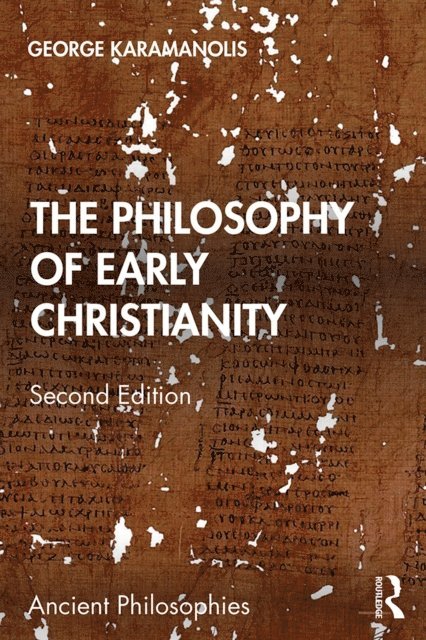
    Philosophy of Early Christianity

    AvGeorge Karamanolis

    Häftad, Engelska, 2021

    Del i serien Ancient Philosophies

    610 kr

    Beställningsvara. Skickas inom 10-15 vardagar. Fri frakt över 249 kr.

    Fler format och utgåvor

    Inbunden

    2 421 kr

    E-bok

    721 kr

    E-bok

    690 kr

    Beskrivning

    This new edition introduces the reader to the philosophy of early Christianity in the second to fourth centuries AD, and contextualizes the philosophical contributions of early Christians in the framework of the ancient philosophical debates.It examines the first attempts of Christian thinkers to engage with issues such as questions of cosmogony and first principles, freedom of choice, concept formation, and the body–soul relation, as well as later questions like the status of the divine persons of the Trinity. It also aims to show that the philosophy of early Christianity is part of ancient philosophy as a distinct school of thought, being in constant dialogue with the ancient philosophical schools, such as Platonism, Aristotelianism, Stoicism, and even Epicureanism and Scepticism. This book examines in detail the philosophical views of Christian thinkers such as Justin Martyr, Clement of Alexandria, Irenaeus, Tertullian, Origen, Basil, and Gregory of Nyssa, and sheds light in the distinct ways they conceptualized traditional philosophical issues and made some intriguing contributions. The book’s core chapters survey the central philosophical concerns of the early Christian thinkers and examines their contributions. These range across natural philosophy, metaphysics, logic and epistemology, psychology, and ethics, and include such questions as how the world came into being, how God relates to the world, the status of matter, how we can gain knowledge, in what sense humans have freedom of choice, what the nature of soul is and how it relates to the body, and how we can attain happiness and salvation. This revised edition takes into account the recent developments in the area of later ancient philosophy, especially in the philosophy of Early Christianity, and integrates them in the relevant chapters, some of which are now heavily expanded. The Philosophy of Early Christianity remains a crucial introduction to the subject for undergraduate and postgraduate students of ancient philosophy and early Christianity, across the disciplines of classics, history, and theology.

    Produktinformation

    • Utgivningsdatum:2021-05-31
    • Mått:156 x 234 x 22 mm
    • Vikt:480 g
    • Format:Häftad
    • Språk:Engelska
    • Serie:Ancient Philosophies
    • Antal sidor:278
    • Upplaga:2
    • Förlag:Taylor & Francis Ltd
    • ISBN:9780367146306

    Utforska kategorier

    • Forntidens historia inom Historia och arkeologi
    • Religion: allmänt inom Filosofi och religion
    • Filosofiska discipliner inom Filosofi och religion

    Mer om författaren

    George Karamanolis is Associate Professor in the Department of Philosophy, University of Vienna, Austria. His publications include Plato and Aristotle in Agreement? Platonists on Aristotle from Antiochus to Porphyry (2006; revised paperback, 2013), Studies on Porphyry (2007, ed. with Anne Sheppard), The Aporetic Tradition in Ancient Philosophy (2017, ed. with Vasilis Politis), Pseudo-Aristotle: De Mundo (On the Cosmos): A Commentary (2020, ed. with Pavel Gregoric).

    Recensioner i media

    "Karamanolis has breathed new life into the study of the role of philosophy in Early Christianity, and it is to be hoped that this work will strengthen the momentum towards new scholarship, among scholars working on Ancient Philosophy as well, that also revisits the hardest questions." - Rhizomata"...The work is a highly useful and valuable contribution both to the field of early Christian studies and to ancient philosophy in general, particularly the latter. K. provides an excellent introduction to a corner of the intellectual milieu in the ancient world that is often unrecognised or even dismissed, when in fact the rise of Christian thought would play a role in the development of non-Christian philosophy." - The Classical Review

    Innehållsförteckning

    • Preface to the Second Edition; Preface to the First Edition; Abbreviations; Introduction; Chapter 1, The Christian Conception of Philosophy and Christian Philosophical Methodology; Chapter 2, Physics and Metaphysics: First Principles and The Question of Cosmogony; Chapter 3, Logic and Epistemology; Chapter 4, Free Will and Divine Providence; Chapter 5, Psychology: The Soul and Its Relation to The Body; Chapter 6, Ethics and Politics; Conclusion; Appendix, The Protagonists; Bibliography