• Fri frakt över 249 kr
  • •
  • Snabba leveranser
  • •
  • Billiga böcker
Kundservice

Du är på sajten för privatpersoner.

Företag, bibliotek eller offentlig verksamhet?

Du handlar på classic.bokus.com, där alla dina funktioner finns intakta.
Till classic.bokus.com
Bokus logotyp. Gå till startsidan.
  • Erbjudanden
  • Nyheter
  • Student
  • Topplistor
  • Barn & ungdom
  • Bokus Play
  • E-böcker
  • Pocketböcker
  • Spel & pussel

Må bättre, för mindre! Upp till 50% rabatt på hälsoböcker

Sidfot

Mina sidor

    Hjälp

    • Kundservice
    • Vanliga frågor och svar
    • Frakt och leverans
    • Retur vid ångerrätt
    • Reklamera vara
    • Betalning
    • Köpvillkor
    • Allmänna villkor
    • Information om webbplatsens tillgänglighet

    Om Bokus

    • Om oss
    • Pressrum
    • För studenter
    • För företag
    • För bibliotek och offentlig verksamhet
    • För leverantörer
    • Hållbarhet

    Populärt

    • Aktuella erbjudanden
    • Presentkort
    • Studentlitteratur
    • Nya böcker
    • Topplistor
    • Signerade böcker
    • Engelska böcker

    Inspiration

    • Boktips
    • BookTok
    • Populära bokserier
    • Barnbokskaraktärer
    • Populära författare
    Logotyp för Bokus
    Följ oss på Facebook (extern länk)Följ oss på Instagram (extern länk)Följ oss på YouTube (extern länk)Följ oss på TikTok (extern länk)
    bokus @ CookiesAnpassa cookiesIntegritetspolicyKöpvillkor
    Till Citymail hemsida (extern länk)Till Budbee hemsida (extern länk)Till Postnord hemsida (extern länk)Till Schenker hemsida (extern länk)Till Early Bird hemsida (extern länk)Till Walleys hemsida (extern länk)
    1. Psykologi och pedagogik
    2. Psykologi
    3. Psykologiska teorier och skolor
    4. Freudiansk psykologi

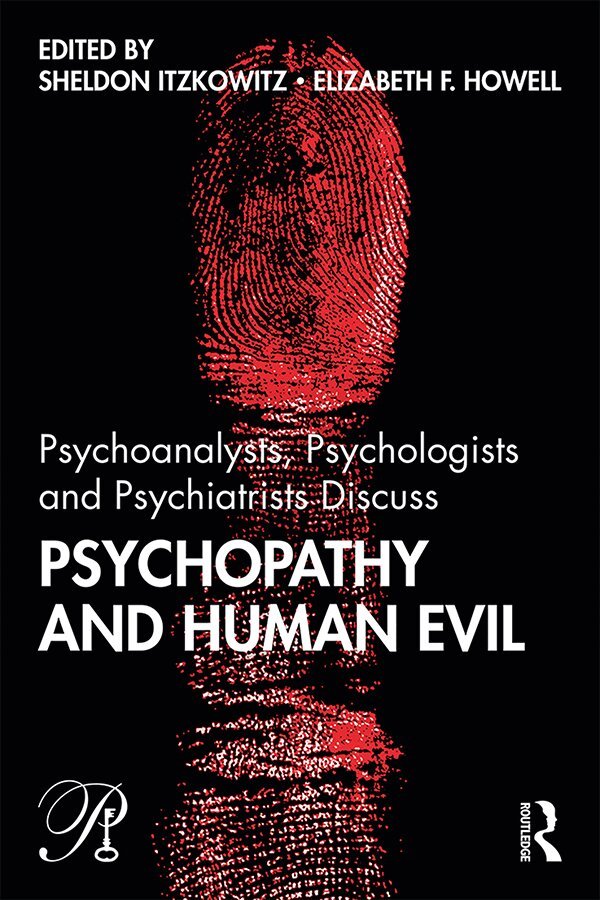
    Psychoanalysts, Psychologists and Psychiatrists Discuss Psychopathy and Human Evil

    AvSheldon Itzkowitz,Elizabeth Howell

    Inbunden, Engelska, 2019

    Del i serien Psychoanalysis in a New Key Book Series

    2 117 kr

    Beställningsvara. Skickas inom 10-15 vardagar. Fri frakt över 249 kr.

    Beskrivning

    Evil - along with its incarnation in human form, the psychopath - remains underexamined in the psychological and psychoanalytic literature. Given current societal issues ranging from increasingly violent cultural divides to climate change, it is imperative that the topics of psychopathy and human evil be thoughtfully explored.The book brings together social scientists, psychologists, and psychoanalysts to discuss the psychology of psychopaths, and the personal, societal and cultural destruction they leave as their legacy. Chapters address such questions as: Who are psychopaths? How do they think and operate? What causes someone to commit psychopathic acts? And are psychopaths born or created? Psychopaths leave us shocked and bewildered by behavior that violates the notions of common human trust and bonding, but not all psychopaths commit crimes. Because of their unique proclivities to deceive, seduce, and dissemble, they can hide in plain sight; especially when intelligent and highly educated. This latter group comprise the "successful or corporate" psychopaths, frequently found in boardrooms of corporations and among leaders of national movements or heads of state.Addressing a wide range of topics including slavery, genocide, the Holocaust, the individual as psychopath, the mind of the terrorist, sexual abuse, the role of attachment and the neurobiology of psychopathy, this book will appeal to researchers of human evil and psychopathy from a range of different disciplines and represents essential reading for psychotherapists and clinical psychologists.

    Produktinformation

    • Utgivningsdatum:2019-11-19
    • Mått:156 x 234 x 20 mm
    • Vikt:710 g
    • Format:Inbunden
    • Språk:Engelska
    • Serie:Psychoanalysis in a New Key Book Series
    • Antal sidor:298
    • Förlag:Taylor & Francis Ltd
    • ISBN:9780367205829

    Utforska kategorier

    • Freudiansk psykologi inom Psykologi och pedagogik
    • Psykoterapi som behandlingsmetod inom Medicin

    Mer om författaren

    Sheldon Itzkowitz, Ph.D., ABPP, Adjunct clinical associate professor of psychology and clinical consultant at New York University (NYU); guest faculty, the William Alanson White Institute; and faculty of the National Institute for the Psychotherpaies (NIP) and the Manhattan Institute of Psychoanalysis. A Fellow of the International Society for the Study of Trauma and Dissociation (ISSTD), he co-edited The Dissociative Mind in Psychoanalysis: Understanding and Working with Trauma.Elizabeth F. Howell, Ph.D., is an adjunct clinical associate professor of psychology at NYU; faculty and clinical consultant at Manhattan Institute of Psychoanalysis; and fellow of ISSTD. She is the author of The Dissociative Mind and Understanding and Treating Dissociative Identity Disorder: A Relational Approach and co-editor of The Dissociative Mind in Psychoanalysis: Understanding and Working with Trauma.

    Recensioner i media

    "Scholars have studied human destructiveness from a public health perspective. Others have recorded the devastating dynamics at the individual level. Dr. Itzkowitz and Dr. Howell bring these perspectives together with insight and eloquence. From an analysis of psychopathic persons as "outsiders to love," contributors speak to the historical, cultural, and even genocidal aspects of psychopathic behavior, all the while offering the reader an uncommon glimpse of the internal experience. In this day when psychopathic personality has the potential to pair with ever greater power, this discerning volume offers a critically needed understanding." --Bandy X. Lee, MD, MDiv, Yale School of Medicine Law and Psychiatry Division"This is a cutting-edge work, an eye-opener. Itzkowitz and Howell, themselves significant contributors to the psychoanalytic literature on psychopathy, encourage us not to limit our definition of psychopathic behavior to the kinds of heinous acts that are reported in the newspapers, but to include evil, noncriminal activities of any kind. Virtually every scholar and clinician who has had something original to say about psychopathy is represented here. This book will be necessary for veterans in its field, and because it so straightforwardly addresses a notoriously difficult subject, it will be crucial to the beginner. It will be widely studied by psychoanalysts, but its appeal will extend to clinicians of every theoretical stripe." --Donnel B. Stern, Ph.D., William Alanson White Institute

    Innehållsförteckning

    • AcknowledgementsEditors and ContributorsBrief Descriptions of Chapters by Sheldon Itzkowitz, Ph.D. & Elizabeth F. Howell, Ph.D.Introduction by Elizabeth F. Howell, Ph.D. & Sheldon Itzkowitz, Ph.D.Chapter One: Psychopathy and Human Evil: An Overview by Sheldon Itzkowitz, Ph.D.Chapter Two: Outsiders to Love: The Psychopathic Character and Dilemma by Elizabeth F. Howell, Ph.D.Chapter Three: Sexual Desire, Violent Death, and the True Believer by J. Reid Meloy, Ph.D.Chapter Four: The Place of Psychopathy Along the Spectrum of Negative Personality Types. by Michael H. Stone, MDChapter Five: The Perpetrators: The Receivers and Transmitters of Evil by Valerie Sinason, Ph.D.Chapter Six: The Other Within: White Shame, Native-American Genocide by Sue Grand, Ph.D.Chapter Seven: American Hierarchy: White, "Good"; Black, "Evil" by Cleonie White, Ph.D.Chapter Eight: Sympathy for the Devil: Evil, Social Process, and Intelligibility by Robert Prince, Ph.D.Chapter Nine: Die Hitler In UNS (The Hitler in US): Evil and The Psychoanalytic Situation by Emily A. Kuriloff, Psy.D.Chapter Ten: Dissociation and Counterdissociation: Nuanced and Binary Perceptions of Good and Evil by Richard B. Gartner, Ph.D.Chapter Eleven: Dancing With The Devil: A Personal Essay On My Encounters with Sexual Abuse in the Catholic Church by Mary Gail Frawley-O’Dea, PhD.Chapter Twelve: The Developmental Roots of Psychopathy: An Attachment Perspective by Adriano Schimmenti, Ph.D.Chapter Thirteen: The Murder of Laius by Neville Symington, Ph.D.Chapter Fourteen: Psychopaths and the Neurobiology of Evil by Nathalie Gauthier, M.A., Tabitha Methot-Jones, Angela Book, Ph.D., & J. Reid Meloy, Ph.D.