• Fri frakt över 249 kr
  • •
  • Snabba leveranser
  • •
  • Billiga böcker
Kundservice

Du är på sajten för privatpersoner.

Företag, bibliotek eller offentlig verksamhet?

Du handlar på classic.bokus.com, där alla dina funktioner finns intakta.
Till classic.bokus.com
Bokus logotyp. Gå till startsidan.
  • Erbjudanden
  • Nyheter
  • Student
  • Topplistor
  • Barn & ungdom
  • Bokus Play
  • E-böcker
  • Pocketböcker
  • Spel & pussel

10% studentrabatt med kod TERM26

Sidfot

Mina sidor

    Hjälp

    • Kundservice
    • Vanliga frågor och svar
    • Frakt och leverans
    • Retur vid ångerrätt
    • Reklamera vara
    • Betalning
    • Köpvillkor
    • Allmänna villkor
    • Information om webbplatsens tillgänglighet

    Om Bokus

    • Om oss
    • Pressrum
    • För studenter
    • För företag
    • För bibliotek och offentlig verksamhet
    • För leverantörer
    • Hållbarhet

    Populärt

    • Aktuella erbjudanden
    • Presentkort
    • Studentlitteratur
    • Nya böcker
    • Topplistor
    • Signerade böcker
    • Engelska böcker

    Inspiration

    • Boktips
    • BookTok
    • Populära bokserier
    • Barnbokskaraktärer
    • Populära författare
    Logotyp för Bokus
    Följ oss på Facebook (extern länk)Följ oss på Instagram (extern länk)Följ oss på YouTube (extern länk)Följ oss på TikTok (extern länk)
    bokus @ CookiesAnpassa cookiesIntegritetspolicyKöpvillkor
    Till Citymail hemsida (extern länk)Till Budbee hemsida (extern länk)Till Postnord hemsida (extern länk)Till Schenker hemsida (extern länk)Till Early Bird hemsida (extern länk)Till Walleys hemsida (extern länk)
    1. Psykologi och pedagogik
    2. Psykologi

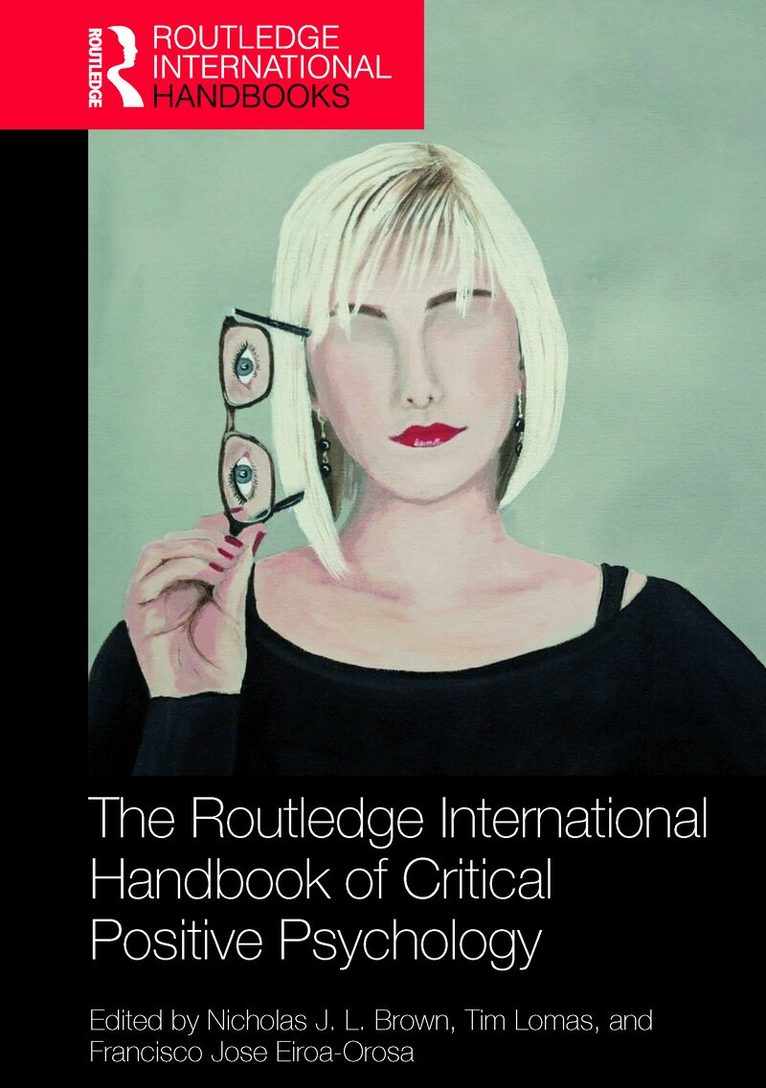
    Routledge International Handbook of Critical Positive Psychology

    AvNicholas J. L. Brown,Tim Lomas

    Häftad, Engelska, 2022

    Del i serien Routledge International Handbooks

    690 kr

    Beställningsvara. Skickas inom 10-15 vardagar. Fri frakt över 249 kr.

    Beskrivning

    Since the turn of the twenty-first century, the field of positive psychology has sought to implement a science of human flourishing so that we may lead happier, more fulfilling lives. It has found expression not only in academic papers but also popular books and, increasingly, in government policy. The Routledge International Handbook of Critical Positive Psychology is the first volume dedicated to a critical appraisal of this influential but controversial field of study.The book critically examines not only the scientific foundations of positive psychology, but also the sociocultural and political tenets on which the field rests. It evaluates the current field of knowledge and practice, and includes chapters analysing the methodological constructs of the field, as well as others that question what positive psychology actually means by ideas such as happiness or well-being. Taking the debate further, the book then discusses how positive psychology can be applied in a wider variety of settings than is presently the case, helping communities and individuals by acknowledging the reality of people’s lives rather than adhering strictly to debateable theoretical constructs.Including contributions from disciplines ranging from psychoanalysis to existential therapy, theology to philosophy, and contributors from throughout the world, The Routledge International Handbook of Critical Positive Psychology will be enlightening reading for anyone interested in how psychology has sought to understand human well-being.

    Produktinformation

    • Utgivningsdatum:2022-08-29
    • Mått:174 x 246 x 34 mm
    • Vikt:1 060 g
    • Format:Häftad
    • Språk:Engelska
    • Serie:Routledge International Handbooks
    • Antal sidor:590
    • Förlag:Taylor & Francis Ltd
    • ISBN:9780367226343

    Utforska kategorier

    • Psykologi inom Psykologi och pedagogik
    • Psykoterapi som behandlingsmetod inom Medicin

    Mer om författaren

    Nicholas J. L. Brown is a PhD candidate in Health Psychology at the University Medical Center, University of Groningen, the Netherlands. His research examines the claims made by positive psychology regarding the relation between well-being and physical health outcomes.Tim Lomas is a Lecturer in positive psychology at the University of East London, UK. He has published numerous books and papers on topics including positive psychology theory, language, meditation, Buddhism, and neuroscience.Francisco Jose Eiroa-Orosa holds a Marie Skłodowska-Curie fellowship coordinated between the universities of Barcelona and Yale. The aim of his project is to explore the role of context on mental health interventions with key stakeholders such as service users, professionals, and policy makers.

    Innehållsförteckning

    • ForewordInteriorizing and Interrogating Well-BeingIsaac PrilleltenskyChapter 1Critical Positive Psychology: A Creative Convergence of Two DisciplinesPiers Worth and Matthew SmithSection 1: Criticism of Positive PsychologyIntroductionNicholas J. L. BrownChapter 2The Unavoidable Role of Values in Positive Psychology: Reflections in Light of Psychology’s Replicability CrisisBrent Dean Robbins and Harris L. FriedmanChapter 3Taking a Closer Look at Well-Being as a Scientific Construct: Delineating its Conceptual Nature and Boundaries in Relation to Spirituality and Existential FunctioningDouglas A. MacDonaldChapter 4The Meaning and Valence of Gratitude in Positive PsychologyLiz Gulliford and Blaire MorganChapter 5Positive Psychology, Mental Health, and the False Promise of the Medical ModelSam ThompsonChapter 6Is Positive Psychology an Indigenous Psychology?Jeanne Marecek and John Chambers ChristopherChapter 7Community Psychology’s Contributions on Happiness and Well-being: Including the Role of Context, Social Justice, and Values in Our Understanding of the Good Life.Salvatore Di Martino, Francisco José Eiroa-Orosa, and Caterina ArcidiaconoChapter 8Positive Psychology: Intellectual, Scientific, or Ideological Movement?Bernardo Moreno-Jiménez and Aldo Aguirre-CamachoChapter 9Is Positive Psychology Compatible With Freedom?Digby TantamChapter 10Critique of Positive Psychology and Positive InterventionsPaul T. P. Wong and Sandip RoyChapter 11Toward a Well-Spoken Explanatory StylePaul KalkinChapter 12An Introduction to Criticality for Students of Positive PsychologyNicholas J. L. BrownInterlude 1Chapter 13Five Historic Philosophers Discuss Human Flourishing and Happiness in Positive Psychology: A Speculative Dialogue in Three ActsLiz Gulliford and Kristján KristjánssonSection 2: Doing Positive Psychology CriticallyIntroductionTim LomasChapter 14A Re-appraisal of Boredom: A Case Study in Second Wave Positive PsychologyTim LomasChapter 15Affirming the Positive in Anomalous Experiences: A Challenge to Dominant Accounts of Reality, Life, and DeathEdith Steffen, David J. Wilde, and Callum E. CooperChapter 16Uncovering the Good in Positive Psychology: Toward a Worldview Conception That Can Help Positive Psychology FlourishPeter C. Hill and M. Elizabeth Lewis HallChapter 17Toward a Culturally Competent Positive PsychologyAdil Qureshi and Stella EvangelidouChapter 18Cultural and Racial Perspectives on Positive Psychologies of HumilityDavid R. Paine, Sarah H. Moon, Daniel J. Hauge, and Steven J. SandageChapter 19Positive Psychology’s Religious ImperativeDaniel K. Brown and David G. GeorgeChapter 20Character Strengths as Critique: The Power of Positive Psychology to Humanise the WorkplaceRoger Bretherton and Ryan M. NiemiecChapter 21Toward an Integrative Applied Positive PsychologyByron LeeChapter 22Positive Politics: Left-wing Versus Right-wing Policies, and Their Impact on the Determinants of WellbeingTim LomasChapter 23A Proposed Enquiry Into the Effect of Sociocultural Changes on Well-BeingFrancisco Jose Eiroa-OrosaChapter 24Complexity: Towards a New Measure of Societal Well-beingDaniel T. Gruner and Mihaly CsikszentmihalyiInterlude 2Chapter 25Pleasure as a Form of Liberatory PracticeTod Sloan and Marisol GarciaSection 3: Applied PerspectivesIntroductionFrancisco Jose Eiroa-OrosaChapter 26Community Social Psychology and Positive Psychology: Learning From the Experience of Latin AmericaRamón Soto Martínez and Salvatore Di MartinoChapter 27Positive, Necessary, and Possible Lives: Experience and Practice from the Struggle for a Dignified LifeJosé Eduardo Viera and Lauren LanguidoChapter 28Exploring the Role of Engagement on Well-Being and Personal Development: A Review of Adolescent and Mental Health ActivismAnne C. Montague and Francisco Jose Eiroa-OrosaChapter 29Citizenship, Mental Health, and Positive PsychologyJean-François Pelletier, Chyrell Bellamy, Maria O’Connell, Michaella Baker, and Michael RoweChapter 30The Brutality of RealityChris BealesChapter 31Philotimo: Vices and Virtues of a Moral ArchetypeManos Rhodes HatzimalonasChapter 32Evaluating Positive Education: A Framework and Case StudyDianne A. Vella-Brodrick, Nikki S. Rickard, and Tan-Chyuan ChinChapter 33Shaping Positive Education Research to Influence Public PolicyCharlie Simson, Lauren Rosewarne, and Lea WatersChapter 34Positive Psychology at a City ScaleMike Zeidler, Liz Zeidler, and Byron LeeChapter 35Judging the Efficacy and Ethics of Positive Psychology for Government PolicymakingMark D. WhiteChapter 36Feel Good or Be Happy. Distinctions Between Emotions and Development in the Environmental Psychology Research of WellbeingPablo Olivos and Ricardo Ernst