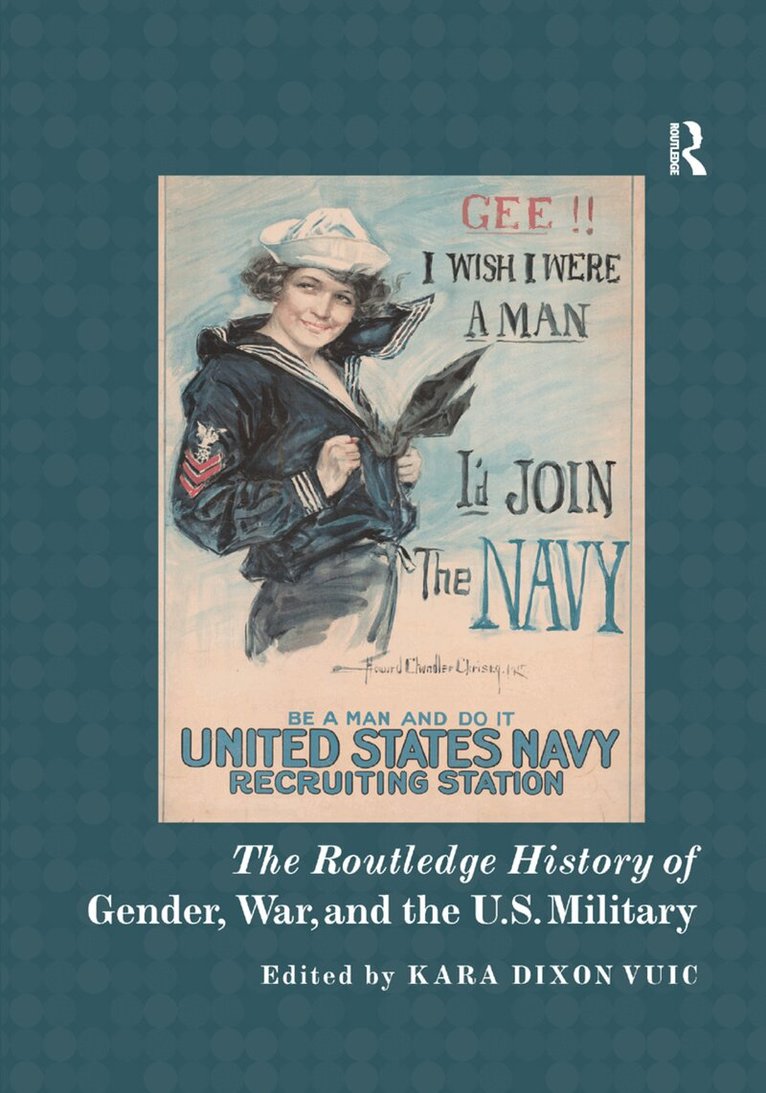
Routledge History of Gender, War, and the U.S. Military
805 kr
Beställningsvara. Skickas inom 10-15 vardagar. Fri frakt över 249 kr.
Du är på sajten för privatpersoner.
805 kr
Beställningsvara. Skickas inom 10-15 vardagar. Fri frakt över 249 kr.
Kara Dixon Vuic is the LCpl. Benjamin W. Schmidt Professor of War, Conflict, and Society in Twentieth-Century America at Texas Christian University.
"Kara Vuic—one of the very best historians of gender, war, and the U.S. military—has given us a clearly-conceptualized and engaging set of essays which analyze the many ways that gender and war intersect in U.S. history. Perhaps there’s no higher praise than to say that this volume is useful—to scholars, to students, to anyone interested in the history behind our contemporary debates over gender, war, and military service."Beth Bailey, University of Kansas"This well-conceived and beautifully executed collection explores the rich scholarship on gender and war and offers fresh perspectives on where we are in answering a number of questions—such as how gender shapes where and why Americans fight, how gender is harnessed to make war, and how new, but more often old, gender orders are reconstructed in war’s aftermath." Judy Giesberg, Villanova University
Du är på sajten för privatpersoner.
805 kr
Beställningsvara. Skickas inom 10-15 vardagar. Fri frakt över 249 kr.
Kara Dixon Vuic is the LCpl. Benjamin W. Schmidt Professor of War, Conflict, and Society in Twentieth-Century America at Texas Christian University.
"Kara Vuic—one of the very best historians of gender, war, and the U.S. military—has given us a clearly-conceptualized and engaging set of essays which analyze the many ways that gender and war intersect in U.S. history. Perhaps there’s no higher praise than to say that this volume is useful—to scholars, to students, to anyone interested in the history behind our contemporary debates over gender, war, and military service."Beth Bailey, University of Kansas"This well-conceived and beautifully executed collection explores the rich scholarship on gender and war and offers fresh perspectives on where we are in answering a number of questions—such as how gender shapes where and why Americans fight, how gender is harnessed to make war, and how new, but more often old, gender orders are reconstructed in war’s aftermath." Judy Giesberg, Villanova University