• Fri frakt över 249 kr
  • •
  • Snabba leveranser
  • •
  • Billiga böcker
Kundservice

Du är på sajten för privatpersoner.

Företag, bibliotek eller offentlig verksamhet?

Du handlar på classic.bokus.com, där alla dina funktioner finns intakta.
Till classic.bokus.com
Bokus logotyp. Gå till startsidan.
  • Erbjudanden
  • Nyheter
  • Student
  • Topplistor
  • Barn & ungdom
  • Bokus Play
  • E-böcker
  • Pocketböcker
  • Spel & pussel

10% rabatt på allt med kod: NYSTART10 →

Sidfot

Mina sidor

    Hjälp

    • Kundservice
    • Vanliga frågor och svar
    • Frakt och leverans
    • Retur vid ångerrätt
    • Reklamera vara
    • Betalning
    • Köpvillkor
    • Allmänna villkor
    • Information om webbplatsens tillgänglighet

    Om Bokus

    • Om oss
    • Pressrum
    • För studenter
    • För företag
    • För bibliotek och offentlig verksamhet
    • För leverantörer
    • Hållbarhet

    Populärt

    • Aktuella erbjudanden
    • Presentkort
    • Studentlitteratur
    • Nya böcker
    • Topplistor
    • Signerade böcker
    • Engelska böcker

    Inspiration

    • Boktips
    • BookTok
    • Populära bokserier
    • Barnbokskaraktärer
    • Populära författare
    Logotyp för Bokus
    Följ oss på Facebook (extern länk)Följ oss på Instagram (extern länk)Följ oss på YouTube (extern länk)Följ oss på TikTok (extern länk)
    bokus @ CookiesAnpassa cookiesIntegritetspolicyKöpvillkor
    Till Citymail hemsida (extern länk)Till Budbee hemsida (extern länk)Till Postnord hemsida (extern länk)Till Schenker hemsida (extern länk)Till Early Bird hemsida (extern länk)Till Walleys hemsida (extern länk)
    1. Samhälle och politik
    2. Sociologi och antropologi
    3. Antropologi

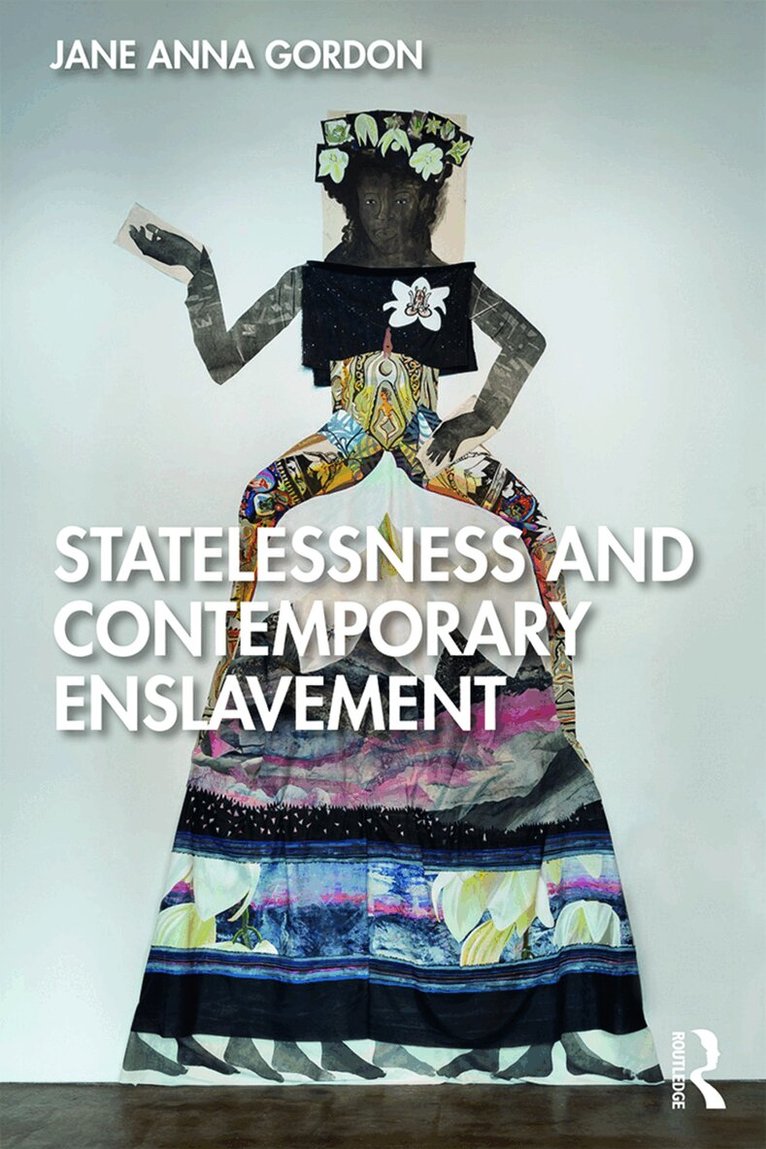
    Statelessness and Contemporary Enslavement

    AvJane Gordon

    Häftad, Engelska, 2019

    597 kr

    Beställningsvara. Skickas inom 10-15 vardagar. Fri frakt över 249 kr.

    Fler format och utgåvor

    Inbunden

    2 423 kr

    E-bok

    648 kr

    E-bok

    648 kr

    Beskrivning

    Why have statelessness and contemporary enslavement become endemic since the 1990s? What is it about global political economic policies, protracted warfare, and migration rules and patterns that have so systemically increased these extreme forms of vulnerability? Why have intellectual communities largely ignored or fundamentally rejected the concepts of statelessness and contemporary enslavement? This book argues that statelessness and enslavement are not aberrations or radical exceptions. They have been and are endemic to Euromodern state systems. While victims are discrete outcomes of similar processes of the racialized debasement of citizenship, stateless people share the predicament of those most likely to be enslaved and the enslaved, even when formally free, often face situations of statelessness. Gordon identifies forcible inclusion of semi-sovereign nations, extralegal expulsion of people who cannot be repatriated, and the concentrated erosion of the rights of full-fledged citizens as the primary modes through which people experience degrees of statelessness. She argues for the political value of seeing the connections among these discrete forms. With enslavement, she insists that while the centuries-long practice has taken on some new guises necessary to its profitability in the current global economy, what and who it involves have remained remarkably consistent. Rather than focusing on slavery as a radical and exceptional extreme of abuse or coercion, Gordon contends that we can understand contemporary slavery’s specificity most usefully through considering its defining dimensions together with those of wage laborers and guest workers. Gordon concludes that appreciation of the situation of the stateless and of the enslaved should fundamentally orient our thinking about viable contemporary conceptions of consent and of the kinds of twenty-first-century political institutions that would make it harder for some to make the vulnerability of others so lucrative.

    Produktinformation

    • Utgivningsdatum:2019-12-09
    • Mått:152 x 229 x 15 mm
    • Vikt:360 g
    • Format:Häftad
    • Språk:Engelska
    • Antal sidor:164
    • Förlag:Taylor & Francis Ltd
    • ISBN:9780367358549

    Utforska kategorier

    • Antropologi inom Samhälle och politik
    • Genusvetenskap inom Samhälle och politik
    • Sociologi inom Samhälle och politik

    Mer om författaren

    Jane Anna Gordon teaches and directs the graduate program in Political Science at the University of Connecticut, USA. She is, most recently, author of Creolizing Political Theory: Reading Rousseau through Frantz Fanon and co-editor (with Cyrus E. Zirakzadeh) of The Politics of Richard Wright: Perspectives on Resistance and co-editor (with Drucilla Cornell) of the forthcoming Creolizing Rosa Luxemburg. She was President of the Caribbean Philosophical Association from 2013 to 2016. Gordon co-edits the Creolizing the Canon and Global Critical Caribbean Thought book series.

    Recensioner i media

    "Are there still slaves? Jane Gordon draws upon her vast knowledge of political theory and Black studies to show that statelessness and enslavement are still with us. Providing an extensive analysis of their nature, she compels us to rethink consent and the state’s role to address these ongoing harms."Joan C. Tronto, Professor Emerita of Political Science at the University of Minnesota, USA"As countless critics warn of the growing fascist threat to our vaunted global cosmopolitan democracies, Jane Gordon reminds us that much of the world already exists in a state of exclusion—stripped of citizenship and government protections, racially marked, and vulnerable to exploitation. Statelessness and unfreedom, she argues, are neither exceptional nor aberrations of modern democracies, but mutually constitutive. Breathtaking in scope and disciplinary breadth, Statelessness and Contemporary Enslavement is the most illuminating examination of one of the most enduring threats to human freedom I’ve ever read."Robin D. G. Kelley, author of Africa Speaks, America Answers: Modern Jazz in Revolutionary Times"In Statelessness and Contemporary Enslavement, Jane Anna Gordon deals very rigorously and sensitively with a major problem of our time: statelessness and modern enslavement. She brilliantly shows how current productive capitalist production of vulnerability, by keeping migrants mercilessly on the other side of the abyssal line and denying them full humanity and citizenship, brings the refugee crisis to a stalemate. This masterful book is a must-read for whoever wants to understand the ruthless moves of our contemporary world."Boaventura de Sousa Santos, Emeritus Professor of Sociology at the University of Coimbra, Portugal, and Distinguished Legal Scholar at the University of Wisconsin-Madison, USA"This book could be no more timely than today, with war and climate refugees overwhelming care agencies, with European and United States borders repelling desperate millions, creating a condition of statelessness and vulnerability that author Jane Gordon calls 'contemporary enslavement.' This is militant history at its best, calling for consciousness, empathy, and mobilization."Roxanne Dunbar-Ortiz, author of An Indigenous Peoples’ History of the United States"Jane Anna Gordon’s book explores the erosion of citizenship with a robustness and vigor that readers of her previous work will appreciate and expect. The book weaves through the intersectionality of race, gender, and ethnicity in a political account of statelessness that inevitably leads to various contemporary forms and modes of slavery, be they guest workers, sex slaves, trafficked immigrants, forced laborers, prisoners, and even debt bondage. You, the reader, hold in your hands a unique contribution to political theory and political economy."Mabogo P. More, University of Limpopo, University of KwaZulu-Natal, and University of Johannesburg, South Africa, and author of Looking through Philosophy in Black

    Innehållsförteckning

    • Introduction: Two Euromodern Phenomena, 1 Degrees of Statelessness, 2 Theorizing Contemporary Enslavement, 3 On Consent, 4 Lucrative Vulnerability, Conclusion: Against Anti-Statism, Bibliography