• Fri frakt över 249 kr
  • •
  • Snabba leveranser
  • •
  • Billiga böcker
Kundservice

Du är på sajten för privatpersoner.

Företag, bibliotek eller offentlig verksamhet?

Du handlar på classic.bokus.com, där alla dina funktioner finns intakta.
Till classic.bokus.com
Bokus logotyp. Gå till startsidan.
  • Erbjudanden
  • Nyheter
  • Student
  • Topplistor
  • Barn & ungdom
  • Bokus Play
  • E-böcker
  • Pocketböcker
  • Spel & pussel

10% studentrabatt med kod TERM26

Sidfot

Mina sidor

    Hjälp

    • Kundservice
    • Vanliga frågor och svar
    • Frakt och leverans
    • Retur vid ångerrätt
    • Reklamera vara
    • Betalning
    • Köpvillkor
    • Allmänna villkor
    • Information om webbplatsens tillgänglighet

    Om Bokus

    • Om oss
    • Pressrum
    • För studenter
    • För företag
    • För bibliotek och offentlig verksamhet
    • För leverantörer
    • Hållbarhet

    Populärt

    • Aktuella erbjudanden
    • Presentkort
    • Studentlitteratur
    • Nya böcker
    • Topplistor
    • Signerade böcker
    • Engelska böcker

    Inspiration

    • Boktips
    • BookTok
    • Populära bokserier
    • Barnbokskaraktärer
    • Populära författare
    Logotyp för Bokus
    Följ oss på Facebook (extern länk)Följ oss på Instagram (extern länk)Följ oss på YouTube (extern länk)Följ oss på TikTok (extern länk)
    bokus @ CookiesAnpassa cookiesIntegritetspolicyKöpvillkor
    Till Citymail hemsida (extern länk)Till Budbee hemsida (extern länk)Till Postnord hemsida (extern länk)Till Schenker hemsida (extern länk)Till Early Bird hemsida (extern länk)Till Walleys hemsida (extern länk)
    1. Historia och arkeologi
    2. Arkeologi
    3. Arkeologiska perioder och områden

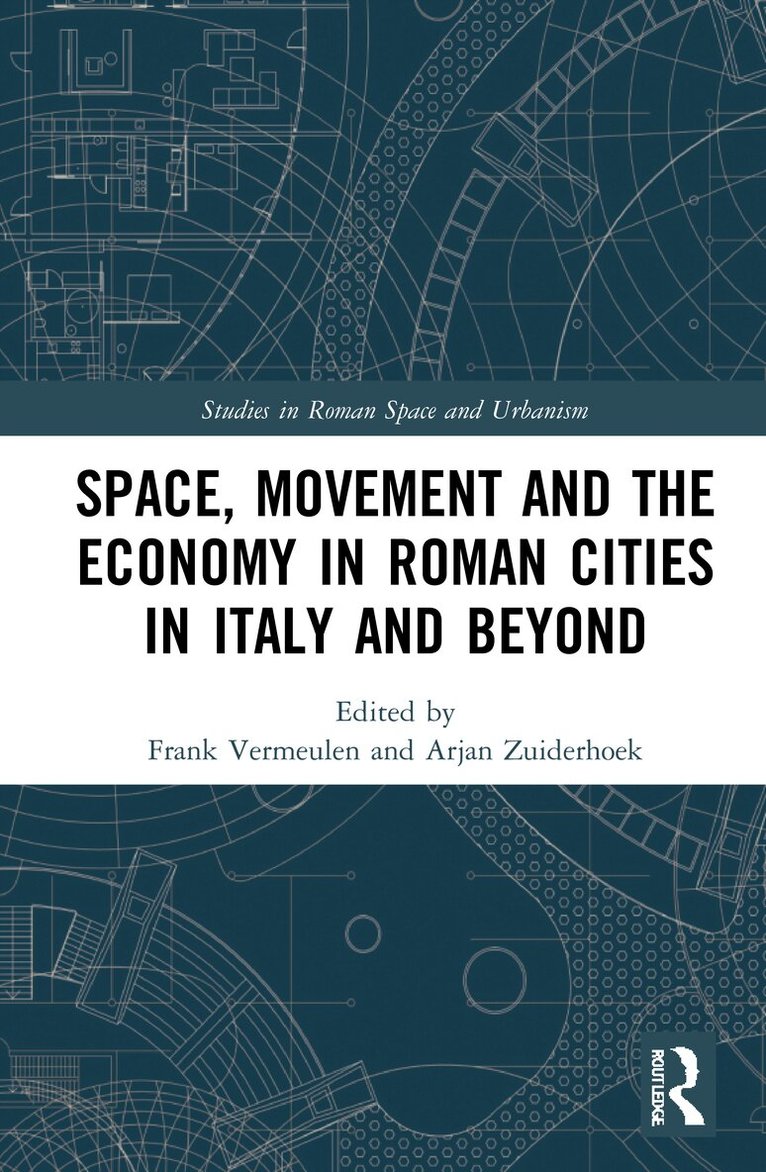
    Space, Movement and the Economy in Roman Cities in Italy and Beyond

    AvFrank Vermeulen,Arjan Zuiderhoek

    Inbunden, Engelska, 2021

    Del i serien Studies in Roman Space and Urbanism

    2 506 kr

    Beställningsvara. Skickas inom 10-15 vardagar. Fri frakt över 249 kr.

    Beskrivning

    How were space and movement in Roman cities affected by economic life? What can the study of Roman urban landscapes tell us about the nature of the Roman economy? These are the central questions addressed in this volume.While there exist many studies of Roman urban space and of the Roman economy, rarely have the two topics been investigated together in a sustained fashion. In this volume, an international team of archaeologists and historians focuses explicitly on the economics of space and mobility in Roman Imperial cities, in both Italy and the provinces, east and west. Employing many kinds of material and written evidence and a wide range of methodologies, the contributors cast new light both on well-known and on less-explored sites. With their direct focus on the everyday economic uses of urban spaces and the movements through them, the contributors offer a fresh and innovative perspective on the workings of Roman urban economies and on the debates concerning space in the Roman world.This volume will be of interest to archaeologists and historians, both those studying the Greco-Roman world and those focusing on urban economic space in other periods and places as well as to other scholars studying premodern urbanism and urban economies.

    Produktinformation

    • Utgivningsdatum:2021-05-27
    • Mått:156 x 234 x 28 mm
    • Vikt:980 g
    • Format:Inbunden
    • Språk:Engelska
    • Serie:Studies in Roman Space and Urbanism
    • Antal sidor:432
    • Förlag:Taylor & Francis Ltd
    • ISBN:9780367371562

    Utforska kategorier

    • Arkeologiska perioder och områden inom Historia och arkeologi
    • Forntidens historia inom Historia och arkeologi
    • Sociala grupper och identitet inom Samhälle och politik

    Mer om författaren

    Frank Vermeulen is a professor of Roman archaeology and archaeological methodology at the Department of Archaeology of Ghent University, Belgium.Arjan Zuiderhoek is an associate professor of ancient history at the Department of History of Ghent University, Belgium.

    Recensioner i media

    "This book offers a variety of interesting and valuable contributions to our knowledge of the Roman economy. It is especially noteworthy for its use of GIS and social network modelling in order to analyze economic activities and networks, showing the value of such approaches for our knowledge of the ancient world." - Bryn Mawr Classical Review"This volume makes a significant contribution to the much-needed integration of archaeological evidence within historical debates. This can only be achieved by collaboration between archaeologists and historians, for which the volume sets a laudable example." - The Classical Review

    Innehållsförteckning

    • PART I: Introducing the themes 1. Introduction: space, movement and the economy in Roman cities 2. Economic space and movement between Roman towns, their suburbia and territories: the regional perspective PART II: Spaces 3. Beyond Pompeii and Ostia: commerce and urban space in Roman Italy 4. Market buildings in Asia Minor: old assumptions and new starting points 5. Do economic activities impinge on Roman urban matrices in Asia Minor? A new style/ function debate 6. Elites and economic space in Roman Imperial Asia Minor 7. Making space for commerce in Roman Britain: reevaluating the nature and impact of the forum/ basilica complex 8. The Roman colony of Sena Gallica: urban space and economic activities 9. Aquileia’s market spaces PART III: Movement 10. Finding your way towards the Macellum : the spatial organization of a Roman type of market building 11. How open was the Roman city? Movement and impediments to movement in the street system 12. Transport and trade: an energy expenditure approach for the distribution of marble in Central Adriatic Italy in Roman times 13. “This mule will ruin me”: the economy of mobility in Roman towns 14. Munigua’s place in the operational chain: some considerations regarding the movement of people and goods and the division of labour in the lower Guadalquivir Valley during the Roman period 15. Understanding Rome as a port city 16. Space, accessibility and movement through the Portus Romae PART IV: Conclusion The economics of space and mobility in Roman urbanism