• Fri frakt över 249 kr
  • •
  • Snabba leveranser
  • •
  • Billiga böcker
Kundservice

Du är på sajten för privatpersoner.

Företag, bibliotek eller offentlig verksamhet?

Du handlar på classic.bokus.com, där alla dina funktioner finns intakta.
Till classic.bokus.com
Bokus logotyp. Gå till startsidan.
  • Erbjudanden
  • Nyheter
  • Student
  • Topplistor
  • Barn & ungdom
  • Bokus Play
  • E-böcker
  • Pocketböcker
  • Spel & pussel

10% rabatt på allt med kod NYSTART10 →

Sidfot

Mina sidor

    Hjälp

    • Kundservice
    • Vanliga frågor och svar
    • Frakt och leverans
    • Retur vid ångerrätt
    • Reklamera vara
    • Betalning
    • Köpvillkor
    • Allmänna villkor
    • Information om webbplatsens tillgänglighet

    Om Bokus

    • Om oss
    • Pressrum
    • För studenter
    • För företag
    • För bibliotek och offentlig verksamhet
    • För leverantörer
    • Hållbarhet

    Populärt

    • Aktuella erbjudanden
    • Presentkort
    • Studentlitteratur
    • Nya böcker
    • Topplistor
    • Signerade böcker
    • Engelska böcker

    Inspiration

    • Boktips
    • BookTok
    • Populära bokserier
    • Barnbokskaraktärer
    • Populära författare
    Logotyp för Bokus
    Följ oss på Facebook (extern länk)Följ oss på Instagram (extern länk)Följ oss på YouTube (extern länk)Följ oss på TikTok (extern länk)
    bokus @ CookiesAnpassa cookiesIntegritetspolicyKöpvillkor
    Till Citymail hemsida (extern länk)Till Budbee hemsida (extern länk)Till Postnord hemsida (extern länk)Till Schenker hemsida (extern länk)Till Early Bird hemsida (extern länk)Till Walleys hemsida (extern länk)
    1. Naturvetenskap och teknik
    2. Geovetenskap
    3. Miljövetenskap och miljöpolitik

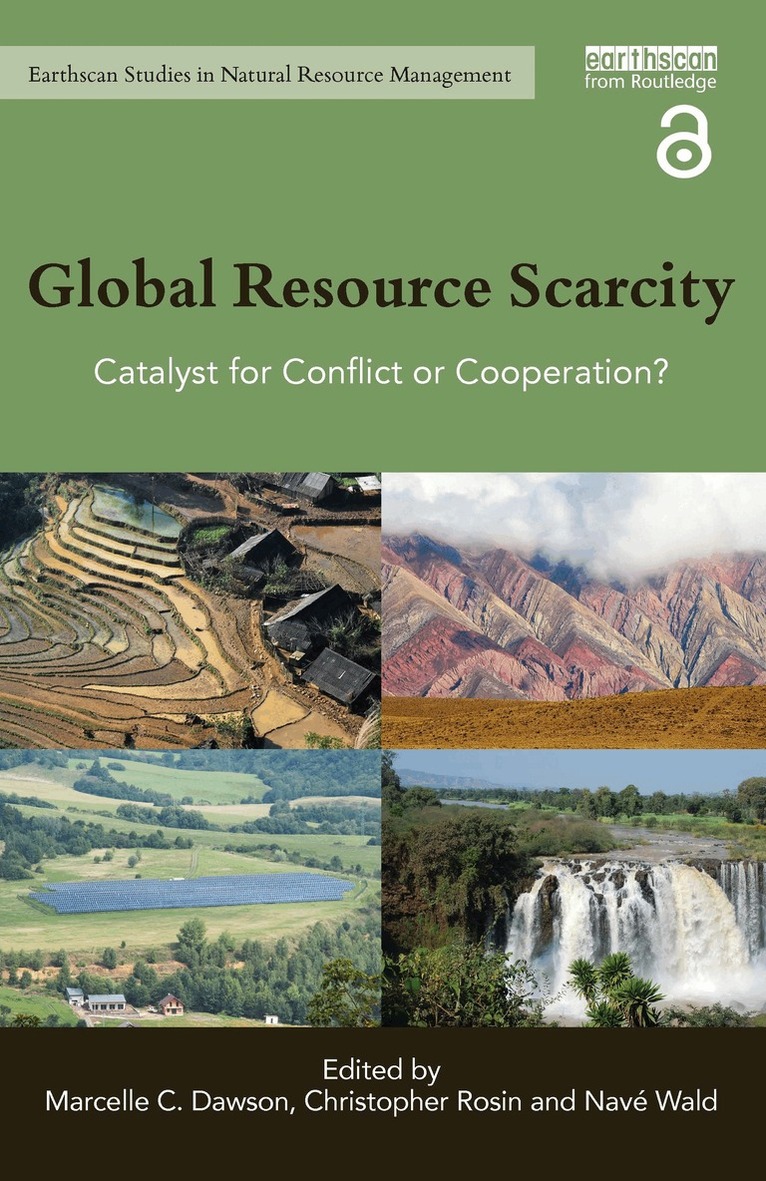
    Global Resource Scarcity

    Catalyst for Conflict or Cooperation?

    AvMarcelle C. Dawson,Christopher Rosin

    Häftad, Engelska, 2019

    Del i serien Earthscan Studies in Natural Resource Management

    695 kr

    Beställningsvara. Skickas inom 10-15 vardagar. Fri frakt över 249 kr.

    Beskrivning

    A common perception of global resource scarcity holds that it is inevitably a catalyst for conflict among nations; yet, paradoxically, incidents of such scarcity underlie some of the most important examples of international cooperation. This volume examines the wider potential for the experience of scarcity to promote cooperation in international relations and diplomacy beyond the traditional bounds of the interests of competitive nation states. The interdisciplinary background of the book’s contributors shifts the focus of the analysis beyond narrow theoretical treatments of international relations and resource diplomacy to broader examinations of the practicalities of cooperation in the context of competition and scarcity. Combining the insights of a range of social scientists with those of experts in the natural and bio-sciences—many of whom work as ‘resource practitioners’ outside the context of universities—the book works through the tensions between ‘thinking/theory’ and ‘doing/practice’, which so often plague the process of social change. These encounters with scarcity draw attention away from the myopic focus on market forces and allocation, and encourage us to recognise more fully the social nature of the tensions and opportunities that are associated with our shared dependence on resources that are not readily accessible to all. The book brings together experts on theorising scarcity and those on the scarcity of specific resources. It begins with a theoretical reframing of both the contested concept of scarcity and the underlying dynamics of resource diplomacy. The authors then outline the current tensions around resource scarcity or degradation and examine existing progress towards cooperative international management of resources. These include food and water scarcity, mineral exploration and exploitation of the oceans. Overall, the contributors propose a more hopeful and positive engagement among the world’s nations as they pursue the economic and social benefits derived from natural resources, while maintaining the ecological processes on which they depend.

    Produktinformation

    • Utgivningsdatum:2019-07-29
    • Mått:156 x 234 x 12 mm
    • Vikt:317 g
    • Format:Häftad
    • Språk:Engelska
    • Serie:Earthscan Studies in Natural Resource Management
    • Antal sidor:224
    • Förlag:Taylor & Francis Ltd
    • ISBN:9780367376925

    Utforska kategorier

    • Miljövetenskap och miljöpolitik inom Naturvetenskap och teknik
    • Lantbruk, fiske och skogsbruk inom Ekonomi och Ledarskap
    • Internationella relationer inom Samhälle och politik

    Mer om författaren

    Marcelle C. Dawson is a Senior Lecturer in the Department of Sociology, Gender and Social Work, University of Otago, New Zealand, and a Senior Research Associate at the Centre for Social Change, University of Johannesburg, South Africa. Christopher Rosin is a Senior Lecturer in the Department of Tourism, Sport and Society at Lincoln University, New Zealand. Navé Wald is a researcher at the Higher Education Development Centre, University of Otago, New Zealand.

    Innehållsförteckning

    • 1. Resource Scarcity between Conflict and Cooperation Part I Reframing Scarcity and Resource Diplomacy 2. Taking the Scare out of Scarcity: The Case of Water 3. Cooperation in the Power Sector to Advance Regionalisation Processes and Sustainable Energy Flows Part II Resource Scarcity and Tensions in International Relations 4. Phosphorus Security: Future Pathways to Reduce Food System Vulnerability to a New Global Challenge 5. Peasant Mineral Resource Extractivism and the Idea of Scarcity 6. Whose Scarcity, Whose Security? Multi-scalar Contestation of Water in the Indus Basin 7. Protecting our Global Ocean Heritage: Unprecedented Threats will Require Bold Interventions Part III Building Resilience Through Resource Cooperation 8. Food Sovereignty and the Politics of Food Scarcity 9. Rare Earth Diplomacy: Mitigating Conflict over Technology Minerals 10. Going with the Flow: Can River Health be a Focus for Foreign Policy? 11. Don’t Forget the Fish! Transnational Collaboration in Governing Tuna Fisheries in the Pacific 12. A World Without Scarcity?