• Fri frakt över 249 kr
  • •
  • Snabba leveranser
  • •
  • Billiga böcker
Kundservice

Du är på sajten för privatpersoner.

Företag, bibliotek eller offentlig verksamhet?

Du handlar på classic.bokus.com, där alla dina funktioner finns intakta.
Till classic.bokus.com
Bokus logotyp. Gå till startsidan.
  • Erbjudanden
  • Nyheter
  • Student
  • Topplistor
  • Barn & ungdom
  • Bokus Play
  • E-böcker
  • Pocketböcker
  • Spel & pussel

10% rabatt på allt med kod: NYSTART10 →

Sidfot

Mina sidor

    Hjälp

    • Kundservice
    • Vanliga frågor och svar
    • Frakt och leverans
    • Retur vid ångerrätt
    • Reklamera vara
    • Betalning
    • Köpvillkor
    • Allmänna villkor
    • Information om webbplatsens tillgänglighet

    Om Bokus

    • Om oss
    • Pressrum
    • För studenter
    • För företag
    • För bibliotek och offentlig verksamhet
    • För leverantörer
    • Hållbarhet

    Populärt

    • Aktuella erbjudanden
    • Presentkort
    • Studentlitteratur
    • Nya böcker
    • Topplistor
    • Signerade böcker
    • Engelska böcker

    Inspiration

    • Boktips
    • BookTok
    • Populära bokserier
    • Barnbokskaraktärer
    • Populära författare
    Logotyp för Bokus
    Följ oss på Facebook (extern länk)Följ oss på Instagram (extern länk)Följ oss på YouTube (extern länk)Följ oss på TikTok (extern länk)
    bokus @ CookiesAnpassa cookiesIntegritetspolicyKöpvillkor
    Till Citymail hemsida (extern länk)Till Budbee hemsida (extern länk)Till Postnord hemsida (extern länk)Till Schenker hemsida (extern länk)Till Early Bird hemsida (extern länk)Till Walleys hemsida (extern länk)
    1. Ekonomi och Ledarskap
    2. Nationalekonomi
    3. Miljöekonomi

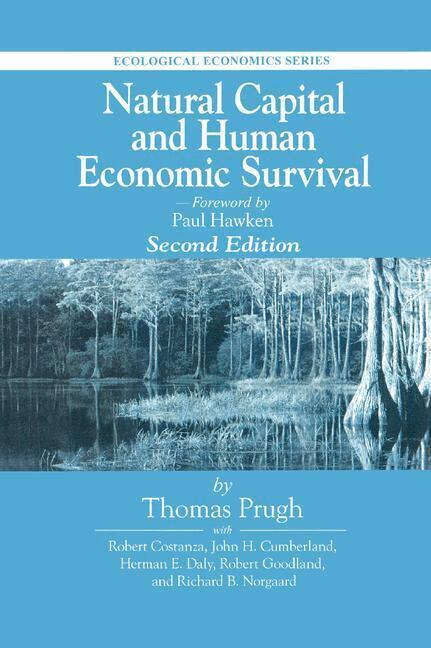
    Natural Capital and Human Economic Survival

    AvThomas Prugh,Herman Daly

    Häftad, Engelska, 2020

    Del i serien Ecological Economics

    1 019 kr

    Beställningsvara. Skickas inom 10-15 vardagar. Fri frakt över 249 kr.

    Fler format och utgåvor

    Inbunden

    2 117 kr

    Beskrivning

    Most people love nature and consider themselves environmentalists, but nature isn't just pretty and lovable, it is indispensable to our survival and economic activity. That is the most compelling reason for environmental protection.The conventional economic wisdom views land (natural capital) as a small part of the economy, along with capital, labor, technology and so on. The authors argue that this is backwards: that the economy nests within the environment (land) and not the other way around.The authors give a brief history of the origins of conventional economic wisdom and critique it from a the standpoint of ecological economics. They explain what natural capital -our life support system - is and does, and describe the severe strains that have been put on it. They conclude with some policy options, such as green taxes and suggestions for personal action that would conserve natural capital and thus make conserve resources for present and future generations.Natural Capital and Human Economic Survival is written for environmentalists, environmental studies majors and anyone concerned about the flaws of mainstream economics - how it has led us into unsustainable ways of living - and who would like to learn about alternatives that are more sustainable.

    Produktinformation

    • Utgivningsdatum:2020-09-30
    • Mått:156 x 234 x 22 mm
    • Vikt:380 g
    • Format:Häftad
    • Språk:Engelska
    • Serie:Ecological Economics
    • Antal sidor:208
    • Upplaga:2
    • Förlag:Taylor & Francis Ltd
    • ISBN:9780367399726

    Utforska kategorier

    • Miljöekonomi inom Ekonomi och Ledarskap

    Mer om författaren

    Prugh, Thomas; Daly, Herman; Goodland, Robert; Cumberland, John H; Norgaard, Richard B

    Recensioner i media

    "In this second edition, excellent insights into the fields of ecological and environmental economics are provided…very readable and understandable publication…recommended for all readers, the general public and up, with an interest in the environment."-B.J. Peterson in Choice, December 1999"Sustainability is a widely accepted ideal for investigating and managing natural resources, but disciplined efforts to make its core principles operational are rare. This book is exceptional in developing a common, analytic framework and language for investigating how human institutions interact with ecological systems."Sarah Michaels, School of Planning, University of Waterloo, Ontario, Canada

    Innehållsförteckning

    • Foreword -- Preface -- Section I: The Ecological Economics Perspective and Why It's Needed -- 1 The Origins of Our Economic Worldview -- Classical Economics, Key Figures, Assumptions -- The Birth of Neoclassicism -- Driven to Abstraction: The Neoclassical Legacy -- 2 The Ecological Economics Perspective -- The Coevolutionary Paradigm -- Scale, Throughput, and Carrying Capacity -- The Mostly Invisible City -- Substitutability vs. Complementarity -- Technological Optimism vs. Prudent Skepticism -- Entropy and Economics -- What Sustainability Means -- Section II: The Definition, Function, and Valuation of Natural Capital -- 3 What Natural Capital Is and Does -- What Does Natural Capital Do? -- Biodiversity, Ecosystem Function, and the Economy -- Four Functions of Natural Capital -- 4 Depletion and Valuation -- Some Evidence of Natural Capital Depletion -- The Green Devolution -- A Fearful Asymmetry: Accounting for Natural Capital -- The Monetary Valuation of Natural Capital -- When "Discounted" Doesn't Mean a Bargain -- An Alternative -- Section Ill: Managing Natural Capital for Sustainability -- 5 Investing in Natural Capital: Incentives and Obstacles -- The Nutshell Case for Natural Capital Investment -- Why We Ignore Natural Capital -- Command-and-Control Regulation -- Incentive-Based Systems -- 6 Some Investment Strategies -- Green Taxes -- Graded Ecozoning -- Natural Capital Depletion Taxes -- The Link Between Human and Natural Capital -- The Precautionary Polluter-Pays Principle -- Ecological Tariffs -- Natural Capital and International Trade -- Property Rights Regimes -- Resource Utilities -- Two Sustainability Profiles -- Afterword -- Appendix: Some Tools For Personal and Community Action -- Glossary -- -References -- Index.