Ecological Economics - Böcker
Visar alla böcker i serien Ecological Economics. Handla med fri frakt och snabb leverans.
6 produkter
6 produkter
947 kr
Skickas inom 10-15 vardagar
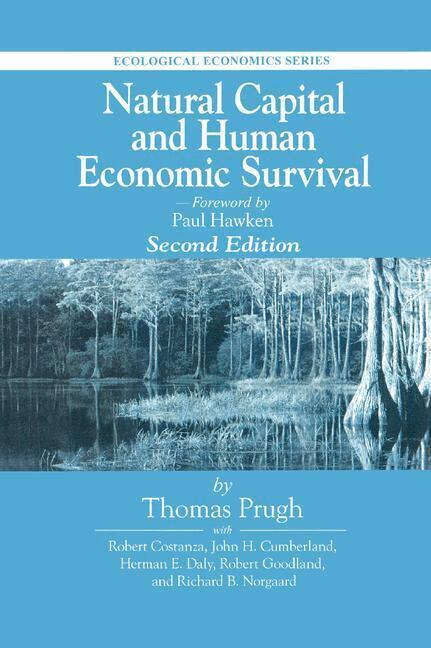
Most people love nature and consider themselves environmentalists, but nature isn't just pretty and lovable, it is indispensable to our survival and economic activity. That is the most compelling reason for environmental protection.The conventional economic wisdom views land (natural capital) as a small part of the economy, along with capital, labor, technology and so on. The authors argue that this is backwards: that the economy nests within the environment (land) and not the other way around.The authors give a brief history of the origins of conventional economic wisdom and critique it from a the standpoint of ecological economics. They explain what natural capital -our life support system - is and does, and describe the severe strains that have been put on it. They conclude with some policy options, such as green taxes and suggestions for personal action that would conserve natural capital and thus make conserve resources for present and future generations.Natural Capital and Human Economic Survival is written for environmentalists, environmental studies majors and anyone concerned about the flaws of mainstream economics - how it has led us into unsustainable ways of living - and who would like to learn about alternatives that are more sustainable.
736 kr
Skickas inom 10-15 vardagar
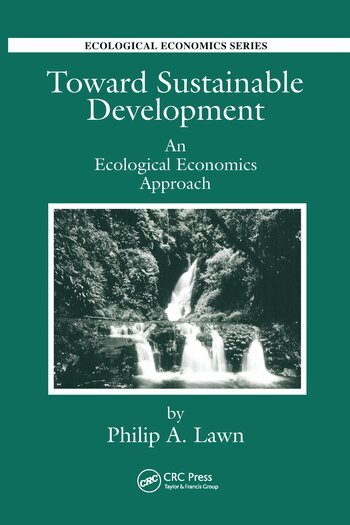
By now, most people in the ecological and environmental fields have heard of sustainable development, but how many know how we go about getting there, and if we are achieving it? By synthesizing the many disparate elements of the field of Ecological Economics, Toward Sustainable Development: An Ecological Economics Approach combines analysis, theory, and empiricism to answer the whats, whys, and hows of moving towards sustainable development.Since the ecological economics approach to sustainable development is still a relatively new paradigm, its long-term success rests heavily on the formalized establishment of the most basic and fundamental principles. This volume discusses the formation of these principles and their implementation in the real world. Lawn establishes the ground-rules by showing that development need not be achieved at the expense of ecological sustainability. He presents the tools, guidelines, and conceptual framework necessary to move toward sustainable development.Filled with figures, tables, and illustrations, Toward Sustainable Development: An Ecological Economics Approach systematically develops a conceptual framework from which to design workable policies. The author shows that development and ecological sustainability don't have to be trade-offs but can be complimentary and outlines a range of economic and non-economic indicators to measure performance.
715 kr
Skickas inom 10-15 vardagar
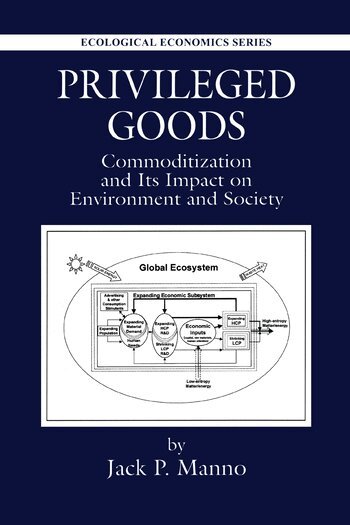
What are the obstacles in the way of effectively solving the environmental crises of our time? What can we do to overcome them? These may be two of the most important questions heading into the 21st century. Organized human societies have the ability to completely change the world. While we have excelled at building, destroying and rebuilding, we have not succeeded at conserving, preserving, and sustaining.Priviledged Goods: Commoditization and Its Impact on Environment and Society suggests that our propensity toward environmental destruction - a tragic flaw of the modern economy - can be understood as a result of hidden economic forces. These forces drive social and economic development towards increasing mobilization of energy and material beyond what is actually needed to achieve general prosperity and meet basic human needs. The author explains the complex concept of commoditization using examples from key sectors of society.Interdisciplinary in scope, Privileged Goods: Commoditization and Its Impact on Environment and Society will appeal to a wide variety of environmental professionals. It explains the key concepts, discusses the history of public policy, analyzes the "appropriate technology" movement of the 70s and compares it to the sustainable development movement of today.
1 502 kr
Tillfälligt slut
What are the obstacles in the way of effectively solving the environmental crises of our time? What can we do to overcome them? These may be two of the most important questions heading into the 21st century. Organized human societies have the ability to completely change the world. While we have excelled at building, destroying and rebuilding, we have not succeeded at conserving, preserving, and sustaining.Priviledged Goods: Commoditization and Its Impact on Environment and Society suggests that our propensity toward environmental destruction - a tragic flaw of the modern economy - can be understood as a result of hidden economic forces. These forces drive social and economic development towards increasing mobilization of energy and material beyond what is actually needed to achieve general prosperity and meet basic human needs. The author explains the complex concept of commoditization using examples from key sectors of society.Interdisciplinary in scope, Privileged Goods: Commoditization and Its Impact on Environment and Society will appeal to a wide variety of environmental professionals. It explains the key concepts, discusses the history of public policy, analyzes the "appropriate technology" movement of the 70s and compares it to the sustainable development movement of today.
1 744 kr
Skickas inom 10-15 vardagar
Most people love nature and consider themselves environmentalists, but nature isn't just pretty and lovable, it is indispensable to our survival and economic activity. That is the most compelling reason for environmental protection.The conventional economic wisdom views land (natural capital) as a small part of the economy, along with capital, labor, technology and so on. The authors argue that this is backwards: that the economy nests within the environment (land) and not the other way around.The authors give a brief history of the origins of conventional economic wisdom and critique it from a the standpoint of ecological economics. They explain what natural capital -our life support system - is and does, and describe the severe strains that have been put on it. They conclude with some policy options, such as green taxes and suggestions for personal action that would conserve natural capital and thus make conserve resources for present and future generations.Natural Capital and Human Economic Survival is written for environmentalists, environmental studies majors and anyone concerned about the flaws of mainstream economics - how it has led us into unsustainable ways of living - and who would like to learn about alternatives that are more sustainable.
2 300 kr
Skickas inom 10-15 vardagar
By now, most people in the ecological and environmental fields have heard of sustainable development, but how many know how we go about getting there, and if we are achieving it? By synthesizing the many disparate elements of the field of Ecological Economics, Toward Sustainable Development: An Ecological Economics Approach combines analysis, theory, and empiricism to answer the whats, whys, and hows of moving towards sustainable development.Since the ecological economics approach to sustainable development is still a relatively new paradigm, its long-term success rests heavily on the formalized establishment of the most basic and fundamental principles. This volume discusses the formation of these principles and their implementation in the real world. Lawn establishes the ground-rules by showing that development need not be achieved at the expense of ecological sustainability. He presents the tools, guidelines, and conceptual framework necessary to move toward sustainable development.Filled with figures, tables, and illustrations, Toward Sustainable Development: An Ecological Economics Approach systematically develops a conceptual framework from which to design workable policies. The author shows that development and ecological sustainability don't have to be trade-offs but can be complimentary and outlines a range of economic and non-economic indicators to measure performance.