• Fri frakt över 249 kr
  • •
  • Snabba leveranser
  • •
  • Billiga böcker
Kundservice

Du är på sajten för privatpersoner.

Företag, bibliotek eller offentlig verksamhet?

Du handlar på classic.bokus.com, där alla dina funktioner finns intakta.
Till classic.bokus.com
Bokus logotyp. Gå till startsidan.
  • Erbjudanden
  • Student
  • Topplistor
  • Barn & ungdom
  • Bokus Play
  • E-böcker
  • Ljudböcker
  • Pocketböcker
  • Spel och pussel

Pocketfynda! Hundratals böcker för 49 kr/st →

Sidfot

Mina sidor

    Hjälp

    • Kundservice
    • Vanliga frågor och svar
    • Frakt och leverans
    • Retur vid ångerrätt
    • Reklamera vara
    • Betalning
    • Köpvillkor
    • Allmänna villkor
    • Information om webbplatsens tillgänglighet

    Om Bokus

    • Om oss
    • Pressrum
    • För studenter
    • För företag
    • För bibliotek och offentlig verksamhet
    • För leverantörer
    • Hållbarhet

    Populärt

    • Aktuella erbjudanden
    • Presentkort
    • Studentlitteratur
    • Nya böcker
    • Topplistor
    • Signerade böcker
    • Engelska böcker

    Inspiration

    • Boktips
    • BookTok
    • Barnbokskaraktärer
    • Populära författare
    Logotyp för Bokus
    Följ oss på Facebook (extern länk)Följ oss på Instagram (extern länk)Följ oss på YouTube (extern länk)Följ oss på TikTok (extern länk)
    bokus @ CookiesAnpassa cookiesIntegritetspolicyKöpvillkor
    Till Citymail hemsida (extern länk)Till Budbee hemsida (extern länk)Till Postnord hemsida (extern länk)Till Schenker hemsida (extern länk)Till Early Bird hemsida (extern länk)Till Walleys hemsida (extern länk)
    1. Medicin
    2. Andra medicinska specialiteter
    3. Miljömedicin

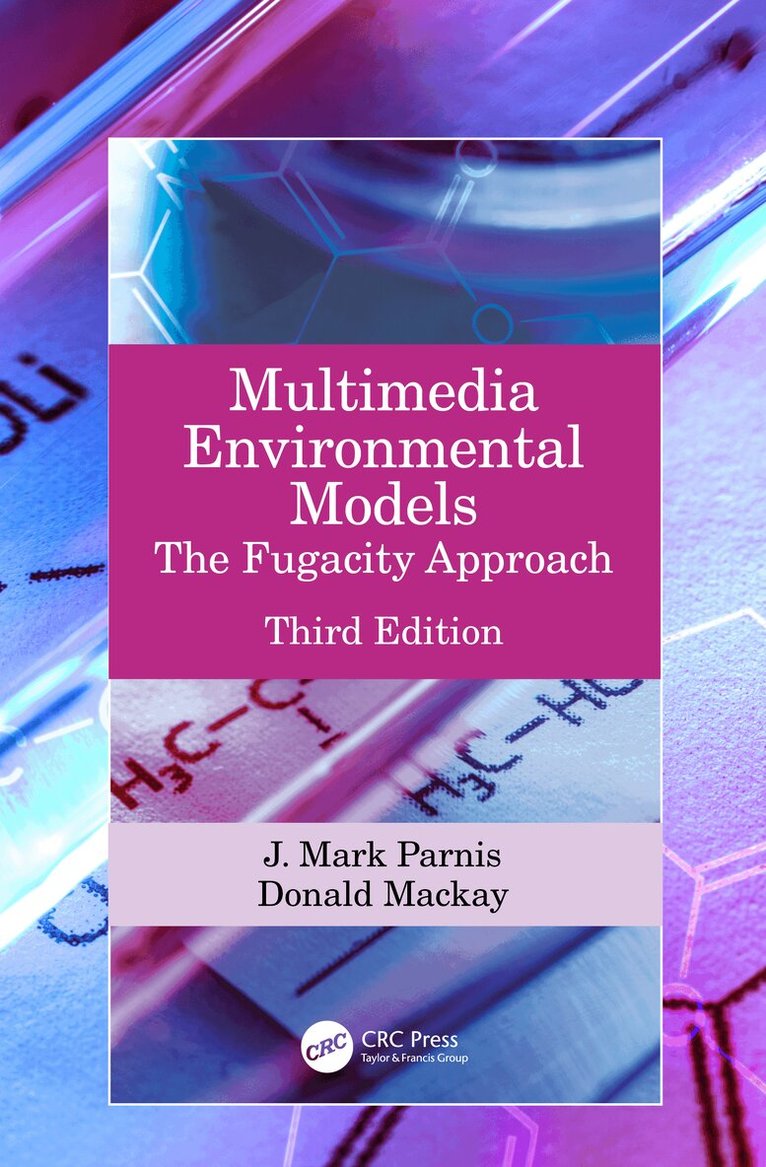
    Multimedia Environmental Models

    The Fugacity Approach

    AvJ. Mark Parnis,Donald Mackay

    Inbunden, Engelska, 2020

    3 029 kr

    Beställningsvara. Skickas inom 10-15 vardagar. Fri frakt över 249 kr.

    Fler format och utgåvor

    Häftad

    1 274 kr

    Beskrivning

    Multimedia Environmental Models: The Fugacity Approach, Third Edition, takes a broad approach of viewing chemical behavior in the total biosphere of connected biotic and abiotic compartments. Chemicals are subject to the laws of "mass balance," a constraint that provides the opportunity to establish quantitative expressions for chemical fate that are central to chemical management and regulatory legislation. This book employs both the conventional concentration-based procedures and those based on application of the more elegant and powerful concept of fugacity to characterize equilibrium, steady-state distribution, and time-dependent transport between environmental phases such as air, water, and soil. Organic chemicals are emphasized because they are more easily generalized when assessing environmental behavior.Features Illustrates professional approaches to calculating the fate of chemicals in the environment Explicitly details all worked examples in an annotated step-by-step fashion Presents real-life freely downloadable models of use to government, industry, and private consulting professionals and students alike Clarifies symbols and notation

    Produktinformation

    • Utgivningsdatum:2020-09-08
    • Mått:178 x 254 x 21 mm
    • Vikt:720 g
    • Format:Inbunden
    • Språk:Engelska
    • Antal sidor:287
    • Upplaga:3
    • Förlag:Taylor & Francis Ltd
    • ISBN:9780367407827

    Utforska kategorier

    • Miljömedicin inom Medicin
    • Tillverkningsteknik inom Naturvetenskap och teknik

    Mer om författaren

    J. Mark Parnis is a physical chemist with a background in quantum mechanics, spectroscopy, and kinetics. Born in Calgary, Alberta, Mark graduated from the University of Toronto with a PhD in physical inorganic chemistry. After working in the NRC Laser Chemistry Group in Ottawa, he joined Trent University Chemistry Department in 1989, where he has taught inorganic, physical, and theoretical chemistry. Early on in his research career, he worked on the photochemistry and spectroscopic characterization of metal atom reaction products with small organic molecules in low-temperature matrices. This work led to studies of organic cation spectroscopy and the study of ion decomposition products in matrices. Later in his career, he joined forces with Donald Mackay to form the Chemical Properties Research Group, focusing on the techniques for estimating physicochemical properties of molecular species with an emphasis on environmental modeling applications. He is currently the director of the Canadian Environmental Modelling Centre at Trent University.Donald Mackay is an internationally renowned engineer and scientist, the acknowledged pioneer of fugacity-based modeling applications in environmental fate and exposure methodology. Born in Glasgow, Scotland, Don is a graduate of the University of Glasgow and is now professor emeritus in the School of the Environment and director emeritus of the Canadian Environmental Modelling Centre, both at Trent University. He is also professor emeritus in the Department of Chemical Engineering and Applied Chemistry of the University of Toronto where he taught for some 30 years and established himself as a pioneer of multimedia modeling in environmental science. Moving to Trent University in 1995, he contributed to the growth and maturation of the environmental science program and established the Canadian Environmental Modelling Centre, which he led until his official retirement in 2002. Since that time, Don has continued to work in the field, producing over 750 articles, many books, and numerous reports during his career. His principal research has been on the environmental fate of toxic substances and has included studies of numerous partitioning and transport processes in the environment, the focus being on organic contaminants. His recent work includes the extension of the environmental models to include food uptake and pharmacokinetic processes and their application as components of chemical risk assessments by regulatory agencies worldwide. The recipient of the Order of Canada and many other awards, Don is a leading figure in the field of environmental fate modeling.

    Innehållsförteckning

    • 1. Basic Concepts 2. Equilibrium Partitioning 3. Advection and Reaction 4. Transport within and between Compartments 5. Evaluative Fugacity Models and Calculations 6. Specific Fugacity Models and Calculations 7. Chemical Uptake by Organisms 8. Human Health