• Fri frakt över 249 kr
  • •
  • Snabba leveranser
  • •
  • Billiga böcker
Kundservice

Du är på sajten för privatpersoner.

Företag, bibliotek eller offentlig verksamhet?

Du handlar på classic.bokus.com, där alla dina funktioner finns intakta.
Till classic.bokus.com
Bokus logotyp. Gå till startsidan.
  • Erbjudanden
  • Nyheter
  • Student
  • Topplistor
  • Barn & ungdom
  • Bokus Play
  • E-böcker
  • Pocketböcker
  • Spel & pussel

10% rabatt på allt med kod: NYSTART10 →

Sidfot

Mina sidor

    Hjälp

    • Kundservice
    • Vanliga frågor och svar
    • Frakt och leverans
    • Retur vid ångerrätt
    • Reklamera vara
    • Betalning
    • Köpvillkor
    • Allmänna villkor
    • Information om webbplatsens tillgänglighet

    Om Bokus

    • Om oss
    • Pressrum
    • För studenter
    • För företag
    • För bibliotek och offentlig verksamhet
    • För leverantörer
    • Hållbarhet

    Populärt

    • Aktuella erbjudanden
    • Presentkort
    • Studentlitteratur
    • Nya böcker
    • Topplistor
    • Signerade böcker
    • Engelska böcker

    Inspiration

    • Boktips
    • BookTok
    • Populära bokserier
    • Barnbokskaraktärer
    • Populära författare
    Logotyp för Bokus
    Följ oss på Facebook (extern länk)Följ oss på Instagram (extern länk)Följ oss på YouTube (extern länk)Följ oss på TikTok (extern länk)
    bokus @ CookiesAnpassa cookiesIntegritetspolicyKöpvillkor
    Till Citymail hemsida (extern länk)Till Budbee hemsida (extern länk)Till Postnord hemsida (extern länk)Till Schenker hemsida (extern länk)Till Early Bird hemsida (extern länk)Till Walleys hemsida (extern länk)
    1. Naturvetenskap och teknik
    2. Geovetenskap
    3. Regional planering

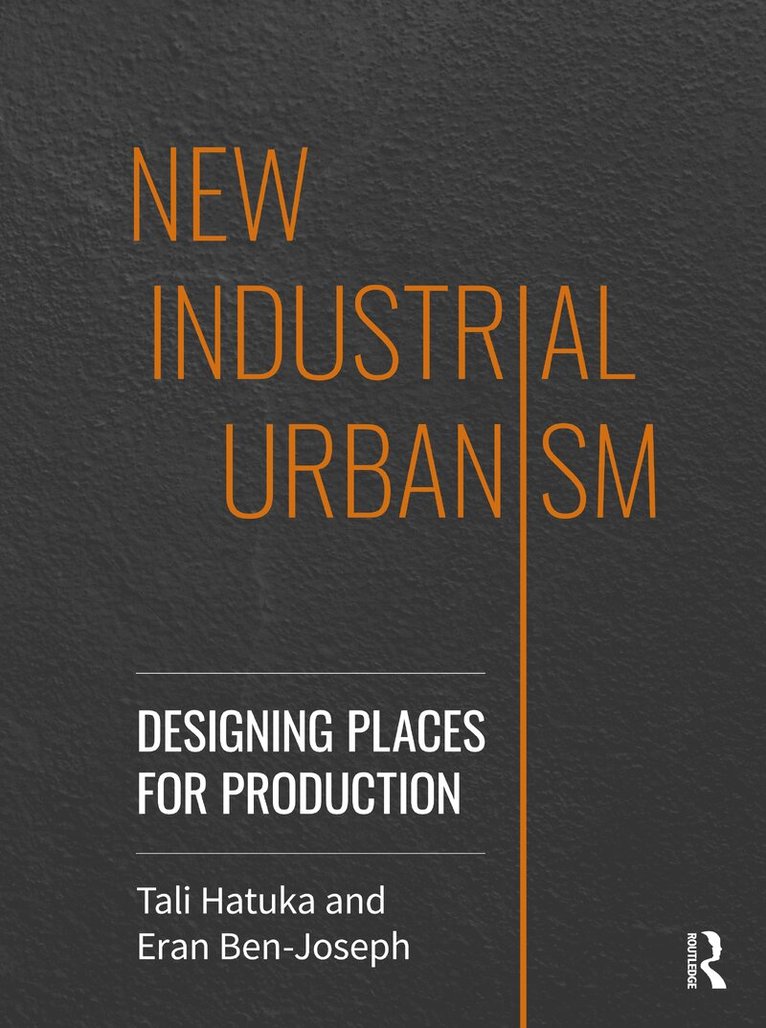
    New Industrial Urbanism

    Designing Places for Production

    AvTali Hatuka,Eran Ben-Joseph

    Inbunden, Engelska, 2022

    2 423 kr

    Beställningsvara. Skickas inom 10-15 vardagar. Fri frakt över 249 kr.

    Fler format och utgåvor

    Häftad

    541 kr

    Beskrivning

    Since the Industrial Revolution, cities and industry have grown together; towns and metropolitan regions have evolved around factories and expanding industries. New Industrial Urbanism explores the evolving and future relationships between cities and places of production, focusing on the spatial implications and physical design of integrating contemporary manufacturing into the city. The book examines recent developments that have led to dramatic shifts in the manufacturing sector – from large-scale mass production methods to small-scale distributed systems; from polluting and consumptive production methods to a cleaner and more sustainable process; from broad demand for unskilled labor to a growing need for a more educated and specialized workforce – to show how cities see new investment and increased employment opportunities. Looking ahead to the quest to make cities more competitive and resilient, New Industrial Urbanism provides lessons from cases around the world and suggests adopting New Industrial Urbanism as an action framework that reconnects what has been separated: people, places, and production. Moving the conversation beyond the reflexively-negative characterizations of industry, more than two centuries after the start of the Industrial Revolution, this book calls to re-consider the ways in which industry creates places, sustains jobs, and supports environmental sustainability in our cities.This book is available as Open Acess through https://www.taylorfrancis.com/.

    Produktinformation

    • Utgivningsdatum:2022-03-24
    • Mått:210 x 280 x undefined mm
    • Vikt:1 140 g
    • Format:Inbunden
    • Språk:Engelska
    • Antal sidor:270
    • Förlag:Taylor & Francis Ltd
    • ISBN:9780367427726

    Utforska kategorier

    • Regional planering inom Naturvetenskap och teknik
    • Tillverkningsindustri inom Ekonomi och Ledarskap

    Mer om författaren

    Tali Hatuka, an architect and urban planner, is a Professor of Urban Planning and the head of the Laboratory of Contemporary Urban Design, at Tel Aviv University (lcud.tau.ac.il). Her work is focused primarily on two fields: urban society, and city design and development. Hatuka is the author and co-author of the books: The Design of Protest, Violent Acts and Urban Space in Contemporary Tel Aviv, The Factory, State-Neighborhood, The Planners, City-Industry and Land-Gardens. She also works as a city planner and urban designer advising municipalities and the public sector. Hatuka has received many awards, including a Fulbright Scholarship and a Marie Curie Scholarship at the Massachusetts Institute of Technology (MIT). She holds degrees from the Technion in Israel and Heriot-Watt University in the UK.Eran Ben-Joseph is the Class of 1922 Professor of Landscape Architecture and Urban Planning and the former head of the Department of Urban Studies and Planning at the Massachusetts Institute of Technology (MIT). His research and teaching areas include urban and physical design, standards and regulations, sustainable site planning technologies and urban retrofitting. He authored and co-authored the books: Streets and the Shaping of Towns and Cities, Regulating Place: Standards and the Shaping of Urban America, The Code of the City, RENEW Town and ReThinking a Lot. Ben-Joseph worked as a city planner, urban designer, and landscape architect in Europe, Asia, the Middle East, and the United States. He holds academic degrees from the University of California at Berkeley and Chiba National University of Japan.

    Recensioner i media

    Although advocates and academics alike have embraced the notion of advanced manufacturing locating in cities, the literature has lacked a compelling and detailed vision of what a new industrial urbanism would actually encompass. This comprehensive volume fills that gap, with a powerful visual analysis thoroughly grounded in economic theory and historical context.- Karen Chapple, Professor and Director, School of Cities, University of Toronto, CanadaTypically the purview of logistics consultants and engineers, Tali Hatuka and Eran Ben-Joseph make a compelling case that industrial districts should be an important area of focus for urban designers. The reemergence of direct-to-customer and small batch manufacturing and the proliferation of last mile e-commerce distribution facilities means that many types of industrial facilities need to be integrated into the urban core and not segregated to the expanding metropolitan periphery. New Industrial Urbanism provides a comprehensive roadmap for how this can be considered and accommodated.- Tim Love FAIA, Professor Northeastern University and Founding Principal Utile, Boston, MassachusettsIn a time of dramatic changes in industrial strategies and manufacturing, New Industrial Urbanism provides a much-needed spatial approach to exploring the relationships between city and industry. Hatuka and Ben-Joseph offer valuable lessons to those who are committed to communities and places, and actively engaged in shaping our cities’ built environment.- Elisabeth B. Reynolds, Former Executive Director of MIT’s Industrial Performance Center and Task Force on the Work of the Future; Special Assistant to the President of the United States for Manufacturing, National Economic Council

    Innehållsförteckning

    • PART I FOR PRODUCTION’S SAKE 1. People, Factories, and Making 2. Between Production and City Development 3. The Way Forward: New Industrial Urbanism PART II PLACES OF MAKING 4. Clustering New Industries 5. Reinventing Industrial Areas 6. Forming Hybrid Districts 7. Industry and Place PART III OPEN MANUFACTURING 8. Advancing Regions 9. Integrating Urban-Industrial Systems 10. Working, Living, and Innovating 11. New Industrial Urbanism