• Fri frakt över 249 kr
  • •
  • Snabba leveranser
  • •
  • Billiga böcker
Kundservice

Du är på sajten för privatpersoner.

Företag, bibliotek eller offentlig verksamhet?

Du handlar på classic.bokus.com, där alla dina funktioner finns intakta.
Till classic.bokus.com
Bokus logotyp. Gå till startsidan.
  • Erbjudanden
  • Nyheter
  • Student
  • Topplistor
  • Barn & ungdom
  • Bokus Play
  • E-böcker
  • Pocketböcker
  • Spel & pussel

10% rabatt på allt med kod: NYSTART10 →

Sidfot

Mina sidor

    Hjälp

    • Kundservice
    • Vanliga frågor och svar
    • Frakt och leverans
    • Retur vid ångerrätt
    • Reklamera vara
    • Betalning
    • Köpvillkor
    • Allmänna villkor
    • Information om webbplatsens tillgänglighet

    Om Bokus

    • Om oss
    • Pressrum
    • För studenter
    • För företag
    • För bibliotek och offentlig verksamhet
    • För leverantörer
    • Hållbarhet

    Populärt

    • Aktuella erbjudanden
    • Presentkort
    • Studentlitteratur
    • Nya böcker
    • Topplistor
    • Signerade böcker
    • Engelska böcker

    Inspiration

    • Boktips
    • BookTok
    • Populära bokserier
    • Barnbokskaraktärer
    • Populära författare
    Logotyp för Bokus
    Följ oss på Facebook (extern länk)Följ oss på Instagram (extern länk)Följ oss på YouTube (extern länk)Följ oss på TikTok (extern länk)
    bokus @ CookiesAnpassa cookiesIntegritetspolicyKöpvillkor
    Till Citymail hemsida (extern länk)Till Budbee hemsida (extern länk)Till Postnord hemsida (extern länk)Till Schenker hemsida (extern länk)Till Early Bird hemsida (extern länk)Till Walleys hemsida (extern länk)
    1. Hälsa och familj
    2. Hälsa
    3. Särskilda hälsotillstånd
    4. Fysiskafunktionsvariationer

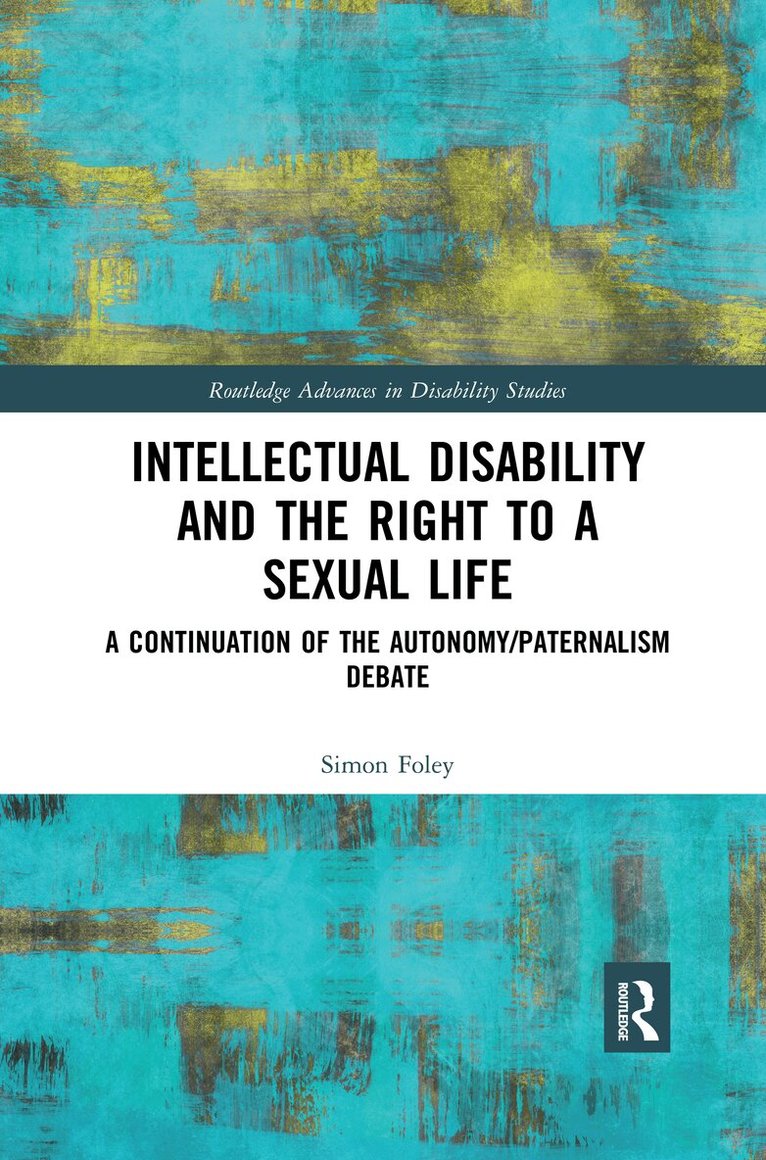
    Intellectual Disability and the Right to a Sexual Life

    A Continuation of the Autonomy/Paternalism Debate

    AvSimon Foley

    Häftad, Engelska, 2019

    Del i serien Routledge Advances in Disability Studies

    793 kr

    Beställningsvara. Skickas inom 10-15 vardagar. Fri frakt över 249 kr.

    Fler format och utgåvor

    Inbunden

    2 352 kr

    E-bok

    939 kr

    E-bok

    939 kr

    Beskrivning

    One of the perennial political/philosophical questions concerns whether it is ever justifiable for a third party to paternalistically restrict an adult’s freedom to ensure their own, or society’s, best interests are protected. Wherever one stands on this debate it remains the case that, unlike their non-impaired contemporaries, many intellectually disabled adults are subjected to a paternalistic regime of care. This is particularly the case regarding members of this population exercising more control of their sexuality. Utilizing rare empirical data, Foucault's theory of power and Kristeva’s concept of abjection, this work shows that many non-disabled people – including family members – hold ambivalent attitudes towards people with visible disabilities expressing their sexuality. Through a careful examination of the autonomy/paternalism debate this is the first book to provide an original, provocative and philosophically compelling analysis to argue that where necessary, facilitated sex with prostitutes should be included as part of a new regime of care to ensure that sexual needs are met.Intellectual Disability and the Right to a Sexual Life is essential reading for scholars, students and policy-makers with an interest in philosophy, sociology, political theory, social work, disability studies and sex studies. It will also be of interest to anybody who is a parent or a sibling of an adult with an intellectual disability and those with an interest in human rights and disability more generally.

    Produktinformation

    • Utgivningsdatum:2019-09-11
    • Mått:156 x 234 x 11 mm
    • Vikt:360 g
    • Format:Häftad
    • Språk:Engelska
    • Serie:Routledge Advances in Disability Studies
    • Antal sidor:192
    • Förlag:Taylor & Francis Ltd
    • ISBN:9780367430955

    Utforska kategorier

    • Fysiskafunktionsvariationer inom Hälsa och familj
    • Sociala och etiska frågor inom Samhälle och politik
    • Sociologi inom Samhälle och politik

    Mer om författaren

    Dr Simon Foley of QUB Belfast has taught Sociology in various universities throughout the United Kingdom and the Republic of Ireland over the past 10 years. He has published widely on issues of sexuality, social theory and social change and is an acknowledged international expert on the sociology of disability.

    Recensioner i media

    'This is a provocative and ambitious piece of work that is driven by an unapologetic desire to interrogate assumptions about the common placed infantilisation of Intellectually Disabled adults, particularly those with Down Syndrome, and especially when it comes to genital sex. A stand out strength of this book are the thought provoking and honest narratives that Foley has elicited from his participants; mostly mothers. Furthermore, we hear his voice throughout, as both a researcher pushing the boundaries from the ‘inside’ and as a sibling of an adult sister who has Down Syndrome. His positionality is explicit and forms a nuanced part of the framework. This book will certainly open the debate and prompt a discussion.' - Dr Chrissie Rogers, Senior Lecturer in Sociology at Aston University

    Innehållsförteckning

    • Introduction, Chapter 1. The who, the what and the why, 1.1. Research Methodology, 1.2. The contested politics of researching disability, 1.3. My Conceptual Framework, 1.4. Ideological affiliations, Chapter 2. The Autonomy/Paternalism Debate, 2.1. Introduction, 2.2 The Autonomy/Paternalism Debate, 2.3 Historical and Cultural Discourses of Sexuality, 2.4 The focus on genital sex explained, 2.5 The dangerous discourse of sexual expression, 2.6 Liberal society and changing sexual mores, 2.7 The parental perspective, 2.8 Facilitated sex, 2.9 Conceptualising disability, 2.10 My conceptual framework, Chapter 3. Research Findings and Analysis: The Parental Perspective, 3.1 Introduction, 3.2 Theme 1: Parental perception of what it means to be normal - the rationale behind the paternalistic regime of care, 3.3 Theme 2: Parental refutation of the charge that their regime of care is to 'blame' for the celibate lives led by some of the adult children with Down syndrome, 3.4 Theme 3: Parental view of their adult sons and daughters with Down syndrome as sexual beings – and the desire that they find a girlfriend/boyfriend, 3.5 Theme 4: The privileging of ‘loving’ boyfriend/girlfriend relationships over sexual expression for its own sake: the gender bias in action, 3.6 Interviews with Adults with Down Syndrome, 3.7 Theme 1: The desire to move out of the parental home, 3.8 Theme 2: The desire to have more control over how their leisure time is spent, 3.9 Theme 3: The role played by the mother as reluctant jailor, 3.10 Theme 4: The desire to have a boyfriend/girlfriend, 3.11 Theme 5: What one does in a boyfriend/girlfriend relationship?, 3.12 Theme 6: The desire to be normal – the abject in action, 3.13 Analysis of the Findings, Chapter 4. Third Rail Sexual Politics under Scrutiny: The Question of Faciliated Sex, 4.1 Focus group findings, 4.2 Focus group analysis, Chapter 5. A modest proposal regarding the normalisation of facilitated sex, 5.1 Introduction, 5.2 Ideological Critiques in form and content, 5.3 The Three Faces of Power Debate, 5.4 Conclusion, Chapter 6. Conclusions, References