• Fri frakt över 249 kr
  • •
  • Snabba leveranser
  • •
  • Billiga böcker
Kundservice

Du är på sajten för privatpersoner.

Företag, bibliotek eller offentlig verksamhet?

Du handlar på classic.bokus.com, där alla dina funktioner finns intakta.
Till classic.bokus.com
Bokus logotyp. Gå till startsidan.
  • Erbjudanden
  • Nyheter
  • Student
  • Topplistor
  • Barn & ungdom
  • Bokus Play
  • E-böcker
  • Pocketböcker
  • Spel & pussel

10% rabatt på allt med kod: NYSTART10 →

Sidfot

Mina sidor

    Hjälp

    • Kundservice
    • Vanliga frågor och svar
    • Frakt och leverans
    • Retur vid ångerrätt
    • Reklamera vara
    • Betalning
    • Köpvillkor
    • Allmänna villkor
    • Information om webbplatsens tillgänglighet

    Om Bokus

    • Om oss
    • Pressrum
    • För studenter
    • För företag
    • För bibliotek och offentlig verksamhet
    • För leverantörer
    • Hållbarhet

    Populärt

    • Aktuella erbjudanden
    • Presentkort
    • Studentlitteratur
    • Nya böcker
    • Topplistor
    • Signerade böcker
    • Engelska böcker

    Inspiration

    • Boktips
    • BookTok
    • Populära bokserier
    • Barnbokskaraktärer
    • Populära författare
    Logotyp för Bokus
    Följ oss på Facebook (extern länk)Följ oss på Instagram (extern länk)Följ oss på YouTube (extern länk)Följ oss på TikTok (extern länk)
    bokus @ CookiesAnpassa cookiesIntegritetspolicyKöpvillkor
    Till Citymail hemsida (extern länk)Till Budbee hemsida (extern länk)Till Postnord hemsida (extern länk)Till Schenker hemsida (extern länk)Till Early Bird hemsida (extern länk)Till Walleys hemsida (extern länk)
    1. Naturvetenskap och teknik
    2. Geovetenskap
    3. Miljövetenskap och miljöpolitik

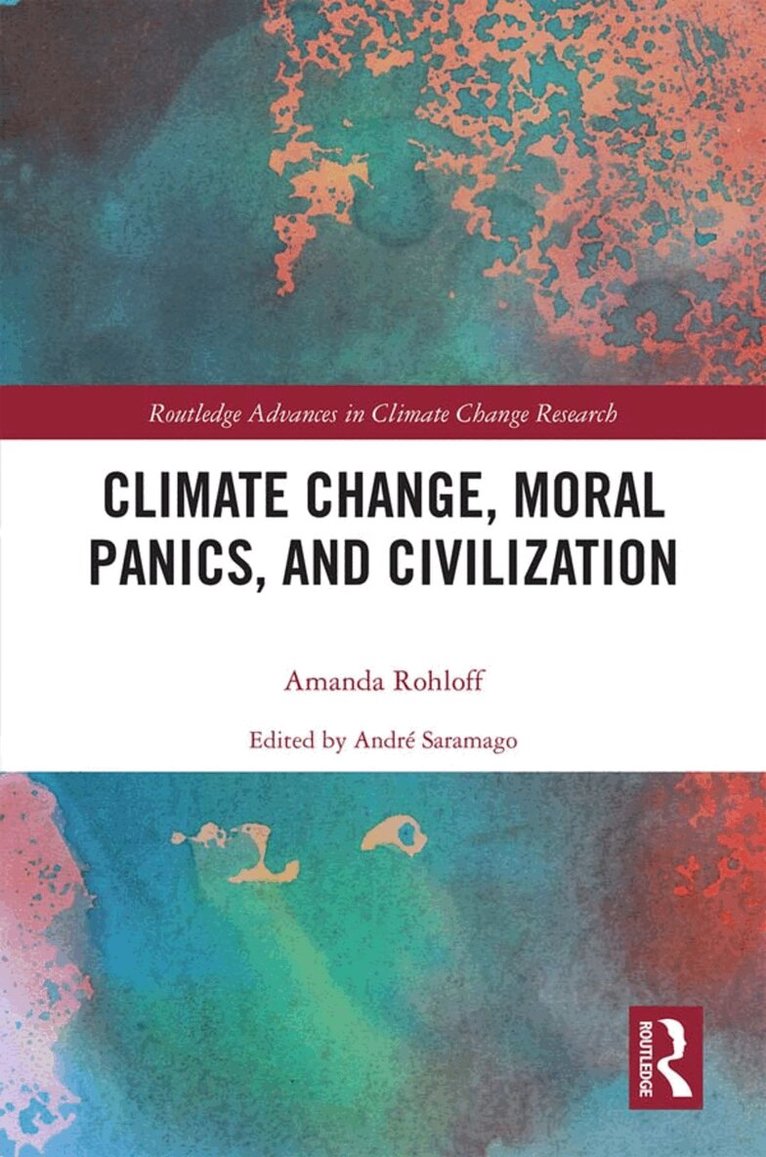
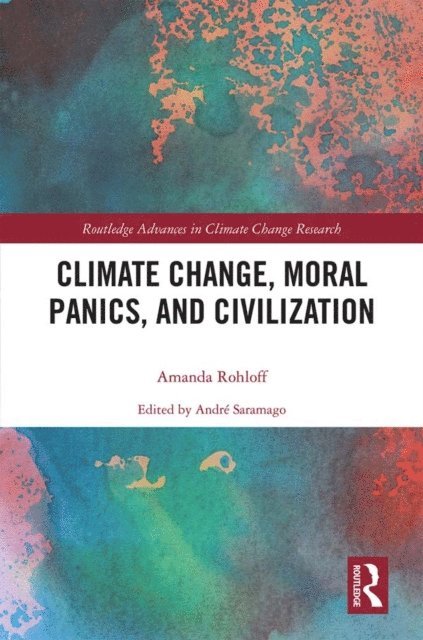
    Climate Change, Moral Panics and Civilization

    AvAmanda Rohloff,André Saramago

    Häftad, Engelska, 2020

    Del i serien Routledge Advances in Climate Change Research

    695 kr

    Beställningsvara. Skickas inom 10-15 vardagar. Fri frakt över 249 kr.

    Fler format och utgåvor

    Inbunden

    2 421 kr

    E-bok

    822 kr

    E-bok

    822 kr

    Beskrivning

    In recent years, interest in climate change has rapidly increased in the social sciences and yet there is still relatively little published material in the field that seeks to understand the development of climate change as a perceived social problem. This book contributes to filling this gap by theoretically linking the study of the historical development of social perceptions about ‘nature’ and climate change with the figurational sociology of Norbert Elias and the study of moral panics. By focusing sociological theory on climate change, this book situates the issue within the broader context of the development of ecological civilizing processes and comes to conceive of contemporary campaigns surrounding climate change as instances of moral panics/civilizing offensives with both civilizing and decivilizing effects. In the process, the author not only proposes a new approach to moral panics research, but makes a fundamental contribution to the development of figuration sociology and the understanding of how climate change has developed as a social problem, with significant implications regarding how to improve the efficacy of climate change campaigns. This highly innovative study should be of interest to students and researchers working in the fields of sociology, environment and sustainability, media studies and political science.

    Produktinformation

    • Utgivningsdatum:2020-03-04
    • Mått:156 x 234 x 18 mm
    • Vikt:380 g
    • Format:Häftad
    • Språk:Engelska
    • Serie:Routledge Advances in Climate Change Research
    • Antal sidor:200
    • Förlag:Taylor & Francis Ltd
    • ISBN:9780367507701

    Utforska kategorier

    • Miljövetenskap och miljöpolitik inom Naturvetenskap och teknik
    • Sociologi inom Samhälle och politik
    • Miljöteknik inom Naturvetenskap och teknik

    Mer om författaren

    Amanda Rohloff was a Wellcome Trust Postdoctoral Research Fellow in Sociology at the School of Social Sciences at Brunel University, UK.André Saramago is an Auxiliary Professor of International Relations at Lusíada University-North (Porto), Portugal.

    Recensioner i media

    "A must read for anyone who wants to make sense of the uncertainties of our times caused by climate change and fear of a bleak future. The analytical links established by the author between Elias’ thought on civilising [and decivilising] processes and moral panic literature are very compelling." -- Aurélie Lacassagne, Associate Professor of Political Science, Laurentian University, Canada"Amanda Rohloff’s book makes a valuable contribution to the discussion of how the sociological perspective inspired by Norbert Elias can be extended to develop the historical sociology of moral panics, as well being a path-breaking intervention into the way we understand current debates around the vital question of climate change". -- Robert van Krieken, Professor of Sociology, University of Sydney, Australia"Amanda Rohloff was a remarkable young thinker. She had the original idea that our contemporary concern with climate change has some of the characteristics of a moral panic -- but not in the usual sense of an overreaction, because the problem is very real. And she sets it in long-term and theoretical perspective, linking it to civilising and decivilising processes". -- Stephen Mennell, Professor Emeritus of Sociology, University College Dublin, Ireland"Focusing on how climate change has come to be perceived as a major global threat, Amanda Rohloff has developed a challenging and sophisticated reformulation of the moral panic concept. A major contribution to ongoing debates about such panics, this highly original work is a fitting epitaph to an exceptionally promising and talented younger scholar". -- Julian Petley, Professor of Journalism, Brunel University London, United Kingdom "This book constitutes a well-researched study on anthropogenic climate change as [a] social problem. Rohloff skilfully interweaves the moral panic sociological model with the figurational sociology of Norbert Elias. Providing original insights and suggestions for future research, she offers a rigorous approach for testing the moral panic concept and improving its reformulation". -- Morena Tartari, Lecturer of Sociology, University of Padova, Italy"Climate change and moral panics are inherently political subjects. But amid heated debate, Amanda Rohloff keeps her cool and resists the temptation to indulge in moralising. Drawing on the theory of civilising processes, she provides a highly illuminating long-term and wide-ranging perspective in this exemplary work of sociology". -- Cas Wouters, Senior Lecturer of Sociology, Utrecht University, The Netherlands "Bringing to bear both Elias’s theory of civilising processes and Cohen’s theory of moral panics on the problem of climate change, Rohloff has managed to shed real light on the greatest challenge facing global civilisation. This book is an accessible and constantly illuminating guide [to] the environmental politics of the biosphere that should be compulsory reading for anyone involved in climate change governance". -- Stephen Quilley, Associate Professor of Social and Environmental Innovation, University of Waterloo, Canada"Amanda Rohloff ’s book illustrates how the igniting of a sociological spark in an outstanding student began an impressive voyage of discovery. This innovative synthesis of Eliasian perspectives and moral panic theories greatly enhances our understanding of climate change politics and serves as a fitting tribute to a tragically foreshortened scholarly journey." -- David Pearson, Adjunct Reader, School of Social & Cultural Studies, Victoria University of Wellington, New Zealand


    Innehållsförteckning

    • Preface1 Introduction2 On Climate Change, ‘Nature’ and the ‘Environment’ 3 Theories of Social Processes and Social Change4 Methodology5 Historical Analysis (Part One): Climate Change and Ecological Civilizing Processes6 Historical Analysis (Part Two): Climate Change and Moral Panics7 Moral Panics as Civilizing and Decivilizing Processes: A Comparative Analysis8 Conclusion