• Fri frakt över 249 kr
  • •
  • Snabba leveranser
  • •
  • Billiga böcker
Kundservice

Du är på sajten för privatpersoner.

Företag, bibliotek eller offentlig verksamhet?

Du handlar på classic.bokus.com, där alla dina funktioner finns intakta.
Till classic.bokus.com
Bokus logotyp. Gå till startsidan.
  • Erbjudanden
  • Nyheter
  • Student
  • Topplistor
  • Barn & ungdom
  • Bokus Play
  • E-böcker
  • Pocketböcker
  • Spel & pussel

Må bättre, för mindre! Upp till 50% rabatt på hälsoböcker

Sidfot

Mina sidor

    Hjälp

    • Kundservice
    • Vanliga frågor och svar
    • Frakt och leverans
    • Retur vid ångerrätt
    • Reklamera vara
    • Betalning
    • Köpvillkor
    • Allmänna villkor
    • Information om webbplatsens tillgänglighet

    Om Bokus

    • Om oss
    • Pressrum
    • För studenter
    • För företag
    • För bibliotek och offentlig verksamhet
    • För leverantörer
    • Hållbarhet

    Populärt

    • Aktuella erbjudanden
    • Presentkort
    • Studentlitteratur
    • Nya böcker
    • Topplistor
    • Signerade böcker
    • Engelska böcker

    Inspiration

    • Boktips
    • BookTok
    • Populära bokserier
    • Barnbokskaraktärer
    • Populära författare
    Logotyp för Bokus
    Följ oss på Facebook (extern länk)Följ oss på Instagram (extern länk)Följ oss på YouTube (extern länk)Följ oss på TikTok (extern länk)
    bokus @ CookiesAnpassa cookiesIntegritetspolicyKöpvillkor
    Till Citymail hemsida (extern länk)Till Budbee hemsida (extern länk)Till Postnord hemsida (extern länk)Till Schenker hemsida (extern länk)Till Early Bird hemsida (extern länk)Till Walleys hemsida (extern länk)
    1. Naturvetenskap och teknik
    2. Matematik och naturvetenskap
    3. Biologi

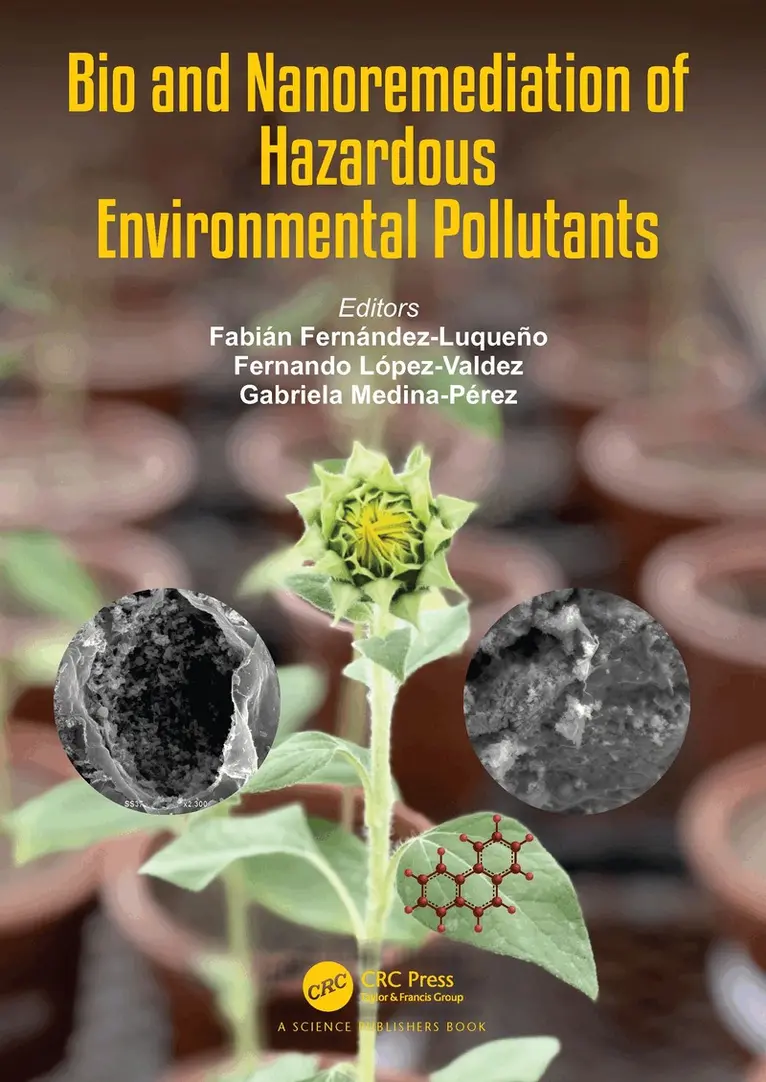
    Bio and Nanoremediation of Hazardous Environmental Pollutants

    AvFabián Fernández Luqueño,Fernando López-Valdez

    Häftad, Engelska, 2024

    765 kr

    Beställningsvara. Skickas inom 10-15 vardagar. Fri frakt över 249 kr.

    Beskrivning

    This book is a compendium of knowledge about nanomaterials and strategies for bioremediation over hazardous environmental pollutants. The book is divided into 2 sections. Section 1 deals with the polluted environment, where it explains that soil is in serious danger and highlights the primary hazardous pollutants. Besides, this section covers algae, autochthonous, introduced, or genetically modified organisms that are used to degrade hazardous contaminants. In Section 2, Bio- and Nanoremediation are shown through synthesis, green synthesis and molecular farming, and their applications or impacts. Moreover, this discusses bio- and nano-remediation, working together for better performance, organisms, and nanomaterials for environmental remediation.

    Produktinformation

    • Utgivningsdatum:2024-12-19
    • Mått:178 x 254 x 19 mm
    • Vikt:740 g
    • Format:Häftad
    • Språk:Engelska
    • Antal sidor:344
    • Förlag:Taylor & Francis Ltd
    • ISBN:9780367512392

    Utforska kategorier

    • Biologi inom Naturvetenskap och teknik
    • Teknik: allmänt inom Naturvetenskap och teknik
    • Miljöteknik inom Naturvetenskap och teknik

    Mer om författaren

    Dr. Fabián Fernández-Luqueño is a Full Professor at the Center for Research and Advanced Studies of the National Polytechnic Institute (Cinvestav Saltillo), Mexico. He received a Bachelor’s degree in engineering in soil science, his M.Sc. in edaphology, and a Ph.D. in Biotechnology. His research area is plant-environment interactions, bio- and nano-remediation, agricultural nanotechnology, and the effect of nanomaterials on crops, soils, and microorganisms. Fabián has authored more than 65 scientific papers, 12 science articles, 17 books, and 35 book chapters, and has been a reviewer of more than 20 high-impact peer-reviewed journals (Ranked in JCR-Q1) and associate editor from Heliyon (IF = 3.772) & Terra Latinoamericana (Scopus). He has been a dissertation advisor for undergraduate, bachelor, master, and Ph.D. degrees. Fabián is a member of Researchers-National Systems in level II, Mexican Academy of Sciences, and is currently vice-president of the Mexican Society of Soil Science.Dr. Fernando López-Valdez is a full Professor at the Research Centre for Applied Biotechnology (Centro de Investigación en Biotecnología Aplicada), Instituto Politécnico Nacional, Mexico. He is a Bachelor grade in Chem. Engineering (UV, México). M.Sc. Degree in Biotechnology (Bioprocesses) and Ph.D. in Biotechnology (Agricultural Biotech.) from CINVESTAV, Mexico. Dr. Fernando López-Valdez has been a Postgraduate professor for more than 20 years. He is also a Author or co-author of over 20 book chapters, two books as Editor, over 20 articles papers (JCR or peer-reviewed). He has lectured for science divulgation on Biotechnology, Agricultural, and Environmental Biotechnology fields. Currently, he is the Associate Editor for Terra Latinoamericana Journal, Mexican Society of Soil Science (SMCS).Dr. Gabriela Medina-Pérez is a Doctor of Science from the Scientific and Technological Development Program for Society with an emphasis on Agricultural Nanotechnology from the Center for Research and Advanced Studies of the National Polytechnic Institute (CINVESTAV-IPN). She is a Master in Food Sciences from the Autonomous University of the State of Hidalgo (UAEH) and an Agroindustrial Engineer from the Institute of Agricultural Sciences of UAEH (ICAP-UAEH). She is a member of the National System of Researchers (SNI) with a recent entry at the candidate level. An active member of the International Network of Government Scientific Advice (INGSA) since 2018. She is currently a full-time research professor in the academic area of agro-industrial engineering and food engineering at the ICAP-UAEH. She is also the general coordinator of the institute’s outreach. She has participated as lead author and co-author in several indexed articles, book chapters, and conference proceedings on bioactive compounds, nanotechnology, agricultural biotechnology, and sustainable development.

    Innehållsförteckning

    • SECTION 1. The Jeopardized Soil. Isoproturon Herbicide Interaction with Crops and Biodegradation. New Paradigm in Algae-based Wastewater Remediation. Microbial Communities and GHG Emissions from Polluted Agricultural Soils Remediated with Several Amendments. Agricultural Nanotechnologies to Improve the Crops’ Quality, Increasing their Yields and Remediating Polluted Soils. SECTION 2. Genetically Modified Plants for Phytoremediation Biotechnological Microbial Remediants: Enhanced Pedospheric Detoxification Accomplished via Transgenic Plants. Synthesis and Applications of Transition Metal Oxide Nanoparticles for Bacteria Disinfection and Virus Inactivation in the Environment. Synthesis of Carbon-based Nanomaterials and their use in Nanoremediation. Green Synthesis of Nanomaterials and their use in Bio-and Nanoremediation. Nanoremediation of Hazardous Environmental Pollutants.Chemical and Biochemical Process Involved in the Degradation of Hazardous Contaminants through Bio and Nanoremediation. Environmental Remediation by Novel Nanomaterials and Fungi with High-degradation Capacity of Hazardous Contaminants. Nanomaterials and Edible or Nonedible Crops for Dissipate Pollutants: Using Nanotechnology to Bioremediate the Environment. Conducting Polymers Based Nanocomposites for the Environmental Pollutants Detection.