• Fri frakt över 249 kr
  • •
  • Snabba leveranser
  • •
  • Billiga böcker
Kundservice

Du är på sajten för privatpersoner.

Företag, bibliotek eller offentlig verksamhet?

Du handlar på classic.bokus.com, där alla dina funktioner finns intakta.
Till classic.bokus.com
Bokus logotyp. Gå till startsidan.
  • Erbjudanden
  • Nyheter
  • Student
  • Topplistor
  • Barn & ungdom
  • Bokus Play
  • E-böcker
  • Pocketböcker
  • Spel & pussel

10% rabatt på allt med kod NYSTART10 →

Sidfot

Mina sidor

    Hjälp

    • Kundservice
    • Vanliga frågor och svar
    • Frakt och leverans
    • Retur vid ångerrätt
    • Reklamera vara
    • Betalning
    • Köpvillkor
    • Allmänna villkor
    • Information om webbplatsens tillgänglighet

    Om Bokus

    • Om oss
    • Pressrum
    • För studenter
    • För företag
    • För bibliotek och offentlig verksamhet
    • För leverantörer
    • Hållbarhet

    Populärt

    • Aktuella erbjudanden
    • Presentkort
    • Studentlitteratur
    • Nya böcker
    • Topplistor
    • Signerade böcker
    • Engelska böcker

    Inspiration

    • Boktips
    • BookTok
    • Populära bokserier
    • Barnbokskaraktärer
    • Populära författare
    Logotyp för Bokus
    Följ oss på Facebook (extern länk)Följ oss på Instagram (extern länk)Följ oss på YouTube (extern länk)Följ oss på TikTok (extern länk)
    bokus @ CookiesAnpassa cookiesIntegritetspolicyKöpvillkor
    Till Citymail hemsida (extern länk)Till Budbee hemsida (extern länk)Till Postnord hemsida (extern länk)Till Schenker hemsida (extern länk)Till Early Bird hemsida (extern länk)Till Walleys hemsida (extern länk)
    1. Naturvetenskap och teknik
    2. Teknik och industri
    3. Byggnadsteknik

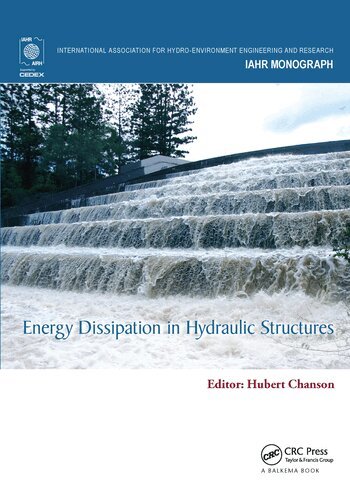
    Energy Dissipation in Hydraulic Structures

    AvHubert Chanson

    Häftad, Engelska, 2020

    Del i serien IAHR Monographs

    906 kr

    Beställningsvara. Skickas inom 10-15 vardagar. Fri frakt över 249 kr.

    Beskrivning

    Recent advances in technology have permitted the construction of large dams, reservoirs and channels. This progress has necessitated the development of new design and construction techniques, particularly with the provision of adequate flood release facilities. Chutes and spillways are designed to spill large water discharges over a hydraulic structure (e.g. dam, weir) without major damage to the structure itself and to its environment. At the hydraulic structure, the flood waters rush as an open channel flow or free-falling jet, and it is essential to dissipate a very signifi cant part of the flow kinetic energy to avoid damage to the hydraulic structure and its surroundings. Energy dissipation may be realised by a wide range of design techniques. A number of modern developments have demonstrated that such energy dissipation may be achieved (a) along the chute, (b) in a downstream energy dissipator, or (c) a combination of both.The magnitude of turbulent energy that must be dissipated in hydraulic structures is enormous even in small rural and urban structures. For a small storm waterway discharging at a 4 m3/s mm high drop, the turbulent kinetic energy flux per unit time is 120 kW! At a large dam, the rate of energy dissipation can exceed tens to hundreds of gigawatts; that is, many times the energy production rate of nuclear power plants. Many engineers have never been exposed to the complexity of energy dissipator designs, to the physical processes taking place and to the structural challenges. Several energy dissipators, spillways and storm waterways failed because of poor engineering design. It is believed that a major issue affecting these failures was the lack of understanding of the basic turbulent dissipation processes and of the interactions between free-surface aeration and flow turbulence.In that context, an authoritative reference book on energy dissipation in hydraulic structures is proposed here. The book contents encompass a range of design techniques including block ramps, stepped spillways, hydraulic jump stilling basins, ski jumps and impact dissipators.

    Produktinformation

    • Utgivningsdatum:2020-06-30
    • Mått:174 x 246 x 10 mm
    • Vikt:330 g
    • Format:Häftad
    • Språk:Engelska
    • Serie:IAHR Monographs
    • Antal sidor:178
    • Förlag:Taylor & Francis Ltd
    • ISBN:9780367575731

    Utforska kategorier

    • Byggnadsteknik inom Naturvetenskap och teknik
    • Maskinteknik och material inom Naturvetenskap och teknik
    • Miljöteknik inom Naturvetenskap och teknik

    Mer om författaren

    Hubert CHANSON received a degree of 'Ingénieur Hydraulicien' from the Ecole Nationale Supérieure d'Hydraulique et de Mécanique de Grenoble (France) in 1983 and a degree of 'Ingénieur Génie Atomique' from the 'Institut National des Sciences et Techniques Nucléaires' in 1984. He worked for the industry in France as a R&D engineer at the Atomic Energy Commission from 1984 to 1986, and as a computer professional in fluid mechanics for Thomson-CSF between 1989 and 1990. From 1986 to 1988, he studied at the University of Canterbury (New Zealand) as part of a Ph.D. project.Hubert CHANSON is Professor in Hydraulic Engineering and Applied Fluid Mechanics at the University of Queensland since 1990. His research interests include design of hydraulic structures, experimental investigations of two-phase flows, coastal hydrodynamics, water quality modelling, environmental management and natural resources. In 1999 he was awarded a Doctor of Engineering from the University of Queensland for outstanding research achievements in gas-liquid bubbly flows.Hubert CHANSON has been active also as consultant for both governmental agencies and private organisations. He is the main author of six books. Awards received: - The 13th Arthur Ippen award for outstanding achievements in hydraulic engineering (International Association of Hydraulic Engineering & Research)- 2004 award for the best practice paper in the Journal of Irrigation and Drainage Engineering (ASCE-EWRI)

    Recensioner i media

    "Many open channel and pipe flows are highly energetic – notable examples include flood overflows down the spillways of large dams. The IAHR monograph, Energy Dissipation in Hydraulic Structures, edited by Hubert Chanson, provides a contemporary account of modern developments in assessing and designing hydraulic structures aimed at lowering the energy levels of high-energy free surface flows. The book considers energy dissipation by a wide range of hydraulic structures including chutes, spillways and stilling basins. It is written by some of the leading experts in the field and is crammed full of useful information. [...]In the reviewer’s opinion, Energy Dissipation in Hydraulic Structures, edited by Hubert Chanson, is recommended reading for hydraulic engineers engaged in the design and maintenance of energy-dissipation devices. With some further polishing, this book could become the gold standard in the subject. This reviewer is left viewing hydraulic structures in a new, more awe-inspired light."Book review by Alistair G.L. Borthwick in 'Engineering and Computational Mechanics' Vol. 170 (March 2017).

    Innehållsförteckning

    • 1. Introduction: Energy dissipators in hydraulic structures 2. Energy dissipation at block ramps 3. Stepped spillways and cascades 4. Hydraulic jumps and stilling basins 5. Ski jumps, jets and plunge pools 6. Impact dissipators 7. Energy dissipation: Concluding remarks