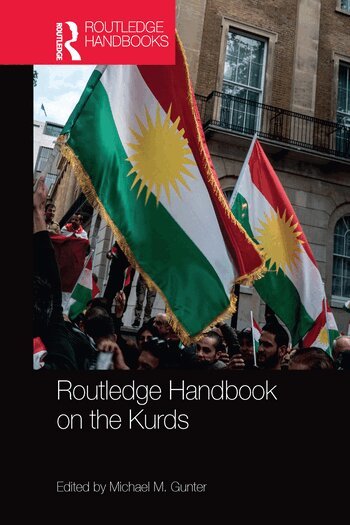
Routledge Handbook on the Kurds
761 kr
Beställningsvara. Skickas inom 10-15 vardagar. Fri frakt över 249 kr.
Du är på sajten för privatpersoner.
761 kr
Beställningsvara. Skickas inom 10-15 vardagar. Fri frakt över 249 kr.
Michael M. Gunter is a Professor of Political Science at Tennessee Technological University and the Secretary-General of the EU Turkey Civic Commission (EUTCC), headquartered in Brussels. He is the author or editor of 15 scholarly books on the Kurdish and Armenian issues as well as over 100 peer-reviewed scholarly articles.
"...edited by Michael M. Gunter, who is himself probably the most prolific of today’s scholars of Kurdish politics... Gunter has made an effort to juxtapose different viewpoints in each section, some chapters being sympathetic with the Kurdish movements described and others more critical[...] The history of the Kurdish movement, from the early twentieth century until the defeat of ISIS, is well covered and there are interesting though partial observations on changes in the political economy and social organisation of Kurdistan. [...] Kurdish scholars will find a few chapters that provide significant new information or analysis... Non-specialists who consult it as a work of reference may find it helpful for contextualising news reports." — Martin van Bruinessen, Utrecht University, The Netherlands, book review appeared in Kurdish Studies, May 2020
Du är på sajten för privatpersoner.
761 kr
Beställningsvara. Skickas inom 10-15 vardagar. Fri frakt över 249 kr.
Michael M. Gunter is a Professor of Political Science at Tennessee Technological University and the Secretary-General of the EU Turkey Civic Commission (EUTCC), headquartered in Brussels. He is the author or editor of 15 scholarly books on the Kurdish and Armenian issues as well as over 100 peer-reviewed scholarly articles.
"...edited by Michael M. Gunter, who is himself probably the most prolific of today’s scholars of Kurdish politics... Gunter has made an effort to juxtapose different viewpoints in each section, some chapters being sympathetic with the Kurdish movements described and others more critical[...] The history of the Kurdish movement, from the early twentieth century until the defeat of ISIS, is well covered and there are interesting though partial observations on changes in the political economy and social organisation of Kurdistan. [...] Kurdish scholars will find a few chapters that provide significant new information or analysis... Non-specialists who consult it as a work of reference may find it helpful for contextualising news reports." — Martin van Bruinessen, Utrecht University, The Netherlands, book review appeared in Kurdish Studies, May 2020