• Fri frakt över 249 kr
  • •
  • Snabba leveranser
  • •
  • Billiga böcker
Kundservice

Du är på sajten för privatpersoner.

Företag, bibliotek eller offentlig verksamhet?

Du handlar på classic.bokus.com, där alla dina funktioner finns intakta.
Till classic.bokus.com
Bokus logotyp. Gå till startsidan.
  • Erbjudanden
  • Nyheter
  • Student
  • Topplistor
  • Barn & ungdom
  • Bokus Play
  • E-böcker
  • Pocketböcker
  • Spel & pussel

10% rabatt på allt med kod: NYSTART10 →

Sidfot

Mina sidor

    Hjälp

    • Kundservice
    • Vanliga frågor och svar
    • Frakt och leverans
    • Retur vid ångerrätt
    • Reklamera vara
    • Betalning
    • Köpvillkor
    • Allmänna villkor
    • Information om webbplatsens tillgänglighet

    Om Bokus

    • Om oss
    • Pressrum
    • För studenter
    • För företag
    • För bibliotek och offentlig verksamhet
    • För leverantörer
    • Hållbarhet

    Populärt

    • Aktuella erbjudanden
    • Presentkort
    • Studentlitteratur
    • Nya böcker
    • Topplistor
    • Signerade böcker
    • Engelska böcker

    Inspiration

    • Boktips
    • BookTok
    • Populära bokserier
    • Barnbokskaraktärer
    • Populära författare
    Logotyp för Bokus
    Följ oss på Facebook (extern länk)Följ oss på Instagram (extern länk)Följ oss på YouTube (extern länk)Följ oss på TikTok (extern länk)
    bokus @ CookiesAnpassa cookiesIntegritetspolicyKöpvillkor
    Till Citymail hemsida (extern länk)Till Budbee hemsida (extern länk)Till Postnord hemsida (extern länk)Till Schenker hemsida (extern länk)Till Early Bird hemsida (extern länk)Till Walleys hemsida (extern länk)
    1. Samhälle och politik
    2. Samhälle och kultur
    3. Kultur och medier
    4. Kulturvetenskap

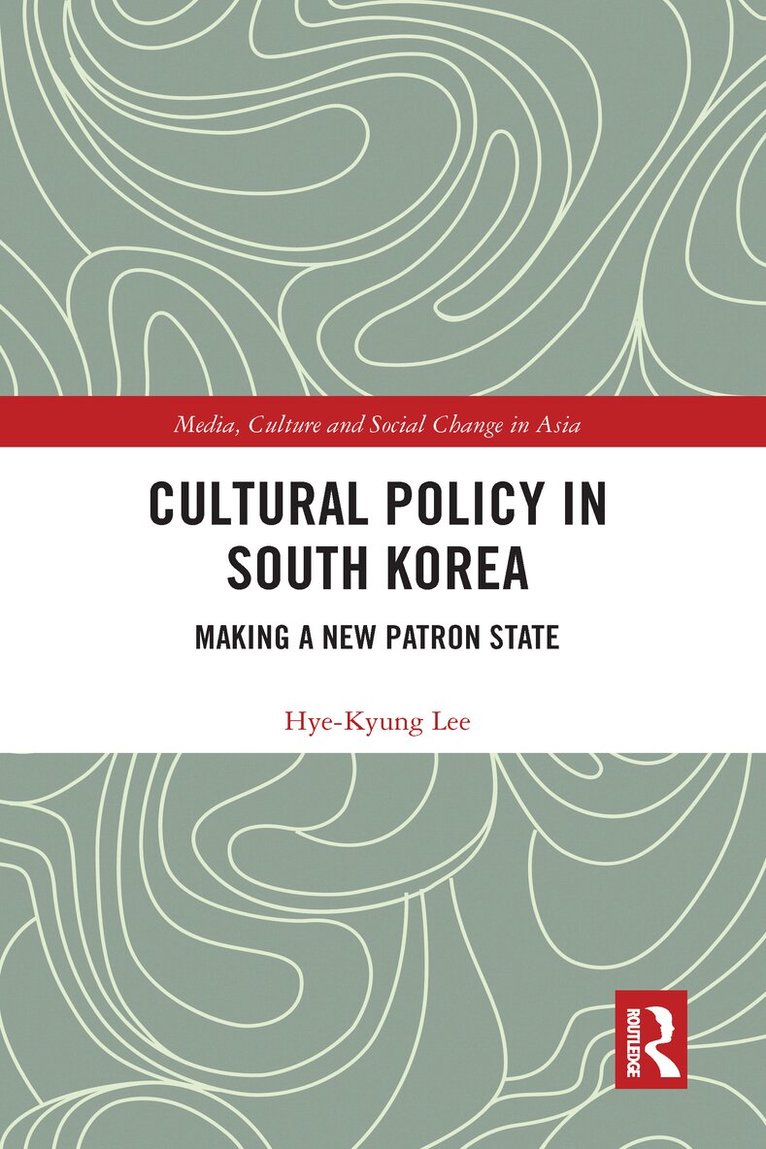
    Cultural Policy in South Korea

    Making a New Patron State

    AvHye-Kyung Lee

    Häftad, Engelska, 2020

    Del i serien Media, Culture and Social Change in Asia

    695 kr

    Beställningsvara. Skickas inom 10-15 vardagar. Fri frakt över 249 kr.

    Fler format och utgåvor

    Inbunden

    2 421 kr

    E-bok

    822 kr

    E-bok

    822 kr

    Beskrivning

    This is the first English-language book on cultural policy in Korea, which critically historicises and analyses the contentious and dynamic development of the policy. It highlights that the evolution of cultural policy has been bound up with the complicated political, economic and social trajectory of Korea to a surprising degree. Investigating the content and context of the policy from the period of Japanese colonial rule (1910–1945) until the military authoritarian regime (1961–1988), the book discusses how culture, often co-opted by the government, was mobilised to disseminate state agendas and define national identity. It then moves on to investigate the distinct characteristics of Korea’s contemporary cultural policy since the 1990s, particularly its energetic pursuit of democracy, a market economy of culture and outward cultural globalisation (the Korean Wave). This book helps readers to understand the continuous presence of the ‘strong state’ in Korean cultural policy and its implications for the cultural life of Koreans. It argues that this exceptionally active cultural policy sets an important condition not only for artistic creation, cultural consumption and cultural business in the country, but also for the nation's ambitious endeavour to turn the success of its pop culture into a global phenomenon.

    Produktinformation

    • Utgivningsdatum:2020-06-30
    • Mått:156 x 234 x 15 mm
    • Vikt:780 g
    • Format:Häftad
    • Språk:Engelska
    • Serie:Media, Culture and Social Change in Asia
    • Antal sidor:170
    • Förlag:Taylor & Francis Ltd
    • ISBN:9780367588557

    Utforska kategorier

    • Kulturvetenskap inom Samhälle och politik
    • Politik och statsskick inom Samhälle och politik

    Mer om författaren

    Hye-Kyung Lee is a Senior Lecturer in Cultural and Creative Industries at King’s College London, UK.

    Recensioner i media

    This book is a captivating and greatly needed addition to cultural policy studies. As the first English-language book on Korean cultural policy, it aptly historicizes the evolution of Korean cultural policy since the early 20th century and clearly articulates diverse perspectives embedded in the national cultural policy. By rendering the tensions and negotiations among various theoretical and practical frameworks, in particular between state-developmentalists and neoliberal globalists, surrounding major cultural policy issues, it clarifies the reasons why media scholars, cultural producers, and policy makers refocus on cultural policy in the ever-growing Korean cultural industries and the Korean Wave contexts. Without a doubt, this is timely and an indispensable chaperon for researchers and students who are interested in cultural policy studies, globalization studies, media studies, and Korean studies. - Dal Yong Jin, Simon Fraser University For those of us less familiar with Korean history, Hye-Kyung Lee gives us a richly contextualised and accessible account of cultural policies since the era of Japanese colonial rule, explaining their evolution both in terms of South Korea’s own political dynamics since the 1940s and the nationally diffracted effects of globalization. At the same time, Lee has extensive familiarity with Anglophone discussions of cultural policy, and the book represents an incisive and original intervention in those discussions. In particular, it recasts or ‘provincializes’ prevailing conceptions of state-culture-economy relations, and shows an admirable awareness of the broad range of fronts on which cultural policies have operated. - Jeremy Ahearne, University of WarwickIn this timely book Hye-Kyung Lee examines the history of state patronage in South Korea during the twentieth century, culminating in the current era sometimes described as the Korean Wave. She considers trajectories of cultur

    Innehållsförteckning

    • AcknowledgementsNotes on the Romanisation of KoreanChapter 1. Introduction: Culture and the StateChapter 2. The Origins of Cultural Policy Chapter 3. Modernising Country and Nationalising CultureChapter 4. Democracy and Cultural Policy TransformationChapter 5. Doing Cultural Policy in the Neoliberal EraChapter 6. The Korean Wave Inside OutChapter 7. Conclusion: Past, Present and Future of the New Patron State