• Fri frakt över 249 kr
  • •
  • Snabba leveranser
  • •
  • Billiga böcker
Kundservice

Du är på sajten för privatpersoner.

Företag, bibliotek eller offentlig verksamhet?

Du handlar på classic.bokus.com, där alla dina funktioner finns intakta.
Till classic.bokus.com
Bokus logotyp. Gå till startsidan.
  • Erbjudanden
  • Student
  • Topplistor
  • Barn & ungdom
  • Bokus Play
  • E-böcker
  • Ljudböcker
  • Pocketböcker
  • Spel och pussel

Pocketfynda! Hundratals böcker för 49 kr/st →

Sidfot

Mina sidor

    Hjälp

    • Kundservice
    • Vanliga frågor och svar
    • Frakt och leverans
    • Retur vid ångerrätt
    • Reklamera vara
    • Betalning
    • Köpvillkor
    • Allmänna villkor
    • Information om webbplatsens tillgänglighet

    Om Bokus

    • Om oss
    • Pressrum
    • För studenter
    • För företag
    • För bibliotek och offentlig verksamhet
    • För leverantörer
    • Hållbarhet

    Populärt

    • Aktuella erbjudanden
    • Presentkort
    • Studentlitteratur
    • Nya böcker
    • Topplistor
    • Signerade böcker
    • Engelska böcker

    Inspiration

    • Boktips
    • BookTok
    • Barnbokskaraktärer
    • Populära författare
    Logotyp för Bokus
    Följ oss på Facebook (extern länk)Följ oss på Instagram (extern länk)Följ oss på YouTube (extern länk)Följ oss på TikTok (extern länk)
    bokus @ CookiesAnpassa cookiesIntegritetspolicyKöpvillkor
    Till Citymail hemsida (extern länk)Till Budbee hemsida (extern länk)Till Postnord hemsida (extern länk)Till Schenker hemsida (extern länk)Till Early Bird hemsida (extern länk)Till Walleys hemsida (extern länk)
    1. Historia och arkeologi
    2. Historia
    3. Historia: särskilda händelser och ämnen
    4. Socialhistoria och kulturhistoria

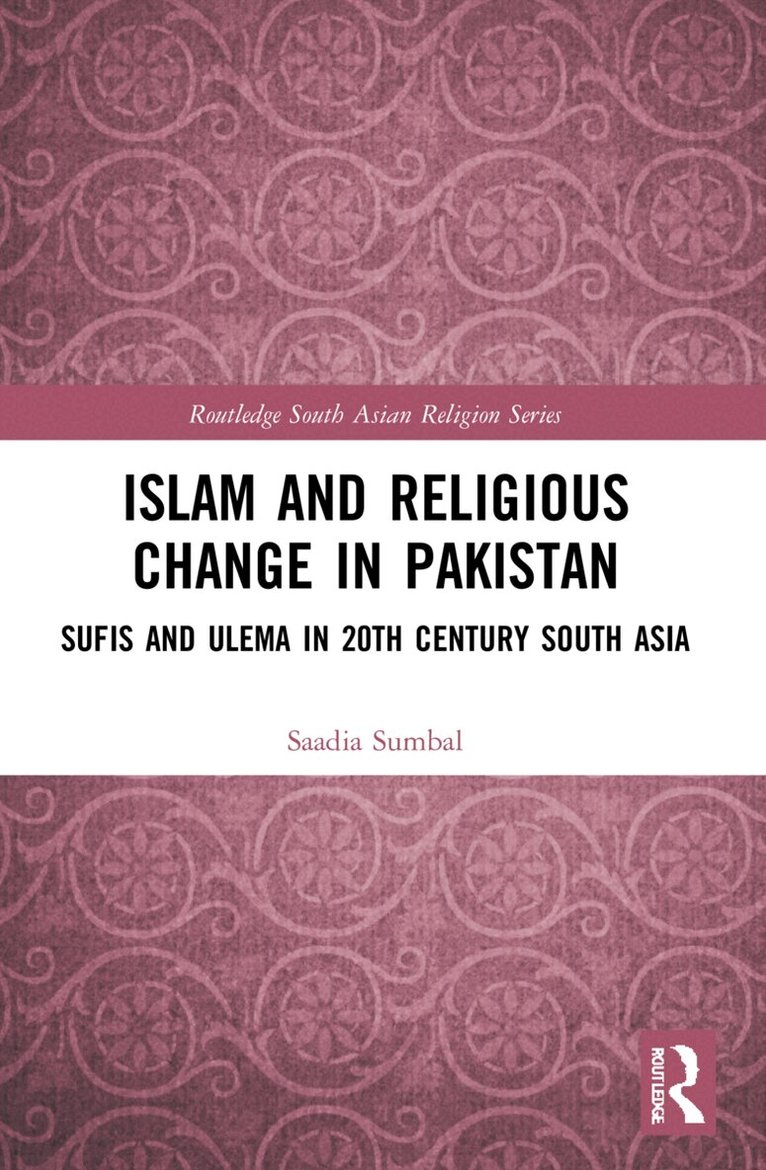
    Islam and Religious Change in Pakistan

    Sufis and Ulema in 20th Century South Asia

    AvSaadia Sumbal

    Häftad, Engelska, 2023

    Del i serien Routledge South Asian Religion Series

    622 kr

    Beställningsvara. Skickas inom 10-15 vardagar. Fri frakt över 249 kr.

    Fler format och utgåvor

    Inbunden

    2 410 kr

    E-bok

    738 kr

    E-bok

    738 kr

    Beskrivning

    This book examines the history of, and the contestations on, Islam and the nature of religious change in 20th century Pakistan, focusing in particular on movements of Islamic reform and revival.This book is the first to bring the different facets of Islam, particularly Islamic reformism and shrine-oriented traditions, together within the confines of a single study ranging from the colonial to post-colonial era. Using a rich corpus of Urdu and Arabic material including biographical accounts, Sufi discourses (malfuzat), letter collections, polemics and unexplored archival sources, the author investigates how Islamic reformism and shrine-oriented religiosity interacted with one another in the post-colonial state of Pakistan. Focusing on the district of Mianwali in Pakistani northwestern Punjab, the book demonstrates how reformist ideas could only effectively find space to permeate after accommodating Sufi thoughts and practices; the text-based religious identity coalesced with overlapped traditional religious rituals and practices. The book proceeds to show how reformist Islam became the principal determinant of Islamic identity in the post-colonial state of Pakistan and how one of its defining effects was the hardening of religious boundaries.Challenging the approach of viewing the contestation between reformist and shrine-oriented Islam through the lens of binaries modern/traditional and moderate/extremist, this book makes an important contribution to the field of South Asian religion and Islam in modern South Asia.

    Produktinformation

    • Utgivningsdatum:2023-01-09
    • Mått:156 x 234 x 12 mm
    • Vikt:317 g
    • Format:Häftad
    • Språk:Engelska
    • Serie:Routledge South Asian Religion Series
    • Antal sidor:196
    • Förlag:Taylor & Francis Ltd
    • ISBN:9780367634919

    Utforska kategorier

    • Socialhistoria och kulturhistoria inom Historia och arkeologi
    • Referensverk och tvärvetenskap inom Samhälle och politik
    • Islam inom Filosofi och religion

    Mer om författaren

    Saadia Sumbal is Assistant Professor in the Department of History at Forman Christian College University, Pakistan.

    Recensioner i media

    "In this pioneering book Saadia Sumbal explores in the context of the Pakistani district of Mianwali how reforming Islam gained serious purchase in a region dominated by Sufism. In the process she demonstrates how local struggles might be reflected in the affairs of the army and the nation. This is an excellent example of the value of district-level studies." Francis Robinson, Royal Holloway, University of London "Islam’s modern transformations are all too often viewed either in doctrinal abstraction or on the cumulative large scale. Both angles easily lose sight of social facts on the ground that shape religious change in any given setting. Through a revealing case study of the Mianwali region of Pakistani Punjab, Saadia Sumbal unravels the knot of local needs, national politics and South Asia-wide reformist teachings that over the course of a century sealed the fate of customary Sufi Islam." Nile Green, author of Sufism: A Global History."Richly situated in relation to previous scholarship on Sufism and Islam in South Asia, Saadia Sumbal’s study of religious change in Pakistan examines how Islamic reformism came to be established in a region where Sufism had been dominant and closely linked to local, tribal political structures. Through a well-researched case study of Mianwali in northwestern Punjab, Sumbal effectively traces the impact of state-led ideologies on local practices, and provides a detailed account of the penetration of reformist orientations into Sufism and hardening of sectarian boundaries within the context of distinctive local movements."Katherine Pratt Ewing, Professor of Religion Director, South Asia Institute at Columbia University"In this important book, Saadia Sumbal renews the study of the impact of Sufism on society and politics, through her research centered on the case of Mianwali, of Pakistani northwestern Punjab. She demonstrates how reformist Islamic movements contributed, with the action of the State, to reduce the space of Sufism in religious life, arguing that they represented a form of modernity. She excels in linking the micro and macro levels in order to analyze convincingly the different processes of contestation and negotiation that led to this outcome."Michel Boivin, Director of the Centre for South Asian Studies, Paris Research University

    Innehållsförteckning

    • Introduction 1. Migrant Sufis and ‘rooting’ of Islam (ca. 1600–1900)2. Reformist Islam and Sufism: A dialectical religious identity3. Reformist Islam and Majlis-i-Ahrar's Politics of Nationalism4. Sectarianism and the politics of religious exclusion5. Deobandi identity and sectarian cleavageConclusion