• Fri frakt över 249 kr
  • •
  • Snabba leveranser
  • •
  • Billiga böcker
Kundservice

Du är på sajten för privatpersoner.

Företag, bibliotek eller offentlig verksamhet?

Du handlar på classic.bokus.com, där alla dina funktioner finns intakta.
Till classic.bokus.com
Bokus logotyp. Gå till startsidan.
  • Erbjudanden
  • Student
  • Topplistor
  • Barn & ungdom
  • Bokus Play
  • E-böcker
  • Ljudböcker
  • Pocketböcker
  • Spel och pussel

Skapa nya rutiner – hälsoböcker upp till 50% →

Sidfot

Mina sidor

    Hjälp

    • Kundservice
    • Vanliga frågor och svar
    • Frakt och leverans
    • Retur vid ångerrätt
    • Reklamera vara
    • Betalning
    • Köpvillkor
    • Allmänna villkor
    • Information om webbplatsens tillgänglighet

    Om Bokus

    • Om oss
    • Pressrum
    • För studenter
    • För företag
    • För bibliotek och offentlig verksamhet
    • För leverantörer
    • Hållbarhet

    Populärt

    • Aktuella erbjudanden
    • Presentkort
    • Studentlitteratur
    • Nya böcker
    • Topplistor
    • Signerade böcker
    • Engelska böcker

    Inspiration

    • Boktips
    • BookTok
    • Barnbokskaraktärer
    • Populära författare
    Logotyp för Bokus
    Följ oss på Facebook (extern länk)Följ oss på Instagram (extern länk)Följ oss på YouTube (extern länk)Följ oss på TikTok (extern länk)
    bokus @ CookiesAnpassa cookiesIntegritetspolicyKöpvillkor
    Till Citymail hemsida (extern länk)Till Budbee hemsida (extern länk)Till Postnord hemsida (extern länk)Till Schenker hemsida (extern länk)Till Early Bird hemsida (extern länk)Till Walleys hemsida (extern länk)
    1. Naturvetenskap och teknik
    2. Matematik och naturvetenskap
    3. Biologi
    4. Cellbiologi

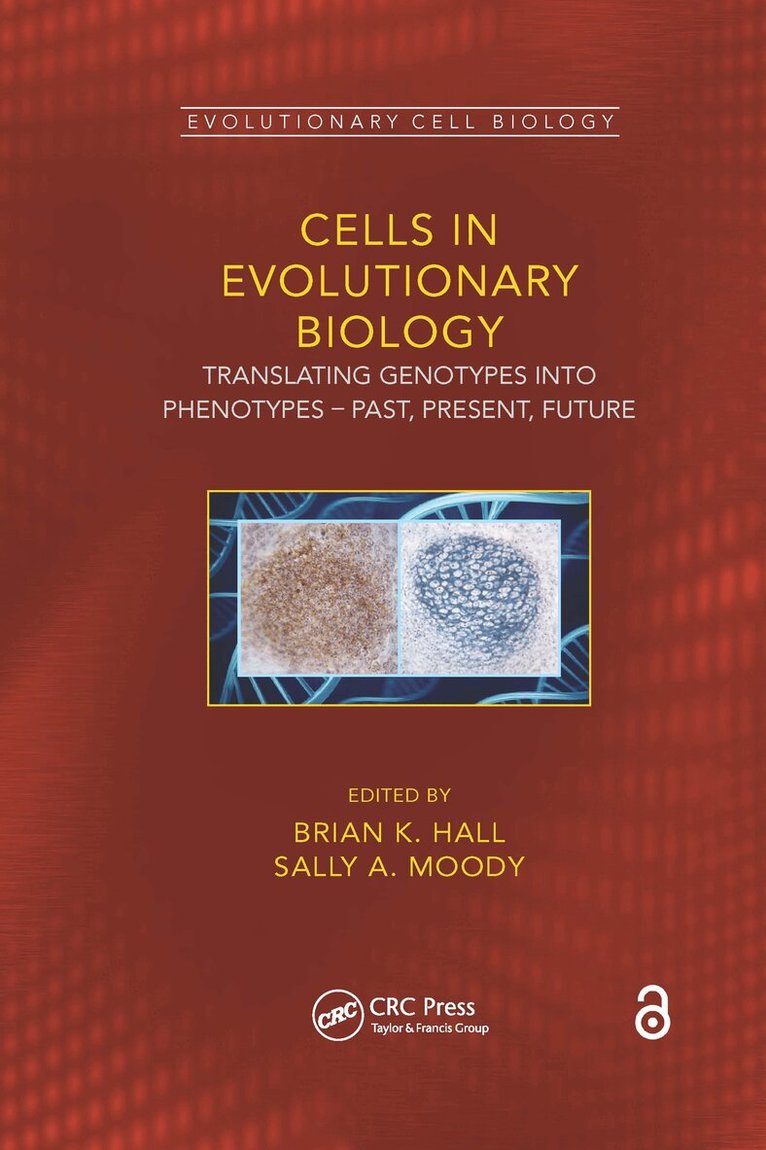
    Cells in Evolutionary Biology

    Translating Genotypes into Phenotypes - Past, Present, Future

    AvBrian K. Hall,Sally A. Moody

    Häftad, Engelska, 2021

    Del i serien Evolutionary Cell Biology

    790 kr

    Beställningsvara. Skickas inom 10-15 vardagar. Fri frakt över 249 kr.

    Beskrivning

    This book is the first in a projected series on Evolutionary Cell Biology, the intent of which is to demonstrate the essential role of cellular mechanisms in transforming the genotype into the phenotype by transforming gene activity into evolutionary change in morphology. This book —Cells in Evolutionary Biology — evaluates the evolution of cells themselves and the role cells have been viewed to play as agents of change at other levels of biological organization. Chapters explore Darwin’s use of cells in his theory of evolution and how Weismann’s theory of the separation of germ plasm from body cells brought cells to center stage in understanding how acquired changes to cells within generations are not passed on to future generations. Chapter 7 of this book is freely available as a downloadable Open Access PDF under a Creative Commons Attribution-Non Commercial-No Derivatives 3.0 license. https://s3-us-west-2.amazonaws.com/tandfbis/rt-files/docs/Open+Access+Chapters/9781315155968_oachapter7.pdf

    Produktinformation

    • Utgivningsdatum:2021-03-30
    • Mått:156 x 234 x 18 mm
    • Vikt:589 g
    • Format:Häftad
    • Språk:Engelska
    • Serie:Evolutionary Cell Biology
    • Antal sidor:280
    • Förlag:Taylor & Francis Ltd
    • ISBN:9780367657239

    Utforska kategorier

    • Cellbiologi inom Naturvetenskap och teknik
    • Zoologi inom Naturvetenskap och teknik
    • Djurböcker inom Djur och Natur

    Mer om författaren

    Brian K. Hall, University Research Professor Emeritus at Dalhousie University, was trained in Australia as an experimental embryologist. His research concentrated on the differentiation of skeletal tissues, especially, how epithelial–mesenchymal signaling initiates osteogenesis and chondrogenesis through the formation of cellular condensations. These studies led him to earlier stages of development and the origin and function of skeletogenic neural crest cells. Comparative studies, using embryos from all five classes of vertebrates provided a strong evolutionary component to his research. These studies, along with analyses of the developmental basis of homology, played significant roles in the establishing of evolutionary developmental biology. He is a Fellow of the Royal Society of Canada, Foreign Fellow of the American Academy of Arts and Science, and recipient of a Killam Prize. He was one of eight individuals awarded the first Kovalevsky Medals in 2000 to recognize the most distinguished scientists of the twentieth century in comparative zoology and evolutionary embryology.Sally A. Moody, Professor and Chair of the Department of Anatomy and Regenerative Biology at George Washington University, received her PhD in Neuroscience during which she studied motor axon guidance cues in the trigeminal system of the chick embryo. Throughout her career, she has continued her interest in understanding the mechanisms of axon guidance, studying the role of lineage factors in Xenopus, extracellular matrix proteins in chick, and genetic mutations in mouse. As a postdoctoral fellow, Sally was introduced to Xenopus embryos, which has remained a favorite. She made extensive fate maps of cleavage stage Xenopus embryos, identified maternal mRNAs that contribute to neural fate, elucidated proteomic and metabolomic changes that occur within specific lineages during cleavage, and demonstrated lineage influences on the determination of amacrine cell fate in the retina. Currently, her laboratory is studying the gene regulatory network that stabilizes neural fate downstream of neural induction, and identifying novel factors that are required for cranial sensory placode development. Dr. Moody has served on several editorial boards in the fields of neuroscience and developmental biology, on the board of directors of several societies focused on developmental processes, and edited the books: Cell Fate and Lineage Determination and Principles in Developmental Genetics.

    Recensioner i media

    "… the book is a very welcome collection of chapters that offers a good overview of the role of cells in EvoDevo. It can be recommended to anyone starting to do research in this field and should be on the bookshelf in all laboratories working in fields related to its contents. In short, a great book that taught me a lot about both subjects I thought I knew something about, and about new and exciting aspects of the role of cells in EvoDevo." Lennart Olsson. 2020. In Evolution & Development, 22."Cells in Evolutionary Biology is the first volume in a series. It provides a valuable historical context and review not only of the cell and evolutionary biology fields, but of developmental and molecular biology as well. Readers will gain an appreciation for the history and philosophy underlying their fields, a perspective less frequently covered in the basic textbooks used in coursework. The volume includes chapters from authors specializing not only in biology and its subfields, but in culture and philosophy. It opens with the origins of cell theory and germ plasm theory, ideas that laid the groundwork for our modern understanding of evolution. It covers historical debate regarding the origin of eukaryotic cells and of multicellular organisms with differentiated tissue types. It successfully dissects topics generally accepted as fact and guides the reader through the thought process that led to that status. To appreciate this text, a solid understanding of the current science is prerequisite. As such, this extremely interesting volume is best suited to graduate level students and established researchers." --D. Schulman, Lake Erie College Summing Up: Recommended. Graduate students through faculty and professionals.---**Description**The book offers a historical perspective of the early observations inevolutionary biology related to the origin of cells, cell theory, Darwin'swork, and the work of many other scientists that documented all those earlystudies, which is a great introduction to more detailed descriptions of germcells, somatic cells, cell lineages, the evolution of multicellular organisms,cellular signaling, and multicellular patterning pathways during embryogenesis.**Purpose**This book is one in the Evolutionary Cell Biology series. The authors propose todescribe the importance of evolutionary developmental biology in cell biologyand stimulate further development of this field so that in current and futurecell biology studies, researchers look back and consider how current findingsfit within the evolutionary biology window. The authors encourage the readers(cell biologists) to think in the context of evolutionary biology in order tobroaden the appeal of future research questions. **Audience**The book offers an interesting look at early observations regarding cell theoryand the origin of cells, which is of interest for younger scientists unfamiliarwith evolutionary biology. The narrative of how scientist in the 17th centuryexplained cellular division, differentiation, regeneration, and many othersubjects offers an interesting historical perspective when placed in thecontext of what we know today, regardless of readers' area of study. The bookis written in accessible language and, thus, researchers at any level wouldbenefit from learning about this historical perspective. The authors andcontributors are leaders in their fields of study and well qualified to be partof this book. **Features**The book covers a broad period of evolutionary biology. While the period of thestudies described in the book changes, the subject does not change much andremains evolutionary biology. I found particularly interesting the firstchapter describing Darwin's work and how scientists of the time thought ofcells, inheritance, and cell theory. The book is organized beginning with thesedescriptions and ending with patterning and embryology. The book does notcontain many images, but those that are part of the book are well presented anduseful. **Assessment**This book is definitely an important contribution to foster future work thatconsiders evolutionary cell biology. The authors manage to narrate earlyevolutionary biology with our current understanding of development and I do notbelieve there are many other books with this focus in mind. -Renier Velez-Cruz, PhD (Midwestern University)

    Innehållsförteckning

    • The role and autonomy of cells in phylogeny and evolution circa 1840-1865. Germ plasm theory and cells in evolutionary biology. The discovery of genes and the rise of genetics from 1900 in usurped cells in evolutionary biology. The study of cells, embryos and evolution through identification of cell lineages. Experimental embryology, nuclear or cytoplasmic control of development. Cytoplasmic inheritance in protozoans and divergent evolution of prokaryotes and eukaryotes. Structural (TEM) analyses of cells: evolution of cells, organelles and cell number. Recognition of the Archaea, different relationships and kingdoms of life. Cellular condensations, modularity and evolution of the phenotype.
    Hoppa över listan

    Du kanske också är intresserad av

    Brian K. Hall, Sally A. Moody - Cells in Evolutionary Biology, Inbunden

    Cells in Evolutionary Biology

    Brian K. Hall, Sally A. Moody

    Inbunden, 2018

    2 049 kr

    Cory Douglas Bishop, Brian K. Hall - Deferring Development, Inbunden

    Deferring Development

    Cory Douglas Bishop, Brian K. Hall

    Inbunden, 2020

    2 049 kr

    Matthew D. Herron, Peter L. Conlin, William C. Ratcliff - Evolution of Multicellularity, Häftad

    Evolution of Multicellularity

    Matthew D. Herron, Peter L. Conlin, William C. Ratcliff

    Häftad, 2024

    734 kr

    Sally A. Moody, Brian K. Hall - Cells in Evolutionary Biology, E-bok

    Cells in Evolutionary Biology

    Sally A. Moody, Brian K. Hall

    E-bok
    2018

    841 kr

    Sally A. Moody, Brian K. Hall - Cells in Evolutionary Biology, E-bok

    Cells in Evolutionary Biology

    Sally A. Moody, Brian K. Hall

    E-bok
    2018

    838 kr

    Ariel Chipman - Cellular Processes in Segmentation, Häftad

    Cellular Processes in Segmentation

    Ariel Chipman

    Häftad, 2021

    664 kr

    M. Kathleen Pitirri, Joan T. Richtsmeier - Evolutionary Cell Processes in Primates, Häftad

    Evolutionary Cell Processes in Primates

    M. Kathleen Pitirri, Joan T. Richtsmeier

    Häftad, 2024

    720 kr

    Gerhard Schlosser - Evolutionary Origin of Sensory and Neurosecretory Cell Types, Inbunden

    Evolutionary Origin of Sensory and Neurosecretory Cell Types

    Gerhard Schlosser

    Inbunden, 2021

    2 412 kr

    Donglei Chen - Odontodes, Inbunden

    Odontodes

    Donglei Chen

    Inbunden, 2023

    2 412 kr

    David W. Pfennig - Phenotypic Plasticity & Evolution, Häftad

    Phenotypic Plasticity & Evolution

    David W. Pfennig

    Häftad, 2022

    1 168 kr