• Fri frakt över 249 kr
  • •
  • Snabba leveranser
  • •
  • Billiga böcker
Kundservice

Du är på sajten för privatpersoner.

Företag, bibliotek eller offentlig verksamhet?

Du handlar på classic.bokus.com, där alla dina funktioner finns intakta.
Till classic.bokus.com
Bokus logotyp. Gå till startsidan.
  • Erbjudanden
  • Nyheter
  • Student
  • Topplistor
  • Barn & ungdom
  • Bokus Play
  • E-böcker
  • Pocketböcker
  • Spel & pussel

10% rabatt på allt med kod: NYSTART10 →

Sidfot

Mina sidor

    Hjälp

    • Kundservice
    • Vanliga frågor och svar
    • Frakt och leverans
    • Retur vid ångerrätt
    • Reklamera vara
    • Betalning
    • Köpvillkor
    • Allmänna villkor
    • Information om webbplatsens tillgänglighet

    Om Bokus

    • Om oss
    • Pressrum
    • För studenter
    • För företag
    • För bibliotek och offentlig verksamhet
    • För leverantörer
    • Hållbarhet

    Populärt

    • Aktuella erbjudanden
    • Presentkort
    • Studentlitteratur
    • Nya böcker
    • Topplistor
    • Signerade böcker
    • Engelska böcker

    Inspiration

    • Boktips
    • BookTok
    • Populära bokserier
    • Barnbokskaraktärer
    • Populära författare
    Logotyp för Bokus
    Följ oss på Facebook (extern länk)Följ oss på Instagram (extern länk)Följ oss på YouTube (extern länk)Följ oss på TikTok (extern länk)
    bokus @ CookiesAnpassa cookiesIntegritetspolicyKöpvillkor
    Till Citymail hemsida (extern länk)Till Budbee hemsida (extern länk)Till Postnord hemsida (extern länk)Till Schenker hemsida (extern länk)Till Early Bird hemsida (extern länk)Till Walleys hemsida (extern länk)
    1. Medicin
    2. Andra medicinska specialiteter
    3. Neurologi och klinisk neurofysiologi
    4. Autism och Aspergers syndrom

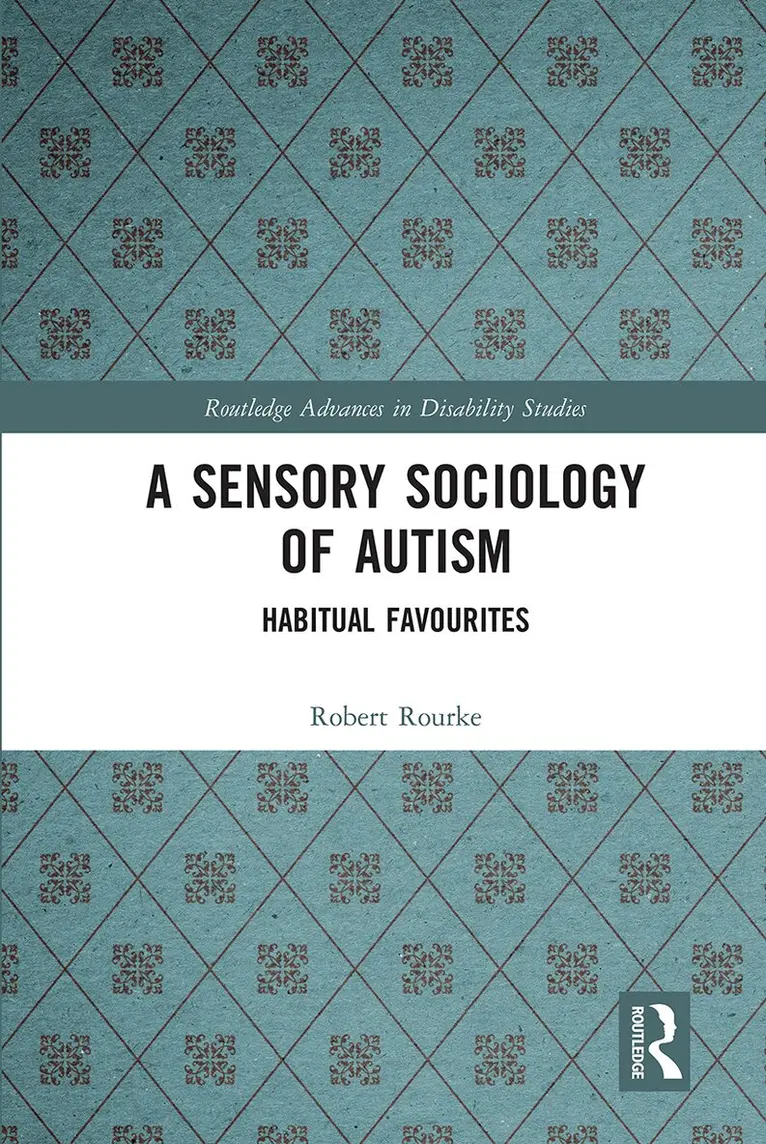
    Sensory Sociology of Autism

    Habitual Favourites

    AvRobert Rourke

    Häftad, Engelska, 2020

    Del i serien Routledge Advances in Disability Studies

    686 kr

    Beställningsvara. Skickas inom 10-15 vardagar. Fri frakt över 249 kr.

    Fler format och utgåvor

    Inbunden

    2 493 kr

    E-bok

    790 kr

    E-bok

    788 kr

    Beskrivning

    This innovative book places the sensory experiences of autistic individuals within a sociological framework. It instigates new discussions around sensory experience, autism and how disability and ability can be reconceived.Autism is commonly understood to involve social and communication difficulties. Less commented upon is the sensory challenges faced by those with autism. Sociology is no different, focusing on communication and neglecting the sensory dimensions of experience. Sensory experiences and relations are central to how we understand and navigate through the natural and social worlds, and mediate our interactions with other people, objects and spaces. In this book, the author explores how these processes are affected by the favourite activities of autistic people.With real-life case studies and cutting-edge research, this book will be useful to students, autistic people, advocates and carers, disability studies researchers and sociologies of disability and the senses.

    Produktinformation

    • Utgivningsdatum:2020-12-18
    • Mått:156 x 234 x 17 mm
    • Vikt:272 g
    • Format:Häftad
    • Språk:Engelska
    • Serie:Routledge Advances in Disability Studies
    • Antal sidor:182
    • Förlag:Taylor & Francis Ltd
    • ISBN:9780367671495

    Utforska kategorier

    • Autism och Aspergers syndrom inom Medicin
    • Sociala och etiska frågor inom Samhälle och politik
    • Rättsliga frågor i hälso- och sjukvården inom Medicin

    Mer om författaren

    Robert Rourke is a Sociology PhD graduate who is interested in social theory, continental philosophy and disability studies. He is particularly interested in reimagining the dis/ability divide and examining how attention to autistic experience can reveal mundane power structures.

    Innehållsförteckning

    • Acknowledgements; Chapter 1 - Introduction: Exploring Autism, The Senses and Autoethnography; A Sensory Beginning; Autism Spectrum Conditions – Categorisation and Expanding Definitions; Sociological Imaginations and Forming Habits; Autoethnography as Sociological Imagination; Redefining Autism Through Favourite Quasi-Objects; Notes on Research and Chapter Exercises; Conclusion - Outline of Chapters; Bibliography; Chapter 2 - Sensory Habits as Pragmatic Quasi-Object Relations; Introduction; A Brief Sociological Trajectory Of The Senses; Pragmatic Habits as Mediating Senses; Habitual Favourites as a Concept; Reassessing Sensory Sociology and Habitual Favourites With Autism; Michel Serres, The Parasite and Quasi-Objects; Habitual Favourites as Quasi-Objects – The Sensory Autistic Manifold; Conclusion; Chapter Exercises; Bibliography; Chapter 3 - Habitual Favourites: Modulated Thresholds and Quasi-Objects; Introduction – An Outline of The Chapter; Factors Impacting The Relationships to Favourites in Autism; Developing The Quasi-Object Concept; Some Comments on Using an "Events" Based Analysis; Doug – Cats, Technological Quasi-Objects and Soylent as Parasite; Garry – Multi-Modal Anxiety Relief and Social Management; Josh - Escalator Sickness; Conclusion – Reformulating Parasitical Quasi-Objects; Chapter Exercises; Bibliography; Chapter 4 - An Auto/AutieEthnography Part 1 - Methodological and Researcher Positionality; Introductory Vignette - A Multivocal Discussion of Research; Evocative Uses of Vignettes and Multivocality in Autoethnographic Accounts; A Brief Interlude – Analytic Autoethnography; An Evocative and Post-Structural Commitment to Openness; Autoethnography Concerns and Challenges;The Slippage Between Autoethnography as Narcissistic and Theory of Mind; An Emplaced Concern With Relational Ethics; Autoethnography as Journeying and Pragmatic Balance; Chapter Exercises; Bibliography; Chapter 4.5 Auto/Autieethnography Part 1.5 – Distributed Sociality and Posthuman Disability; Introduction – A Brief Interlude; Beyond Poststructural Autoethnography to Quasi-Object Relationality; PhD Work, Disability Support and Relational Ethics; How Does The Autistic Author Emerge?; Revealing the Analytic Potential in the Academic Mundane; A Concluding Multivocal Discussion; Chapter Exercises; Bibliography; Chapter 5 - An Auto/AutieEthnography Part 2 - Autoethnographic Writing Vignettes ; Introduction - Of Writing Vignettes and Autoethnography; Writing Vignette 1 - Writing in Chaos - Autism, Writing and Home Care; My PhD "Writing Day" Exhilaration, Exasperation and Emotional Exhaustion; Discussion - Writing as a Mundane Academic Habitus; The Consequences of Writing in Chaos - Thinking With Care in Writing; How Do You Cope? - Future Directions; Post-PhD Update; Writing Vignette 2 - The "Glow" of Academic Labour; Back to Caring - Intellectual Structures and Identity; Conclusion - Reflecting on a Sociological Imagination; Chapter Exercises; Bibliography; Chapter 6 - Affective Atmospheres: Perturbations and Emplaced Affects ; Introduction; What is An Affective Atmosphere?; What Can Be Called an Atmosphere? - Boundaries and Effects; Atmospheric Interstices - Beyond Binaries; Data Analysis - The Material/Spatial Organisation of The Club; Case 1 - Sound, KISS Radio and (Non)-Human Atmospheres; Case 2 - Echolalia, Gestural Semiosis and Blackadder; Conclusion; Chapter Exercises; Bibliography; Chapter 7 - Sensory and Disability Futures ; Introduction; Habitual Favourites in Policy and Practice; Multi-Media Sensory Research; Habitual Favourites and Social Categories; The Book as Quasi-Object; Chapter Exercises; Bibliography; Index