• Fri frakt över 249 kr
  • •
  • Snabba leveranser
  • •
  • Billiga böcker
Kundservice

Du är på sajten för privatpersoner.

Företag, bibliotek eller offentlig verksamhet?

Du handlar på classic.bokus.com, där alla dina funktioner finns intakta.
Till classic.bokus.com
Bokus logotyp. Gå till startsidan.
  • Erbjudanden
  • Nyheter
  • Student
  • Topplistor
  • Barn & ungdom
  • Bokus Play
  • E-böcker
  • Pocketböcker
  • Spel & pussel

10% rabatt på allt med kod NYSTART10 →

Sidfot

Mina sidor

    Hjälp

    • Kundservice
    • Vanliga frågor och svar
    • Frakt och leverans
    • Retur vid ångerrätt
    • Reklamera vara
    • Betalning
    • Köpvillkor
    • Allmänna villkor
    • Information om webbplatsens tillgänglighet

    Om Bokus

    • Om oss
    • Pressrum
    • För studenter
    • För företag
    • För bibliotek och offentlig verksamhet
    • För leverantörer
    • Hållbarhet

    Populärt

    • Aktuella erbjudanden
    • Presentkort
    • Studentlitteratur
    • Nya böcker
    • Topplistor
    • Signerade böcker
    • Engelska böcker

    Inspiration

    • Boktips
    • BookTok
    • Populära bokserier
    • Barnbokskaraktärer
    • Populära författare
    Logotyp för Bokus
    Följ oss på Facebook (extern länk)Följ oss på Instagram (extern länk)Följ oss på YouTube (extern länk)Följ oss på TikTok (extern länk)
    bokus @ CookiesAnpassa cookiesIntegritetspolicyKöpvillkor
    Till Citymail hemsida (extern länk)Till Budbee hemsida (extern länk)Till Postnord hemsida (extern länk)Till Schenker hemsida (extern länk)Till Early Bird hemsida (extern länk)Till Walleys hemsida (extern länk)
    1. Samhälle och politik
    2. Samhälle och kultur
    3. Kultur och medier
    4. Referensverk och tvärvetenskap

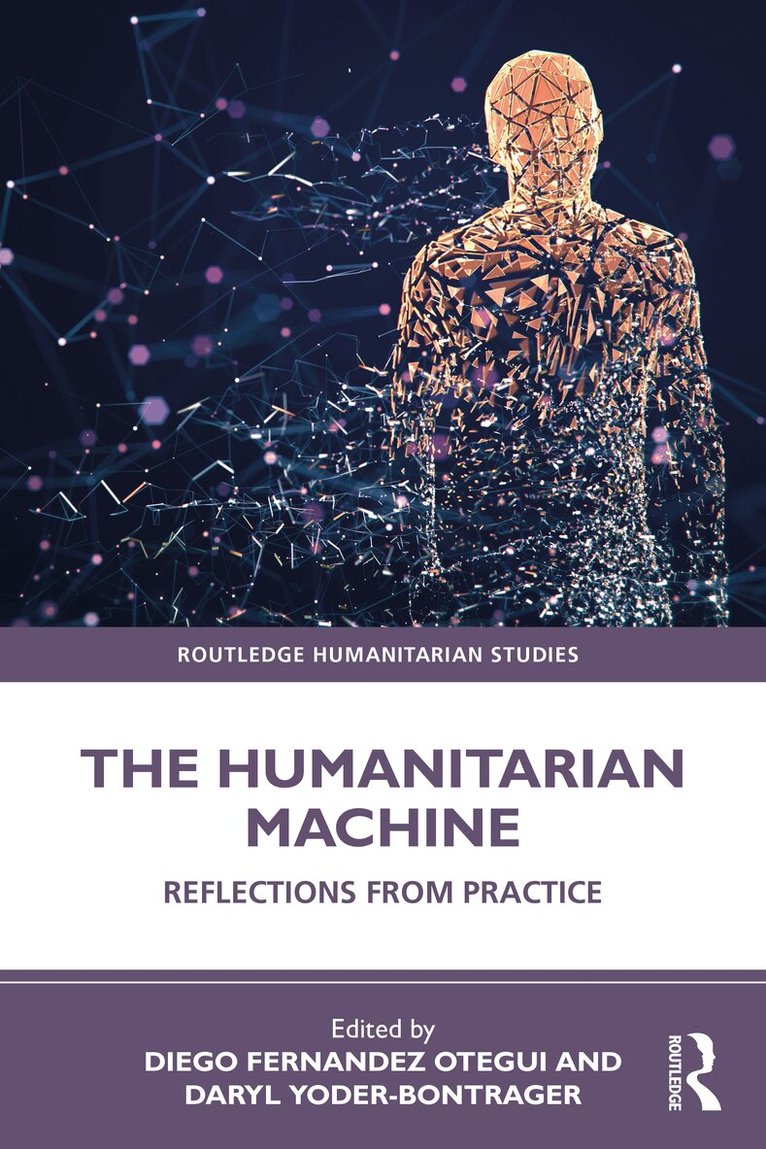
    Humanitarian Machine

    Reflections from Practice

    AvDiego Fernandez Otegui,Daryl Yoder-Bontrager

    Häftad, Engelska, 2021

    Del i serien Routledge Humanitarian Studies

    555 kr

    Beställningsvara. Skickas inom 10-15 vardagar. Fri frakt över 249 kr.

    Beskrivning

    As the world reels from the impact of a global pandemic and increasing intensity of climate-caused hazards, the humanitarian sector has never been more relevant. But providing aid to those affected by disasters and crises is more complex than ever.In The Humanitarian Machine aid workers reflect on their own experiences of working in crisis. As they write about their work and the ways in which they each approach the challenges of helping people, they comment on some of the most vexing issues facing the humanitarian sector. Each speaks from their own perspective, asking tough questions, sharing thoughtful reflections about their ongoing work, and unpacking what it really means to be a humanitarian worker. The stories they tell, whether recounting a specific experience or reflecting on years of practice, reveal the dilemmas they face and demystify the overly romanticized aura that sometimes surrounds humanitarian practice.Complementing the candid accounts that humanitarian leaders contribute in this book, the editors examine how their stories, perceptions, and understandings align with similar conversations that take place in other settings. Viewed together in this way, the insights and reflections provided in this book will be invaluable for humanitarian practitioners, students, and researchers alike.

    Produktinformation

    • Utgivningsdatum:2021-07-07
    • Mått:156 x 234 x 27 mm
    • Vikt:280 g
    • Format:Häftad
    • Språk:Engelska
    • Serie:Routledge Humanitarian Studies
    • Antal sidor:210
    • Förlag:Taylor & Francis Ltd
    • ISBN:9780367689759

    Utforska kategorier

    • Referensverk och tvärvetenskap inom Samhälle och politik
    • Miljövetenskap och miljöpolitik inom Naturvetenskap och teknik

    Mer om författaren

    Diego Fernandez Otegui has almost 25 years of experience in emergency management and humanitarian affairs, working in East Timor, the Democratic Republic of Congo, India, Mozambique, Trinidad and Tobago, and Spain. He is a board member of the International Humanitarian Studies Association (IHSA) and Representative in the United States of the University Network of the Americas for Disaster Risk Reduction (REDULAC) and has a PhD in Disaster Science and Management at the University of Delaware, USA.Daryl Yoder-Bontrager has worked for over 20 years in humanitarian assistance and community development with Mennonite Central Committee, ultimately becoming Director of its Latin America and Caribbean programs and helping to lead the organization’s responses to Hurricane Mitch in Central America and the 2010 Haiti earthquake as well as countless smaller disasters in the region. He holds a PhD in Disaster Science and Management at the University of Delaware, USA.

    Recensioner i media

    "We have long awaited The Humanitarian Machine. Here it is with all the misgivings, dilemmas, contradictions and rewards that such lives consist of. Read and cherish these experiences because they reflect a truth and humanity that screams from the pages." – Phil O’Keefe, Professor, Northumbria University, UK."Experienced humanitarians give vivid personal accounts of how they became involved, the challenges they face in their work and the lessons to be learned, with fascinating insights and clear messages from field experience worldwide. Ask people before assisting them, try to redress imbalances of power, high level humanitarian power brokers and local populations have different perspectives and priorities which humanitarians need to help bridge. Be aware that there is more than one narrative when organising responses or carrying out evaluations. Fragile contexts require flexibility to co-create resilience pathways. Use established standards of good practice, but mindful of context. Whilst current thinking espouses more egalitarian relationships the fund holders exercise the power. Good humanitarian practice understands these lessons and recognises the inevitable tensions need be managed. This book not only provides the lessons, above all, it encourages us to tackle the flaws in the humanitarian machine. This is a must read for humanitarians." – Emeritus Professor Barry Munslow, Liverpool School of Tropical Medicine, UK "Humanitarianism—as an ideology, practice, and industry—is too often shrouded in mythologies of heroism and selfless sacrifice. The grounded, self-critical reflections from humanitarian practitioners in this volume demystify humanitarian practice, probing its tensions and dilemmas together with its successes and failures. A valuable resource!" – Alain Epp Weaver, director of strategic planning, Mennonite Central Committee

    Innehållsförteckning

    • Preface Introduction Section 1. Flexibility and Standardization: Standards in Humanitarian Delivery Introduction to the conversation 1. How Standards Contribute to the Humanitarian Sector (Aninia Nadig) 2. FAO Goats Don’t Die: Can Evaluations Make Aid More Inclusive? (Marta Bruno) 3. COVID and Cholera: Reflections on Humanitarian Principles and their Impact on Public Health Emergencies (David Eisenbaum) 4. How to Be Relevant: A Personal Journey in the Aid System (Volker Huls) 5. Flexibility in Fragility (Helen Barclay-Hollands) Extending the conversation Section 2. Freedom and Control: The Mechanisms of Humanitarian Delivery Introduction to the conversation 7. A Behind the Desk View of Responding to a Disaster (Marie Anne Sliwinski) 8. Ensuring Shared Best Practices are in Place (Gary Shaye) 9. Connecting both Ends and Completing the Humanitarian Cycle: Engaging Donors in a European Context (Naomi Enns) 10. The Role of Volunteers (Jono Anzalone) 11. Action learning in the Anthropocene (Pat Foley) Extending the conversation Section 3. Culture and Power: The Value of Humanitarian Interventions Introduction to the conversation 11. Invisible to Systems, Invisible to Help (Kendra Pospychalla) 13. Security Management: Local Responsibility, Local Engagement (Andrew Cunningham) 14. Starting from Within (Rami Shamma) 15. The Politics of Genocide Prevention and the Limits of Humanitarian Neutrality (Matthew Levinger) 16. Between coordination and communities: Navigating competing perspectives after Hurricane Matthew in Haiti (2016-2019) (Paul Shelter Fast) Extending the conversation Conclusion