• Fri frakt över 249 kr
  • •
  • Snabba leveranser
  • •
  • Billiga böcker
Kundservice

Du är på sajten för privatpersoner.

Företag, bibliotek eller offentlig verksamhet?

Du handlar på classic.bokus.com, där alla dina funktioner finns intakta.
Till classic.bokus.com
Bokus logotyp. Gå till startsidan.
  • Erbjudanden
  • Nyheter
  • Student
  • Topplistor
  • Barn & ungdom
  • Bokus Play
  • E-böcker
  • Pocketböcker
  • Spel & pussel

10% rabatt på allt med kod: NYSTART10 →

Sidfot

Mina sidor

    Hjälp

    • Kundservice
    • Vanliga frågor och svar
    • Frakt och leverans
    • Retur vid ångerrätt
    • Reklamera vara
    • Betalning
    • Köpvillkor
    • Allmänna villkor
    • Information om webbplatsens tillgänglighet

    Om Bokus

    • Om oss
    • Pressrum
    • För studenter
    • För företag
    • För bibliotek och offentlig verksamhet
    • För leverantörer
    • Hållbarhet

    Populärt

    • Aktuella erbjudanden
    • Presentkort
    • Studentlitteratur
    • Nya böcker
    • Topplistor
    • Signerade böcker
    • Engelska böcker

    Inspiration

    • Boktips
    • BookTok
    • Populära bokserier
    • Barnbokskaraktärer
    • Populära författare
    Logotyp för Bokus
    Följ oss på Facebook (extern länk)Följ oss på Instagram (extern länk)Följ oss på YouTube (extern länk)Följ oss på TikTok (extern länk)
    bokus @ CookiesAnpassa cookiesIntegritetspolicyKöpvillkor
    Till Citymail hemsida (extern länk)Till Budbee hemsida (extern länk)Till Postnord hemsida (extern länk)Till Schenker hemsida (extern länk)Till Early Bird hemsida (extern länk)Till Walleys hemsida (extern länk)
    1. Samhälle och politik
    2. Sociologi och antropologi
    3. Sociologi

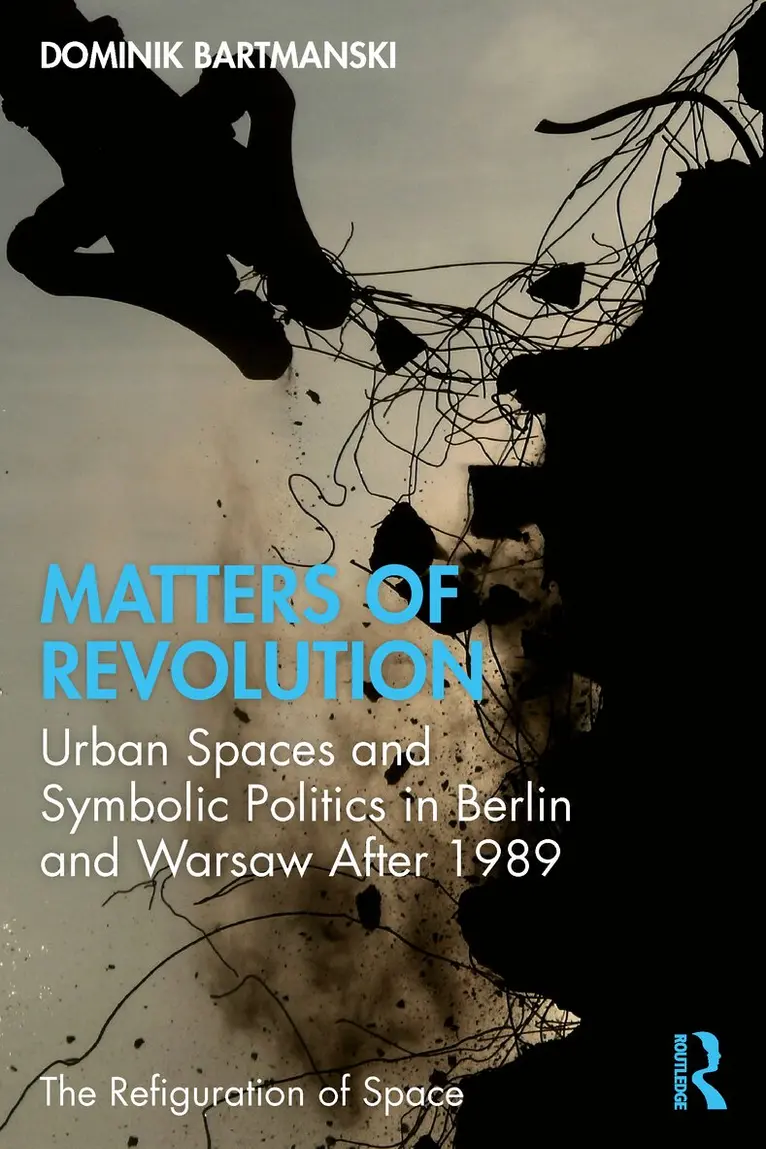
    Matters of Revolution

    Urban Spaces and Symbolic Politics in Berlin and Warsaw After 1989

    AvDominik Bartmanski

    Häftad, Engelska, 2022

    Del i serien Refiguration of Space

    611 kr

    Beställningsvara. Skickas inom 10-15 vardagar. Fri frakt över 249 kr.

    Fler format och utgåvor

    Inbunden

    2 423 kr

    E-bok

    721 kr

    E-bok

    721 kr

    Beskrivning

    Symbols matter, and especially those present in public spaces, but how do they exert influence and maintain a hold over us? Why do such materialities count even in the intensely digitalized culture? This book considers the importance of urban symbols to political revolutions, examining manifold reasons for which social movements necessitate the affirmation or destruction of various material icons and public monuments. What explains variability of life cycles of certain classes of symbols? Why do some of them seem more potent than others? Why do people exhibit nostalgic attachments to some symbols of the controversial past and vehemently oppose others? What nourishes and threatens the social life of icons? Through comparative analyses of major iconic processes following the epochal revolution of 1989 in Berlin and Warsaw, the book argues that revolutionary action needs objects and sites which concretize the transformative redrawing of the symbolic boundaries between the "sacred" and "profane," good and evil, before and after, and "progressive" and "reactionary"—the symbolic shifts that every revolution implies in theory and formalizes in practice. Public symbols ensconced within actual urban spaces provide indispensable visibility to human values and social changes. As affective topographies that externalize collective feelings, their very presence and durability is meaningful, and so are the revolutionary rituals of preservation and destruction directed at those spaces. Far from being mere gestures or token signifiers, they have their own gravity with profound cultural ramifications. This volume will appeal to sociologists, anthropologists, geographers, and social theorists with interests in urban studies, public heritage, material culture, political revolution, and social movements.

    Produktinformation

    • Utgivningsdatum:2022-03-31
    • Mått:156 x 234 x 24 mm
    • Vikt:500 g
    • Format:Häftad
    • Språk:Engelska
    • Serie:Refiguration of Space
    • Antal sidor:208
    • Förlag:Taylor & Francis Ltd
    • ISBN:9780367706203

    Utforska kategorier

    • Sociologi inom Samhälle och politik
    • Sociala grupper och identitet inom Samhälle och politik
    • Geografi inom Naturvetenskap och teknik

    Mer om författaren

    Dominik Bartmanski is Heisenberg Fellow based at the Chair of Cultural Sociology at Humboldt University in Berlin, Germany. He is the co-author of Labels: Making Independent Music and Vinyl: The Analogue Record in the Digital Age and the co-editor of Iconic Power: Materiality and Meaning in Social Life.

    Recensioner i media

    "This is a beautifully written book that demonstrates how the built environment and its iconic nature affects us all. Dealing with the icons of the Soviet bloc (in Berlin and Warsaw), it covers history that still exerts its presence among us. That history will continue to be important. The larger point of the book, however, is applicable beyond the case examined, indeed globally, (and couched in) outstandingly readable prose, much more engaging than what is usually produced by social scientists."Douglas Porpora, Drexel University, USA"Through a richly evocative reflection upon iconicity and spatiality, Bartmanski turns the cultural sociological kaleidoscope so that we see 1989, the Berlin Wall, and the fall and aftermath of Communism in a profoundly new light."David Inglis, University of Helsinki, Finland"By focusing on their ‘political materiality,’ Dominik Bartmański sheds new light on the revolutions of 1989 and explains why some became global icons of the fall of communism and others did not. Theoretically sophisticated and empirically rich, Matters of Revolution proves the relevance of cultural sociology to the study of social movements and political processes."Geneviève Zubrzycki, University of Michigan, USA

    Innehållsförteckning

    • Introduction: Considering the Iconic Wall 1. Point of View 2. Iconicity, or What Makes Social Performances S/tick 3. The Revolution That Did Get Televised 4. Post-revolutionary Nostalgia 5. The Death and Life of Great Communist Palaces Epilogue: Writing Material Culture