• Fri frakt över 249 kr
  • •
  • Snabba leveranser
  • •
  • Billiga böcker
Kundservice

Du är på sajten för privatpersoner.

Företag, bibliotek eller offentlig verksamhet?

Du handlar på classic.bokus.com, där alla dina funktioner finns intakta.
Till classic.bokus.com
Bokus logotyp. Gå till startsidan.
  • Erbjudanden
  • Nyheter
  • Student
  • Topplistor
  • Barn & ungdom
  • Bokus Play
  • E-böcker
  • Pocketböcker
  • Spel & pussel

10% rabatt på allt med kod NYSTART10 →

Sidfot

Mina sidor

    Hjälp

    • Kundservice
    • Vanliga frågor och svar
    • Frakt och leverans
    • Retur vid ångerrätt
    • Reklamera vara
    • Betalning
    • Köpvillkor
    • Allmänna villkor
    • Information om webbplatsens tillgänglighet

    Om Bokus

    • Om oss
    • Pressrum
    • För studenter
    • För företag
    • För bibliotek och offentlig verksamhet
    • För leverantörer
    • Hållbarhet

    Populärt

    • Aktuella erbjudanden
    • Presentkort
    • Studentlitteratur
    • Nya böcker
    • Topplistor
    • Signerade böcker
    • Engelska böcker

    Inspiration

    • Boktips
    • BookTok
    • Populära bokserier
    • Barnbokskaraktärer
    • Populära författare
    Logotyp för Bokus
    Följ oss på Facebook (extern länk)Följ oss på Instagram (extern länk)Följ oss på YouTube (extern länk)Följ oss på TikTok (extern länk)
    bokus @ CookiesAnpassa cookiesIntegritetspolicyKöpvillkor
    Till Citymail hemsida (extern länk)Till Budbee hemsida (extern länk)Till Postnord hemsida (extern länk)Till Schenker hemsida (extern länk)Till Early Bird hemsida (extern länk)Till Walleys hemsida (extern länk)
    1. Ekonomi och Ledarskap
    2. Nationalekonomi

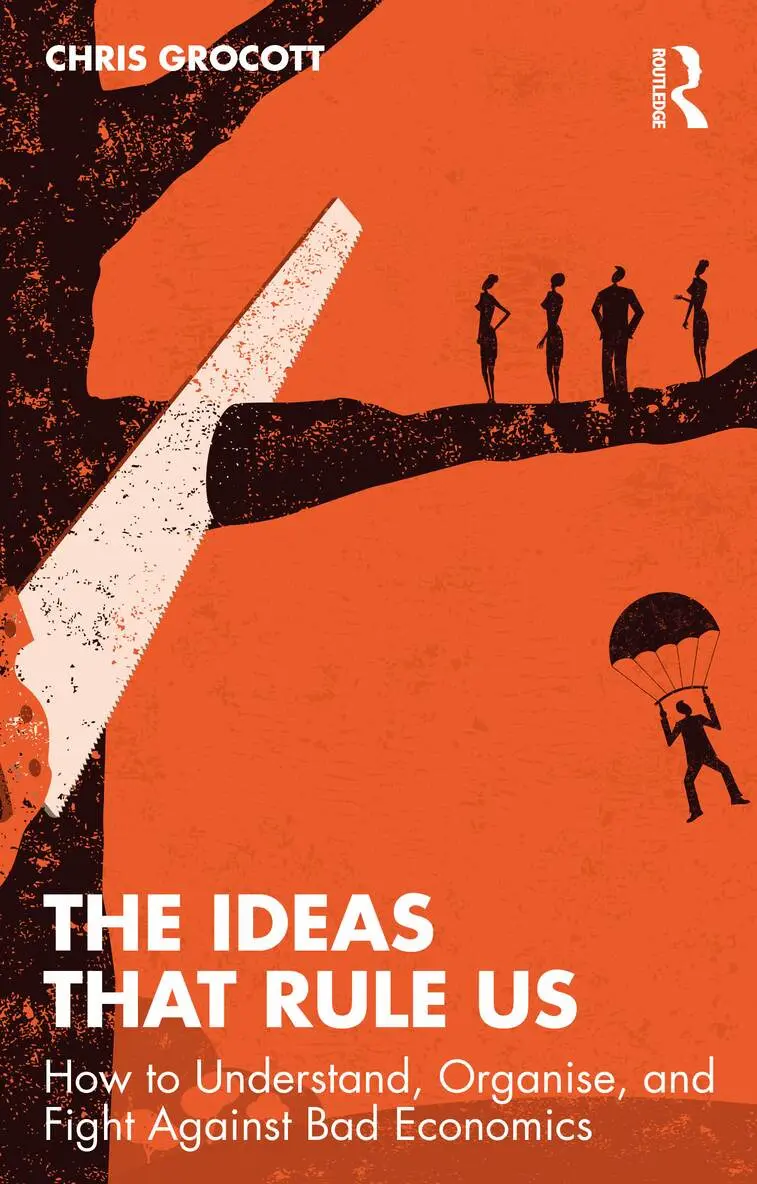
    Ideas That Rule Us

    How to Understand, Organise and Fight Against Bad Economics

    AvChris Grocott

    Häftad, Engelska, 2024

    644 kr

    Beställningsvara. Skickas inom 10-15 vardagar. Fri frakt över 249 kr.

    Fler format och utgåvor

    Inbunden

    2 495 kr

    E-bok

    762 kr

    E-bok

    760 kr

    Beskrivning

    It may seem surprising that the economic choices we make in society are often determined by ideas rather than scientific evidence or financial resources. The consequences of such choices are often stark – such as the austerity policies which eroded our ability to withstand crises like the Covid 19 pandemic. This book explores the ideas that rule how our economy works, how government operates and how workers organise.A small number of historical economic ideas remain stubbornly prevalent and powerful today. However, they are largely based on questionable assumptions about human behaviour and unproven theoretical ideas about economics. They were founded within the realms of philosophy and politics rather than hard science. This book illustrates how politicians have selectively borrowed convenient economic concepts in order to promote and defend policies which entrench and escalate inequalities and other structural problems.This accessible book invites readers to question the ideas that rule us and explore the challenges facing society. It invites progressive thought about how we need to urgently organise action for the future.

    Produktinformation

    • Utgivningsdatum:2024-10-07
    • Mått:138 x 216 x 13 mm
    • Vikt:240 g
    • Format:Häftad
    • Språk:Engelska
    • Antal sidor:180
    • Förlag:Taylor & Francis Ltd
    • ISBN:9780367753139

    Utforska kategorier

    • Nationalekonomi inom Ekonomi och Ledarskap
    • Europas historia inom Historia och arkeologi
    • Ekonomisk historia inom Ekonomi och Ledarskap

    Mer om författaren

    Chris Grocott is Lecturer in Management and Economic History at the University of Leicester, UK.

    Recensioner i media

    "For readers engaged in the movement to rethink economics, this book offers valuable context. It clarifies how the stories we tell about markets, growth and responsibility became so dominant and how they might be rewritten. Grocott book reminds us that to change the economy, we must first understand the ideasthat underpin it. That understanding is the first step towards building something better." Chanda Katema, Rethinking Economics"You might ask yourself, how did we get here: broken public services, polluted rivers and the return of rickets? Chris Grocott provides a crucial part of the answer, deftly recounting the history of the ideas that have come to drive policy, shape behaviour and dominate thinking." David Harvie, co-author of Shaping for Mediocrity: The Cancellation of Critical Thinking at Our Universities, and co-editor of Commoning with George Caffentzis and Silvia Federici"The state of affairs that economists so often justify is producing gigantic inequalities and a climate crisis. In this beautiful little book, Chris Grocott punctures the old stories and encourages the birth of new ones. This is essential reading which will help us to produce a low carbon, high inclusion, high democracy economy." Martin Parker, Professor of Organization Studies, University of Bristol Business School, UK"Economic ideas have a reputation for being devilishly complicated. But The Ideas That Rule Us makes clear that economics has always been most powerful when it is presented as deceptively simple: something that can bring order to the messiness of people’s lives. Grocott expertly leads the reader through the basic economic assumptions that shape how we think about the world via a study of key economic theorists from Adam Smith and Karl Marx to John Maynard Keynes and Friedrich Hayek. But as he explains, the ‘common sense’ economic ideas we live with are now centuries old, and in need of re-evaluation. An important but accessible read that tackles the big questions that continue to perplex society – namely what makes an economy ‘good’ and who is it really ‘good’ for?" Amy Edwards, Senior Lecturer in Modern British History, University of Bristol and author of Are We Rich Yet? The Rise of Mass Investment Culture in Contemporary Britain

    Innehållsförteckning

    • 1. Introduction 2. Just Desserts 3. Tell Me Why I Don’t Like Mondays 4. Unemployment 5. The General Theory 6. You’ve Never Had it so Good: Social Democracy in Post-War Britain 7. Serfdom, Capitalism and Freedom 8. Imperialism for Free Trade 9. No Such Thing as Society 10. Things Can Only Get Better 11. The Keynesian Foxhole 12. Austerity and the Nation’s Credit Card 13. ‘Why Did No One See it Coming?’ 14. Economics Overreach