• Fri frakt över 249 kr
  • •
  • Snabba leveranser
  • •
  • Billiga böcker
Kundservice

Du är på sajten för privatpersoner.

Företag, bibliotek eller offentlig verksamhet?

Du handlar på classic.bokus.com, där alla dina funktioner finns intakta.
Till classic.bokus.com
Bokus logotyp. Gå till startsidan.
  • Erbjudanden
  • Nyheter
  • Student
  • Topplistor
  • Barn & ungdom
  • Bokus Play
  • E-böcker
  • Pocketböcker
  • Spel & pussel

Må bättre, för mindre! Upp till 50% rabatt på hälsoböcker

Sidfot

Mina sidor

    Hjälp

    • Kundservice
    • Vanliga frågor och svar
    • Frakt och leverans
    • Retur vid ångerrätt
    • Reklamera vara
    • Betalning
    • Köpvillkor
    • Allmänna villkor
    • Information om webbplatsens tillgänglighet

    Om Bokus

    • Om oss
    • Pressrum
    • För studenter
    • För företag
    • För bibliotek och offentlig verksamhet
    • För leverantörer
    • Hållbarhet

    Populärt

    • Aktuella erbjudanden
    • Presentkort
    • Studentlitteratur
    • Nya böcker
    • Topplistor
    • Signerade böcker
    • Engelska böcker

    Inspiration

    • Boktips
    • BookTok
    • Populära bokserier
    • Barnbokskaraktärer
    • Populära författare
    Logotyp för Bokus
    Följ oss på Facebook (extern länk)Följ oss på Instagram (extern länk)Följ oss på YouTube (extern länk)Följ oss på TikTok (extern länk)
    bokus @ CookiesAnpassa cookiesIntegritetspolicyKöpvillkor
    Till Citymail hemsida (extern länk)Till Budbee hemsida (extern länk)Till Postnord hemsida (extern länk)Till Schenker hemsida (extern länk)Till Early Bird hemsida (extern länk)Till Walleys hemsida (extern länk)
    1. Samhälle och politik
    2. Samhälle och kultur
    3. Kultur och medier
    4. Medievetenskap

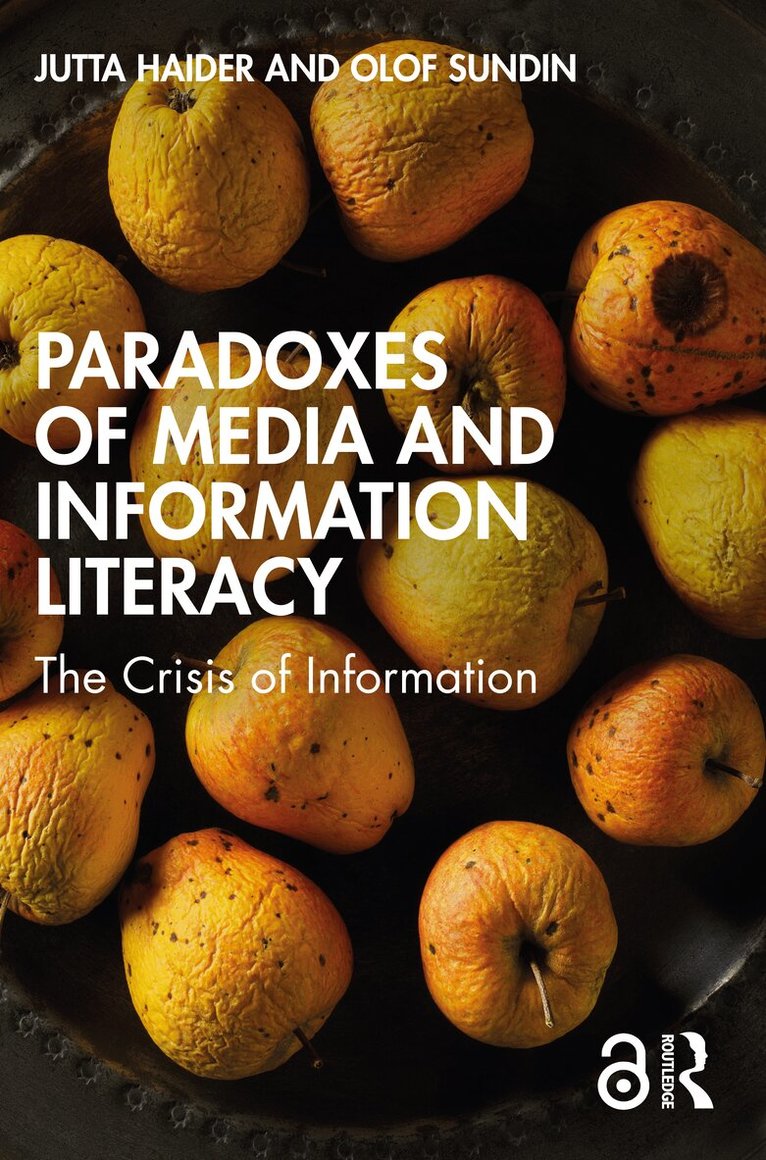
    Paradoxes of Media and Information Literacy

    The Crisis of Information

    AvJutta Haider,Olof Sundin

    Häftad, Engelska, 2022

    610 kr

    Beställningsvara. Skickas inom 10-15 vardagar. Fri frakt över 249 kr.

    Fler format och utgåvor

    Inbunden

    2 421 kr

    Beskrivning

    Paradoxes of Media and Information Literacy contributes to ongoing conversations about control of knowledge and different ways of knowing. It does so by analysing why media and information literacy (MIL) is proposed as a solution for addressing the current information crisis.Questioning why MIL is commonly believed to wield such power, the book throws into sharp relief several paradoxes that are built into common understandings of such literacies. Haider and Sundin take the reader on a journey across different fields of practice, research and policymaking, including librarianship, information studies, teaching and journalism, media and communication and the educational sciences. The authors also consider national information policy proposals and the recommendations of NGOs or international bodies, such as UNESCO and the OECD. Showing that MIL plays an active role in contemporary controversies, such as those on climate change or vaccination, Haider and Sundin argue that such controversies challenge existing notions of fact and ignorance, trust and doubt, and our understanding of information access and information control. The book thus argues for the need to unpack and understand the contradictions forming around these notions in relation to MIL, rather than attempting to arrive at a single, comprehensive definition.Paradoxes of Media and Information Literacy combines careful analytical and conceptual discussions with an in-depth understanding of information practices and of the contemporary information infrastructure. It is essential reading for scholars and students engaged in library and information studies, media and communication, journalism studies and the educational sciences.

    Produktinformation

    • Utgivningsdatum:2022-04-13
    • Mått:156 x 234 x 14 mm
    • Vikt:280 g
    • Format:Häftad
    • Språk:Engelska
    • Antal sidor:160
    • Förlag:Taylor & Francis Ltd
    • ISBN:9780367756192

    Utforska kategorier

    • Medievetenskap inom Samhälle och politik
    • Referensverk och tvärvetenskap inom Samhälle och politik

    Mer om författaren

    Jutta Haider is Professor at the Swedish School of Library and Information Science (SSLIS), University in Borås. She has published widely on information practices and digital cultures' emerging conditions for production, use, and distribution of knowledge and information. This includes work on algorithmic information systems and on knowledge institutions, including encyclopaedias and search engines. She is co-author of Invisible Search and Online Search Engines: The Ubiquity of Search in Everyday Life (Routledge, 2019).Olof Sundin is Professor in Information Studies at the Department of Arts and Cultural Sciences, Lund University, Sweden. He has extensive experience of researching the configuration of information in contemporary society, the construction of trustworthiness, as well as practices of media and information literacy in schools and in everyday life. He is co-author of Invisible Search and Online Search Engines: The Ubiquity of Search in Everyday Life (Routledge, 2019).

    Recensioner i media

    "Questions for a Crisis"; a book review by Barbara Fister can be read here: https://creativelibrarypractice.org/2022/06/22/questions-for-a-crisis/#more-1520 A remarkable book. By clearing conceptual ground, synthesizing policies and debates, formulating challenges and first-hand reflections, the book will stand as a key book for researchers and students dealing with MIL. Ulla Carlsson, Professor, University of Gothenburg, UNESCO Chair on Freedom of Expression, SwedenMedia and information literacies are becoming ever more important for society worldwide. Haider and Sundin provide an original, and insightful analysis, balancing theoretical considerations and practical implications, which will be a valuable and timely resource for anyone researching or teaching in these areasDavid Bawden, Professor, Department of Information Science, City, University of London, UK Haider and Sundin brilliantly explain how a digital culture fraught with fragmentation, emotionalization and distrust turns to media/information literacy. By revealing the invisibility of our information systems, they allow us to ponder the contradictions, assumptions, and unintended consequences of such solutions.Francesca Tripodi, PhD, School of Information and Library Science and senior researcher at the Center for Information, Technology and Public Life, UNC-Chapel Hill, USAOur current epistemic crisis has thrown long-standing contradictions in media and information literacy into high relief. Haider and Sundin identify and illuminate key paradoxes that must be grappled with to reorient our teaching policies and practices. This foundational text is bound to spark fruitful conversations now and for years to come.Barbara Fister, Scholar-in-Residence, Project Information Literacy, USAWith this book Jutta Haider and Olof Sundin contribute cutting-edge insights into the subject of Media and information literacy, indispensable to academics and professionals in the field, essential to policy-makers.Louise Limberg, Professor Emerita, Swedish School of Library and Information Science, University of Borås, SwedenParadoxes of Media and Information Literacy: The Crisis of Information makes an important contribution to the analysis of information and media literacy and embeds these concepts into the wider social and political debate that surround digital culture. Haider and Sundin problematize the idea of responsibility, normativity, temporality, trust and neutrality to challenge the crisis of information in contemporary society. Well researched, analytical and highly recommended! Annemaree Lloyd, Professor, Department of Information Studies, University College London, UK

    Innehållsförteckning

    • 1. Introduction to the literacy paradoxes, 2. Responsibility and the crisis of information, 3. Situating media and information literacy, 4. Media and information literacy as a site for anticipation, 5. Educating for media and information literacy, 6. Polarisation of media and information literacy: The case of Sweden, 7. Conclusion.