• Fri frakt över 249 kr
  • •
  • Snabba leveranser
  • •
  • Billiga böcker
Kundservice

Du är på sajten för privatpersoner.

Företag, bibliotek eller offentlig verksamhet?

Du handlar på classic.bokus.com, där alla dina funktioner finns intakta.
Till classic.bokus.com
Bokus logotyp. Gå till startsidan.
  • Erbjudanden
  • Nyheter
  • Student
  • Topplistor
  • Barn & ungdom
  • Bokus Play
  • E-böcker
  • Pocketböcker
  • Spel & pussel

10% rabatt på allt med kod: NYSTART10 →

Sidfot

Mina sidor

    Hjälp

    • Kundservice
    • Vanliga frågor och svar
    • Frakt och leverans
    • Retur vid ångerrätt
    • Reklamera vara
    • Betalning
    • Köpvillkor
    • Allmänna villkor
    • Information om webbplatsens tillgänglighet

    Om Bokus

    • Om oss
    • Pressrum
    • För studenter
    • För företag
    • För bibliotek och offentlig verksamhet
    • För leverantörer
    • Hållbarhet

    Populärt

    • Aktuella erbjudanden
    • Presentkort
    • Studentlitteratur
    • Nya böcker
    • Topplistor
    • Signerade böcker
    • Engelska böcker

    Inspiration

    • Boktips
    • BookTok
    • Populära bokserier
    • Barnbokskaraktärer
    • Populära författare
    Logotyp för Bokus
    Följ oss på Facebook (extern länk)Följ oss på Instagram (extern länk)Följ oss på YouTube (extern länk)Följ oss på TikTok (extern länk)
    bokus @ CookiesAnpassa cookiesIntegritetspolicyKöpvillkor
    Till Citymail hemsida (extern länk)Till Budbee hemsida (extern länk)Till Postnord hemsida (extern länk)Till Schenker hemsida (extern länk)Till Early Bird hemsida (extern länk)Till Walleys hemsida (extern länk)
    1. Kultur
    2. Konstböcker
    3. Konsthistoria

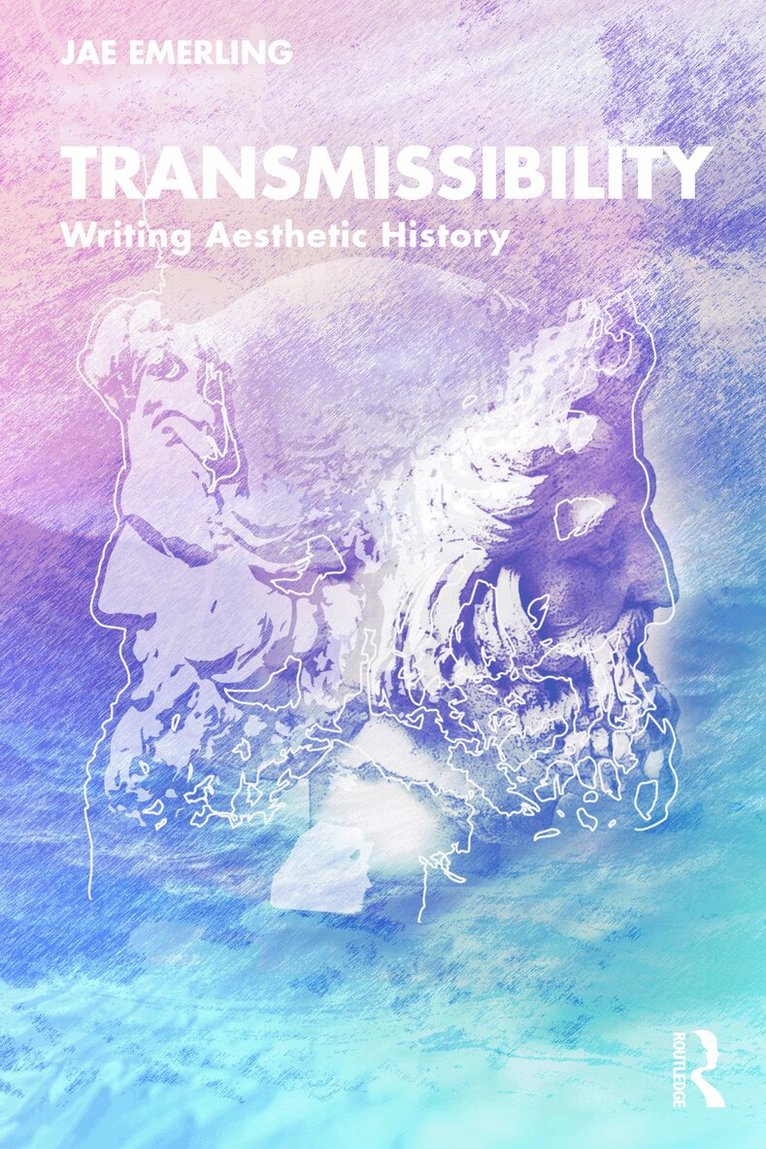
    Transmissibility

    Writing Aesthetic History

    AvJae Emerling

    Häftad, Engelska, 2023

    643 kr

    Beställningsvara. Skickas inom 10-15 vardagar. Fri frakt över 249 kr.

    Fler format och utgåvor

    Inbunden

    2 493 kr

    E-bok

    738 kr

    E-bok

    738 kr

    Beskrivning

    This book examines transmissibility to remind us why the vitality and epistemic significance of an artwork is anachronistic and futural. Transmissibility: Writing Aesthetic History performs a transdisciplinary philosophy of aesthetic history via the work of Gilles Deleuze and Félix Guattari, Cy Twombly, Marina Abramović, Paul Celan, Cecil Taylor, Italo Calvino, Candida Höfer, and others by focusing on the□artistic and historiographic labor that differentiates artworks from other modes of creation.

    Produktinformation

    • Utgivningsdatum:2023-08-17
    • Mått:156 x 234 x 14 mm
    • Vikt:780 g
    • Format:Häftad
    • Språk:Engelska
    • Antal sidor:156
    • Förlag:Taylor & Francis Ltd
    • ISBN:9780367859022

    Utforska kategorier

    • Konsthistoria inom Kultur
    • Konstteori inom Kultur
    • Konstformer inom Kultur

    Mer om författaren

    Jae Emerling is Professor of Art History in the College of Arts + Architecture at the University of North Carolina, Charlotte. He is the author of Theory for Art History and Photography: History and Theory, published by Routledge.

    Recensioner i media

    Transmissibility: Writing Aesthetic History is an exuberant inquiry into the moment—better still, the movement—of transmissibility that pushes aesthetic form over the edge of political praxis, and vice versa. How does art-work survive transitional life-worlds? How are we to think and write about ontological and historical immanence within aesthetic history? Jae Emerling accompanies his reader every step of the way in this exciting and erudite text: he works side-by-side with you to face the challenge of making sense of what it means to encounter art.Homi Bhabha, Harvard UniversityVery occasionally a writer will come along who changes what it might mean to write about art and culture, giving us the permission to take new liberties. In this dazzling, innovative and courageous book, Jae Emerling enacts a radical approach to thinking the intersections of the history and ontology of art. Proposing the concept of ‘transmissibility’ for an ‘aesthetic history’ that complicates the history of art and the history of aesthetics, he demonstrates a new way of thinking artworks as ontological-historiographical configurations, or ‘sense-events’. Rather than the presentation of a new discourse or manifesto, Emerling offers transmissibility as a concept kept in tension, refracted through aesthetic figures and conceptual personae, and continually recreated within the experience of creative acts. Here, experimental historiography meets experimental writing. Crossing an astonishing breadth of references and interlocutors across philosophy, the history of art, literature and critical theory, visual and material culture, Emerling inspires the field by which we think with art. In luminous prose, the book plays, tests, and even betrays its multiple sources, performing the anachronisms and transdisciplinary provocations it describes, deftly moving between modes and genres of writing – the aphoristic, the meditation, the dialogic, the confessional, the fictional – whilst keeping us within the singular thickness of ideas. What must writing do to affirm the becoming of art? How can we extract the virtual from the historical? Emerling addresses such issues as memory, time, destruction, imagination, love and failure whilst drawing us into the folds and intimacies of his thought, and the ceaseless ebbs and flows of an intellectual journey. Transmissibility is a paean to how truly vital scholarship begins with the raw and unmediated experience of an author's real encounters; a love letter to reading without boundaries. Provocative, impassioned, searingly creative, this a book to help us envision the future of writing and thinking about art, its histories and theories, and its multifarious effects. Kamini Vellodi, University of EdinburghJae Emerling has done the remarkable. He argues convincingly that transmissibility is both of and for aesthetics (where aesthetics is critical and transformative thinking), but that it is also of and for history too; which is to say, that it is attentive to both the ontological and the experimental-creative historiographic properties of art. In all this, transmissibility is feral—as is Emerling in the shape of his thinking, his use of language’s materiality, and the rhythm of his writing, and thus what it does—as it (and he) cuts across fields and practices, problematising them, and our affective experiences of them too. How is it possible for Emerling to do all this? Read the book, it’ll blow your bloody doors off! Marquard Smith, University College London

    Innehållsförteckning

    • I. Introduction: "Visions and Auditions" II. Twenty-first Series of Aesthetic History III. Twenty-first Series of Aesthetic History: Hypomnemata IV. Sybil of Cumae, or Indiscernibility V. From Oceanic Chaos…A Luminous Wave VI. Imperceptibility, or The Ear of the Future VII. To Transmit and Receive Vibrations and Waves VIII. Impersonality, or Bob Dylan as a Column of Air