• Fri frakt över 249 kr
  • •
  • Snabba leveranser
  • •
  • Billiga böcker
Kundservice

Du är på sajten för privatpersoner.

Företag, bibliotek eller offentlig verksamhet?

Du handlar på classic.bokus.com, där alla dina funktioner finns intakta.
Till classic.bokus.com
Bokus logotyp. Gå till startsidan.
  • Erbjudanden
  • Nyheter
  • Student
  • Topplistor
  • Barn & ungdom
  • Bokus Play
  • E-böcker
  • Pocketböcker
  • Spel & pussel

10% rabatt på allt med kod NYSTART10 →

Sidfot

Mina sidor

    Hjälp

    • Kundservice
    • Vanliga frågor och svar
    • Frakt och leverans
    • Retur vid ångerrätt
    • Reklamera vara
    • Betalning
    • Köpvillkor
    • Allmänna villkor
    • Information om webbplatsens tillgänglighet

    Om Bokus

    • Om oss
    • Pressrum
    • För studenter
    • För företag
    • För bibliotek och offentlig verksamhet
    • För leverantörer
    • Hållbarhet

    Populärt

    • Aktuella erbjudanden
    • Presentkort
    • Studentlitteratur
    • Nya böcker
    • Topplistor
    • Signerade böcker
    • Engelska böcker

    Inspiration

    • Boktips
    • BookTok
    • Populära bokserier
    • Barnbokskaraktärer
    • Populära författare
    Logotyp för Bokus
    Följ oss på Facebook (extern länk)Följ oss på Instagram (extern länk)Följ oss på YouTube (extern länk)Följ oss på TikTok (extern länk)
    bokus @ CookiesAnpassa cookiesIntegritetspolicyKöpvillkor
    Till Citymail hemsida (extern länk)Till Budbee hemsida (extern länk)Till Postnord hemsida (extern länk)Till Schenker hemsida (extern länk)Till Early Bird hemsida (extern länk)Till Walleys hemsida (extern länk)
    1. Data och IT
    2. Systemvetenskap och AI

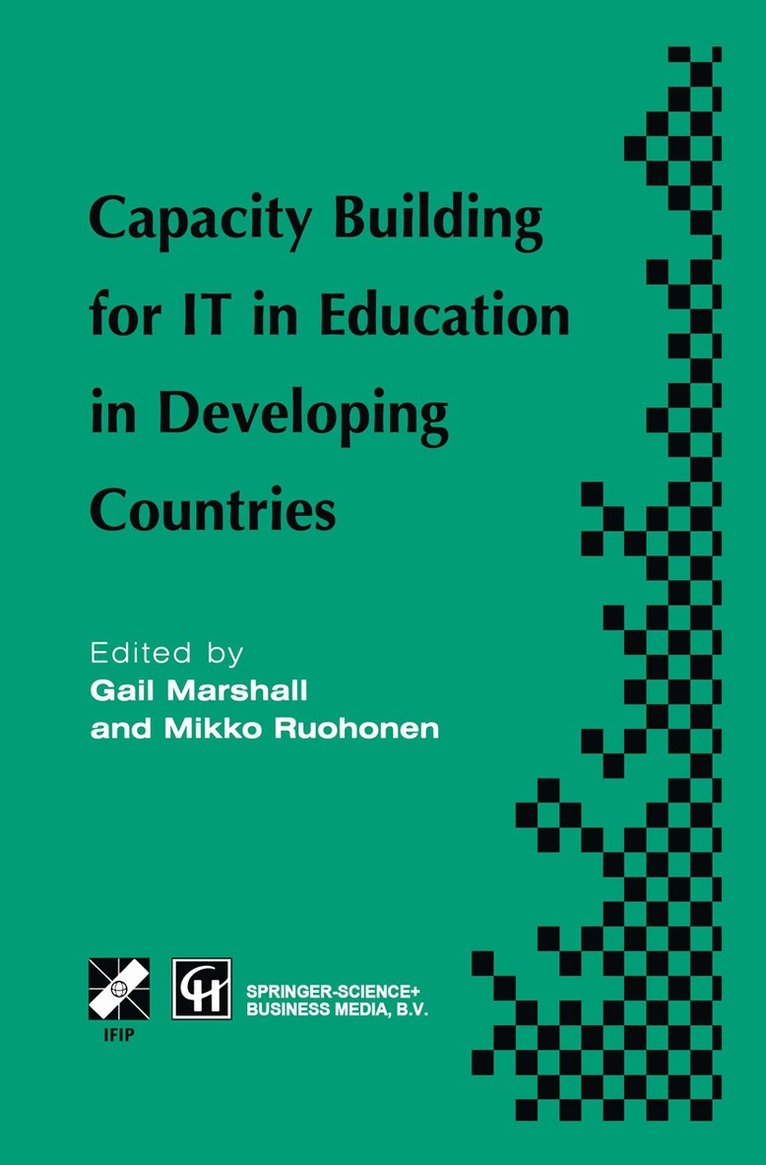
    Capacity Building for IT in Education in Developing Countries

    IFIP TC3 WG3.1, 3.4 & 3.5 Working Conference on Capacity Building for IT in Education in Developing Countries 19–25 August 1997, Harare, Zimbabwe

    AvGail Marshall,Mikko Ruohonen

    Inbunden, Engelska, 1998

    Del i serien IFIP Advances in Information and Communication Technology

    1 579 kr

    Beställningsvara. Skickas inom 10-15 vardagar. Fri frakt över 249 kr.

    Beskrivning

    This volume examines the needs, practices, experiences, peer support and accessibility of resources, both human and technical, for information technologies in developing countries. Seven main themes are presented in the book: experiences from a variety of national policies, strategies and initiatives; information technologies as tools for teaching and learning at all levels; the role of vocational education in information technology; information technology as a teaching subject; information technologies as tools for educational administration and support; building physical resources, skills and knowledge as well as access to those resources in developing countries; and action plans for proposed projects at local and national levels.

    Produktinformation

    • Utgivningsdatum:1998-02-28
    • Mått:155 x 235 x 26 mm
    • Vikt:733 g
    • Format:Inbunden
    • Språk:Engelska
    • Serie:IFIP Advances in Information and Communication Technology
    • Antal sidor:360
    • Upplaga:1998
    • Förlag:Chapman and Hall
    • ISBN:9780412814600

    Utforska kategorier

    • Systemvetenskap och AI inom Data och IT
    • Material och digital teknik i undervisningen inom Psykologi och pedagogik

    Innehållsförteckning

    • I National Perspectives.- 1 Nordic cooperation on communication and information technologies and didactics in education.- 2 Building resource capacity for IT education and training in schools — the case of Botswana.- 3 Computer education and human capacity for information technology in Namibia.- 4 Schools with SPIRIT — capacity building in The Netherlands.- 5 Information technology in Norwegian education — consistency of strategic initiatives implementing IT in primary education.- 6 Development of information technology in Hong Kong education over the past decade.- 7 Fighting a lone battle for computer education in Nepal.- II Building Skills in the National Context.- 8 Bridging the skills gap in Zimbabwe.- 9 Information technology education and training initiatives — the Nigerian experience.- 10 Using applications programs in a university to build human capacity for information technology.- III Targetted Projects.- 11 Infrastructure issues for implementation of portable computer use in schools.- 12 Capacity building with a difference.- 13 Principals, information technology and leadership — coping with professional development despite isolation.- 14 ‘Communicate and Learn’ — a collaborative project.- 15 The effect of network technology on education.- IV Classroom-based Initiatives.- 16 Technology and young children — new strategies to prevent illiteracy and create better chances of success for all.- 17 Designing Logo-based microworlds for effective learning — a road to improving teacher education.- V Research for IT-based Education.- 18 The needs and challenges of information systems education — the case of Nigerian universities.- 19 Blarne the technocentric artefact! What research tells us about problems inhibiting teacher use of IT.- 20 Measuringsuccess in the global village — resources for conducting systematic and comprehensive evaluations in IT settings.- VI Resource acquisition, allocation and utilization.- 21 The role of educational and professional bodies in guidance towards capacity planning.- 22 The European computer driving licence.- 23 Information literacy — the missing link in education, with special reference to developing countries.- 24 Maximizing the benefits of aid for information technology.- 25 Building capacity for information technology in educational management in developing countries.- 26 Information technology resources for education in developing countries.- VII A Curriculum for the Future.- 27 The need for a new perspective — creating learning networks for African teachers: change, professional development and ICTs.- 28 Informatics for secondary education — the UNESCO/IFIP curriculum as a resource for developed and developing countries.- VIII Workshop Presentations.- 29 Teaching informatics as a subject.- 30 Using hypermedia and the internez in the teaching of mathematics.- 31 Information technology and problem solving in mathematics education.- 32 Appropriate research in IT in emerging countries.- IX Discussion Group Recommendations.- Discussion Group 1 — IT in curriculum and courseware development.- 34 Discussion Group 2 — Policies, strategies and initiatives of ICT in education.- 35 Discussion Group 3 — Guidelines and directions for ICT policy in education.- 36 Discussion Group 4 — IT education delivery and learning.- 37 Discussion Group 5 — Information technology in institutional administration and management.- 38 Discussion Group 6 — Building resource accessibility in developing countries.- Alphabetical List of Participants.- Index of Contributors.- Keywordindex.