• Fri frakt över 249 kr
  • •
  • Snabba leveranser
  • •
  • Billiga böcker
Kundservice

Du är på sajten för privatpersoner.

Företag, bibliotek eller offentlig verksamhet?

Du handlar på classic.bokus.com, där alla dina funktioner finns intakta.
Till classic.bokus.com
Bokus logotyp. Gå till startsidan.
  • Erbjudanden
  • Student
  • Topplistor
  • Barn & ungdom
  • Bokus Play
  • E-böcker
  • Ljudböcker
  • Pocketböcker
  • Spel och pussel

Pocketfynda! Hundratals böcker för 49 kr/st →

Sidfot

Mina sidor

    Hjälp

    • Kundservice
    • Vanliga frågor och svar
    • Frakt och leverans
    • Retur vid ångerrätt
    • Reklamera vara
    • Betalning
    • Köpvillkor
    • Allmänna villkor
    • Information om webbplatsens tillgänglighet

    Om Bokus

    • Om oss
    • Pressrum
    • För studenter
    • För företag
    • För bibliotek och offentlig verksamhet
    • För leverantörer
    • Hållbarhet

    Populärt

    • Aktuella erbjudanden
    • Presentkort
    • Studentlitteratur
    • Nya böcker
    • Topplistor
    • Signerade böcker
    • Engelska böcker

    Inspiration

    • Boktips
    • BookTok
    • Barnbokskaraktärer
    • Populära författare
    Logotyp för Bokus
    Följ oss på Facebook (extern länk)Följ oss på Instagram (extern länk)Följ oss på YouTube (extern länk)Följ oss på TikTok (extern länk)
    bokus @ CookiesAnpassa cookiesIntegritetspolicyKöpvillkor
    Till Citymail hemsida (extern länk)Till Budbee hemsida (extern länk)Till Postnord hemsida (extern länk)Till Schenker hemsida (extern länk)Till Early Bird hemsida (extern länk)Till Walleys hemsida (extern länk)
    1. Historia och arkeologi
    2. Historia
    3. Europas historia

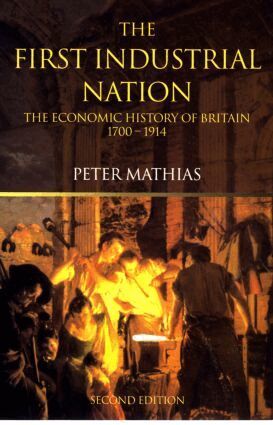
    First Industrial Nation

    The Economic History of Britain 1700–1914

    AvPeter Mathias

    Häftad, Engelska, 2001

    525 kr

    Beställningsvara. Skickas inom 10-15 vardagar. Fri frakt över 249 kr.

    Fler format och utgåvor

    E-bok

    622 kr

    E-bok

    622 kr

    Inbunden

    2 108 kr

    Beskrivning

    This celebrated and seminal text examines the industrial revolution, from its genesis in pre-industrial Britain, through its development and into maturity. A chapter-by-chapter analysis explores topics such as economic growth, agriculture, trade finance, labour and transport. First published in 1969, The First Industrial Nation is widely recognised as a classic text for students of the industrial revolution.

    Produktinformation

    • Utgivningsdatum:2001-10-11
    • Mått:138 x 216 x 38 mm
    • Vikt:220 g
    • Format:Häftad
    • Språk:Engelska
    • Antal sidor:528
    • Upplaga:3
    • Förlag:Taylor & Francis Ltd
    • ISBN:9780415266727

    Utforska kategorier

    • Europas historia inom Historia och arkeologi

    Mer om författaren

    Peter Mathias was Master of Downing College, Cambridge until his retirement in 1996.

    Recensioner i media

    'Remains the finest textbook of British Economic history between 1700 and 1914.' - Stephen Pam, Teaching History'Durable, dependable, virtually unbeatable on home territory and possessed of a sufficiently tested method to be proof against embarrassment on unfamiliar territory.' - Eric J. Evans, Times Higher Education Supplement'Should be bought by every student of British economic history.' - J. Wigley, Economics

    Innehållsförteckning

    • 1. Prologue: The Industrial Revolution – Identity and Beginning Part 1: The Industrial Economy is Born: 1700 to the Early Nineteenth Century 2. Gregory King's England 3. The State, Rural Society and the Land 4. Economic Policy, Trade and Transport 5. Industrial Growth and Finance 6. The Human Dimension 7. Economic Fluctuations Part 2: The Evolving Industrial Economy: To 1914 8. The Century Ahead – Changing Structure of the British Economy 9. Occupational Structure and Industrial Organization in the Mid-Nineteenth Century 10. Railways 11. The Free Trade System and Capital Exports 12. Agriculture, 1815–1914 13. The Evolution of Banking and the Money Market, 1825–1914 14. The Organization of Labour and Standards of Living 15. Industrial Maturity and Deceleration 16. Epilogue: The Inter-War Years