• Fri frakt över 249 kr
  • •
  • Snabba leveranser
  • •
  • Billiga böcker
Kundservice

Du är på sajten för privatpersoner.

Företag, bibliotek eller offentlig verksamhet?

Du handlar på classic.bokus.com, där alla dina funktioner finns intakta.
Till classic.bokus.com
Bokus logotyp. Gå till startsidan.
  • Erbjudanden
  • Nyheter
  • Student
  • Topplistor
  • Barn & ungdom
  • Bokus Play
  • E-böcker
  • Pocketböcker
  • Spel & pussel

10% rabatt på allt med kod: NYSTART10 →

Sidfot

Mina sidor

    Hjälp

    • Kundservice
    • Vanliga frågor och svar
    • Frakt och leverans
    • Retur vid ångerrätt
    • Reklamera vara
    • Betalning
    • Köpvillkor
    • Allmänna villkor
    • Information om webbplatsens tillgänglighet

    Om Bokus

    • Om oss
    • Pressrum
    • För studenter
    • För företag
    • För bibliotek och offentlig verksamhet
    • För leverantörer
    • Hållbarhet

    Populärt

    • Aktuella erbjudanden
    • Presentkort
    • Studentlitteratur
    • Nya böcker
    • Topplistor
    • Signerade böcker
    • Engelska böcker

    Inspiration

    • Boktips
    • BookTok
    • Populära bokserier
    • Barnbokskaraktärer
    • Populära författare
    Logotyp för Bokus
    Följ oss på Facebook (extern länk)Följ oss på Instagram (extern länk)Följ oss på YouTube (extern länk)Följ oss på TikTok (extern länk)
    bokus @ CookiesAnpassa cookiesIntegritetspolicyKöpvillkor
    Till Citymail hemsida (extern länk)Till Budbee hemsida (extern länk)Till Postnord hemsida (extern länk)Till Schenker hemsida (extern länk)Till Early Bird hemsida (extern länk)Till Walleys hemsida (extern länk)
    1. Psykologi och pedagogik
    2. Pedagogik
    3. Pedagogisk psykologi

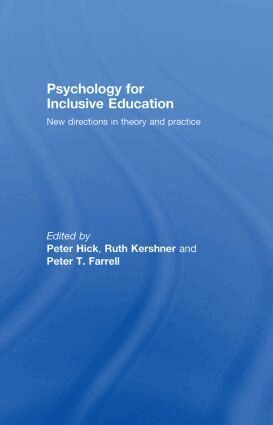
    Psychology for Inclusive Education

    New Directions in Theory and Practice

    AvPeter Hick,Ruth Kershner

    Inbunden, Engelska, 2008

    2 874 kr

    Beställningsvara. Skickas inom 10-15 vardagar. Fri frakt över 249 kr.

    Beskrivning

    What can psychology offer inclusive education? Traditionally, special education has looked to psychology for many of its theoretical resources and practical strategies. While those seeking to promote more inclusive education have tended to see psychology and psychologists as part of the problem by providing a rationale for segregation. However, in practice many psychologists today are developing inclusive ways of working, and are paying attention to psychological theories that underpin inclusive education. Psychology for Inclusive Education reframes the contribution of psychology in terms of its relevance to inclusion and will show how psychological theories of learning and human development are compatible with inclusive education. Part 1 explores psychological theories relevant to understanding inclusive education and Part 2 looks at how psychology can contribute to promoting more inclusive education in practice. Chapters cover: how psychologists can collaborate with teachers for inclusive solutions Vygotsky's theories of learning and their significance for inclusion the challenge of developing pedagogies for inclusion sociocultural understandings of learning in inclusive classrooms the role of emotion in learning and inclusion cooperative learning and inclusion the challenges and tensions of inclusion and high standards for schools the practice of dynamic assessment as an inclusive alternative to IQ social justice and inclusive psychologyBringing together a highly distinguished list of international contributors from the UK, USA and South Africa and including practising educational psychologists, this book will link theory to practice in schools and classrooms. International in focus and at the very cutting edge of the field, this is essential reading for all those interested in the development of inclusive education.

    Produktinformation

    • Utgivningsdatum:2008-09-05
    • Mått:156 x 234 x 18 mm
    • Vikt:530 g
    • Format:Inbunden
    • Språk:Engelska
    • Antal sidor:196
    • Förlag:Taylor & Francis Ltd
    • ISBN:9780415390491

    Utforska kategorier

    • Pedagogisk psykologi inom Psykologi och pedagogik

    Mer om författaren

    Peter Hick is Senior Lecturer in Inclusive Education at Manchester Metropolitan University. He has lectured at the University of Birmingham, the University of Manchester, the Open University and the University of Bolton; his professional background is as an Educational Psychologist and a teacher in a further education college. His research interests currently focus on inclusive learning mediated with ICT; and on race, ethnicity and disproportionality in the identification of special educational needs.Ruth Kershner is a lecturer in psychology of education in the University of Cambridge, Faculty of Education. She has particular interests in the areas of teaching children identified with learning difficulties, the development of teachers' pedagogical knowledge through school-based research, and the uses of technology such as interactive whiteboards in the primary classroom environment. She is currently an Associate Director of the Primary Review (directed by Professor Robin Alexander, 2006-8), an independently funded review of primary education in England.Peter T. Farrell is Sarah Fielden Professor of Special Needs and Educational Psychology in the School of Education, University of Manchester, England and Past President of the International School Psychology Association. He has carried out a number of research projects in the field of inclusive education and has published widely in this area. Much of the focus of this work has been on the contribution educational psychologists can make towards promoting inclusive practice.

    Recensioner i media

    'Case studies, examples and data are all used to excellent illustrative effect, meaning that the chapters are interesting, useful and comprehesible' - Alice Jones, Department of Psychology, Goldsmiths, University of London.

    Innehållsförteckning

    • 1. Introduction Part 1: Understanding Inclusive Learning 2. An epistemology for inclusion. 3. Vygotsky and inclusion. 4. Towards an inclusive pedagogy. 5. Learning in inclusive classrooms. 6. The psychology of inclusion: the emotional dimension. Part 2: Promoting Inclusive Learning 7. Cooperative learning for inclusion . 8. Inclusive and effective schools: challenges and tensions. 9. Inclusive psychology and social transformation: responding to the challenges of the new South Africa. 10. Can educational psychologists be inclusive? 11. Dynamic assessment for inclusive learning. 12. Collaborative consultation: psychologists and teachers working together. Part 3: Challenges and Possibilities 13. Towards an interdisciplinary research agenda for inclusive education. 14. Reframing psychology for inclusive learning within social justice agendas