• Fri frakt över 249 kr
  • •
  • Snabba leveranser
  • •
  • Billiga böcker
Kundservice

Du är på sajten för privatpersoner.

Företag, bibliotek eller offentlig verksamhet?

Du handlar på classic.bokus.com, där alla dina funktioner finns intakta.
Till classic.bokus.com
Bokus logotyp. Gå till startsidan.
  • Erbjudanden
  • Student
  • Topplistor
  • Barn & ungdom
  • Bokus Play
  • E-böcker
  • Ljudböcker
  • Pocketböcker
  • Spel & pussel

Upp till 25% på utvalda nyheter →

Sidfot

Mina sidor

    Hjälp

    • Kundservice
    • Vanliga frågor och svar
    • Frakt och leverans
    • Retur vid ångerrätt
    • Reklamera vara
    • Betalning
    • Köpvillkor
    • Allmänna villkor
    • Information om webbplatsens tillgänglighet

    Om Bokus

    • Om oss
    • Pressrum
    • För studenter
    • För företag
    • För bibliotek och offentlig verksamhet
    • För leverantörer
    • Hållbarhet

    Populärt

    • Aktuella erbjudanden
    • Presentkort
    • Studentlitteratur
    • Nya böcker
    • Topplistor
    • Signerade böcker
    • Engelska böcker

    Inspiration

    • Boktips
    • BookTok
    • Populära bokserier
    • Barnbokskaraktärer
    • Populära författare
    Logotyp för Bokus
    Följ oss på Facebook (extern länk)Följ oss på Instagram (extern länk)Följ oss på YouTube (extern länk)Följ oss på TikTok (extern länk)
    bokus @ CookiesAnpassa cookiesIntegritetspolicyKöpvillkor
    Till Citymail hemsida (extern länk)Till Budbee hemsida (extern länk)Till Postnord hemsida (extern länk)Till Schenker hemsida (extern länk)Till Early Bird hemsida (extern länk)Till Walleys hemsida (extern länk)
    1. Medicin
    2. Andra medicinska specialiteter
    3. Klinisk psykologi
    4. Psykoterapi som behandlingsmetod

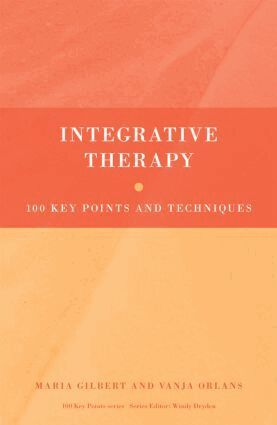
    Integrative Therapy

    100 Key Points and Techniques

    AvMaria Gilbert,Vanja Orlans

    Häftad, Engelska, 2010

    Del i serien 100 Key Points

    383 kr

    Beställningsvara. Skickas inom 10-15 vardagar. Fri frakt över 249 kr.

    Fler format och utgåvor

    Inbunden

    1 815 kr

    Beskrivning

    Integrative Therapy is a unifying approach that brings together physiological, affective, cognitive, contextual and behavioural systems, creating a multi-dimensional relational framework that can be created anew for each individual case.Integrative Therapy: 100 Key Points and Techniques provides a concise and accessible guide that allows professionals and students to look beyond specific approaches in order to draw upon ideas and techniques that will best help the client. Divided into helpful sections, areas of discussion include: the case for an integrative approach to therapythe centrality of relationship and dimensions of self developmentthe process of integrative therapytechniques and strategies This book will be essential reading for all psychotherapists and counsellors, both in practice and training, who want to expand their perspectives and learn more about an integrative approach.

    Produktinformation

    • Utgivningsdatum:2010-11-17
    • Mått:129 x 198 x 15 mm
    • Vikt:300 g
    • Format:Häftad
    • Språk:Engelska
    • Serie:100 Key Points
    • Antal sidor:254
    • Förlag:Taylor & Francis Ltd
    • ISBN:9780415413770

    Utforska kategorier

    • Psykoterapi som behandlingsmetod inom Medicin
    • Socialt arbete och välfärd inom Samhälle och politik

    Mer om författaren

    Maria Gilbert is currently Joint Head of the Integrative Department at Metanoia Institute in London. She is Programme Leader of the MSc in Integrative Psychotherapy and of the MA/MSc in Coaching Psychology at Metanoia.Vanja Orlans is Programme Leader of the Doctorate in Counselling Psychology and Psychotherapy by Professional Studies (DCPsych), a joint programme of Metanoia Institute and Middlesex University. She is also Joint Head of the Integrative Department at Metanoia.

    Innehållsförteckning

    • Acknowledgements. PART I: The Case for an Integrative Approach to Psychotherapy. The Current Professional Context. Philosophy, Values and Ethics Supporting an Integrative Framework for Practice . Criticisms of Integration. Competencies for an Integrative Psychotherapy. Our Framework for an Integrative Psychotherapy. PART II: A Review of the Literature on Integration. The History of Integration. Definitions of Integration. Theoretical Integration: Meta-Theoretical Models. Support for Integration from Outcome Research. Common Factors as a Basis for Integration. The Client as the Most Important ‘Common Factor’ in Change . Technical Eclecticism. Assimilative Integration. Complementarity: Combining two methods. Affective neuroscience and integration. PART III: The Centrality of Relationship from the Time of Infancy. The Primacy of Affect in Development. Early Experience and the Development of the Brain. Affect Regulation and the Development of Self. Affective neuroscience: The work of Panksepp and Damasio. The Social Brain: The Function of the Orbitofrontal Cortex. Attachment Styles: The Work of Bowlby and Colleagues. Intergenerational Patterns of Attachment . Infant Observation Studies: The work of Stern and Others. Winnicott and the Ordinary ‘Good Enough’ Mother. Affect Dysregulation and Adult Pathology: The Work of Schore. Early Relational Trauma and its Effects. Self and Interactive Regulation Throughout the Lifespan. PART IV: Dimensions of Self Development. The Co-Created Self in Relationship. Different Dimensions of Self Experience. The Biological: Relationship of Self to Body. The Intrapsychic: Relationship of Self to Self. The Interpersonal and Intersubjective: Relationship of Self to Others. The Intercultural Dimension: Culture, Race and Wider Context. The Transpersonal Dimension. Internalised Relationship Maps: RIG’s, Schema and Internal Working Models. Developing a Narrative to Make Sense of Life - and Psychotherapy. Mentalization: Developing the Reflective Function. Traumatic Memory Processes and Dissociation. PART V: Problem Formulation for the Integrative Psychotherapist. Drawing on a Range of Concepts for Problem Formulation. Relational Perspectives on Problem Formulation. Diagnosis and the DSM-IV-TR: Pros and Cons. Anxiety and Depression: Common Presenting Issues. From Personality Style to Personality Disorder. Developmental Perspectives in Problem Formulation. Existential Life Issues in Problem Formulation. Chronic Relational Trauma and Single Traumatic Events. Complex Post -Traumatic Stress Disorder. Constructing an Integrative Problem Formulation. PART VI: The Process of Integrative Psychotherapy. The First Session: Important Considerations. What Therapy for Which Client in What Context? Psychotherapeutic Change: The Role of Love and Hope. Assessment in Psychotherapy. Therapeutic Relationship Dimensions: An Overview. The Working Alliance and Effective Therapy. The Person-to-Person or ‘Real’ Relationship. Transference and Countertransference. The Reparative or Developmentally Needed Relationship. The Transpersonal Relationship. The Representational Relationship. Different Views on Working with the Transference. Repetitive and Selfobject Dimensions of the Transference . Implicit and Explicit Levels of Relationship. The Co-Created Unconscious or ‘Analytic Third’. Reciprocal Mutual Influence: A Two-Person Psychology . Conceptions of Time in Integrative Psychotherapy. Inclusion: A Process Goal of Therapy . An Integrative Approach to Trauma. Therapeutic Alliance Ruptures: Research and Clinical Perspectives. The Integrative Psychotherapist as Researcher. Developing One’s Own Unique Style of Integration. PART VII: Techniques and Strategies for the Integrative Psychotherapist. Implicit Relational Knowing: Working with Self and Interactive Regulation. Working with Unconscious Process and Unformulated Experience. Empathic Enquiry and Empathic Resonance: Recognition Precedes Interpretation. Empathic Attunement. Sexuality, Gender Identity and Sexual Orientation. Body Awareness Techniques. An Overview of Therapeutic Interventions. Heightened Affective Moments: Working with Improvisation and Spontaneity in Psychotherapy. Working with Kohut’s Self-Object dimensions of the Transference. Working with The ‘Script’ as a Narrative Approach. Working with Dissociation: Possible Strategies. Working with Shame and Shame-Based Systems. Mindfulness Techniques. Inner Dialogue Between Different Self States . Working with Symbolism and Metaphor. Working with Dreams. Working with Erotic Transference. The Therapist’s Use of the ‘Self’ in the Therapeutic Process. Working with Countertransference. Self Disclosure in Psychotherapy: Uses and Abuses. Addressing the Process of Rupture and Repair. Working with Enactments and Therapeutic Impasse. Accepting and Working with Mistakes. PART VIII: Ethics and Professional Practice. A Process Stance on Ethics. Anti-Oppressive Practice. Professionalism in Practice. The Wider Field of Psychotherapy. The Shadow Side of Psychotherapy Organisations. Challenges for the Integrative Psychotherapist. Reflections.