• Fri frakt över 249 kr
  • •
  • Snabba leveranser
  • •
  • Billiga böcker
Kundservice

Du är på sajten för privatpersoner.

Företag, bibliotek eller offentlig verksamhet?

Du handlar på classic.bokus.com, där alla dina funktioner finns intakta.
Till classic.bokus.com
Bokus logotyp. Gå till startsidan.
  • Erbjudanden
  • Nyheter
  • Student
  • Topplistor
  • Barn & ungdom
  • Bokus Play
  • E-böcker
  • Pocketböcker
  • Spel & pussel

10% rabatt på allt med kod: NYSTART10 →

Sidfot

Mina sidor

    Hjälp

    • Kundservice
    • Vanliga frågor och svar
    • Frakt och leverans
    • Retur vid ångerrätt
    • Reklamera vara
    • Betalning
    • Köpvillkor
    • Allmänna villkor
    • Information om webbplatsens tillgänglighet

    Om Bokus

    • Om oss
    • Pressrum
    • För studenter
    • För företag
    • För bibliotek och offentlig verksamhet
    • För leverantörer
    • Hållbarhet

    Populärt

    • Aktuella erbjudanden
    • Presentkort
    • Studentlitteratur
    • Nya böcker
    • Topplistor
    • Signerade böcker
    • Engelska böcker

    Inspiration

    • Boktips
    • BookTok
    • Populära bokserier
    • Barnbokskaraktärer
    • Populära författare
    Logotyp för Bokus
    Följ oss på Facebook (extern länk)Följ oss på Instagram (extern länk)Följ oss på YouTube (extern länk)Följ oss på TikTok (extern länk)
    bokus @ CookiesAnpassa cookiesIntegritetspolicyKöpvillkor
    Till Citymail hemsida (extern länk)Till Budbee hemsida (extern länk)Till Postnord hemsida (extern länk)Till Schenker hemsida (extern länk)Till Early Bird hemsida (extern länk)Till Walleys hemsida (extern länk)
    1. Samhälle och politik
    2. Samhälle och kultur
    3. Kultur och medier
    4. Referensverk och tvärvetenskap

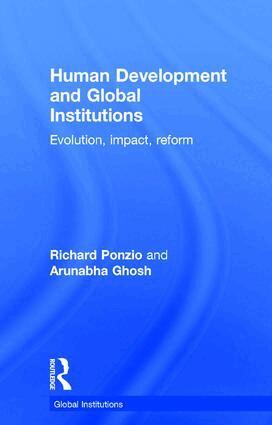
    Human Development and Global Institutions

    Evolution, Impact, Reform

    AvRichard Ponzio,Arunabha Ghosh

    Inbunden, Engelska, 2016

    Del i serien Global Institutions

    2 421 kr

    Beställningsvara. Skickas inom 10-15 vardagar. Fri frakt över 249 kr.

    Fler format och utgåvor

    Häftad

    709 kr

    Beskrivning

    This book provides a timely and accessible introduction to the foundational ideas associated with the human development school of thought. It examines its conceptual evolution during the post-colonial era, and discusses how various institutions of the UN system have tried to engage with this issue, both in terms of intellectual and technical advance, and operationally. Showing that human development has had a profound impact on shaping the policy agenda and programming priorities of global institutions, it argues that human development has helped to preserve the continued vitality of major multilateral development programs, funds, and agencies. It also details how human development faces new risks and threats, caused by political, economic, social, and environmental forces which are highlighted in a series of engaging case studies on trade, water, energy, the environment, democracy, human rights, and peacebuilding. The book also makes the case for why human development remains relevant in an increasingly globalized world, while asking whether global institutions will be able to sustain political and moral support from their member states and powerful non-state actors. It argues that fresh new perspectives on human development are now urgently needed to fill critical gaps across borders and entire regions. A positive, forward-looking agenda for the future of global governance would have to engage with new issues such as the Sustainable Development Goals, energy transitions, resource scarcity, and expansion of democratic governance within and between nations. Redefining the overall nature and specific characteristics of what constitutes human progress in an increasingly integrated and interdependent world, this book serves as a primer for scholars and graduate students of international relations and development. It is also relevant to scholars of economics, political science, history, sociology, and women’s studies.

    Produktinformation

    • Utgivningsdatum:2016-02-23
    • Mått:138 x 216 x 17 mm
    • Vikt:340 g
    • Format:Inbunden
    • Språk:Engelska
    • Serie:Global Institutions
    • Antal sidor:184
    • Förlag:Taylor & Francis Ltd
    • ISBN:9780415483599

    Utforska kategorier

    • Referensverk och tvärvetenskap inom Samhälle och politik
    • Internationell ekonomi inom Ekonomi och Ledarskap
    • Internationella relationer inom Samhälle och politik

    Mer om författaren

    Richard Ponzio is head of the Global Governance Program at The Hague Institute for Global Justice, where he serves as project director for the Commission on Global Security, Justice & Governance. He is formerly a senior adviser in the US State Department’s Office of the Special Representative for Afghanistan and Pakistan. Richard has served with the UN in Afghanistan, Bosnia, Kosovo, New York, Pakistan, Sierra Leone, and the Solomon Islands. Dr Arunabha Ghosh is CEO, Council on Energy, Environment and Water, India. Widely published, with work experience in 35 countries and having previously worked at Princeton, Oxford, the UN Development Programme, and the World Trade Organization, Arunabha advises governments, industry, and civil society around the world on: energy and resources security, renewable energy, water governance, climate governance, energy-trade-climate linkages, and international regimes. He is, most recently, co-author of Climate Change: A Risk Assessment (2015).

    Recensioner i media

    '...this book is a valuable contribution to the human development approach literature: the reader will find it a useful review of the influence of this new paradigm in global governance debates over last 25 years.'Juan Telleria, HEGOA Institute for International Cooperation and Developement Studies, University of the Basque Country UPV/EHUJournal of Human Development and Capabilities

    Innehållsförteckning

    • 1. Human development: An idea whose time has come? 2. The international policy impact of the human development approach in the 1990s … the early years 3. Human development measurement tools: Advantages and shortcomings 4. Human development in international policy-making, Part I: Trade, water, energy, and environment 5. Human development in international policy-making, Part II: Democratic governance, human rights, and peacebuilding 6. Human development in global governance: New frontiers