• Fri frakt över 249 kr
  • •
  • Snabba leveranser
  • •
  • Billiga böcker
Kundservice

Du är på sajten för privatpersoner.

Företag, bibliotek eller offentlig verksamhet?

Du handlar på classic.bokus.com, där alla dina funktioner finns intakta.
Till classic.bokus.com
Bokus logotyp. Gå till startsidan.
  • Erbjudanden
  • Nyheter
  • Student
  • Topplistor
  • Barn & ungdom
  • Bokus Play
  • E-böcker
  • Pocketböcker
  • Spel & pussel

10% rabatt på allt med kod: NYSTART10 →

Sidfot

Mina sidor

    Hjälp

    • Kundservice
    • Vanliga frågor och svar
    • Frakt och leverans
    • Retur vid ångerrätt
    • Reklamera vara
    • Betalning
    • Köpvillkor
    • Allmänna villkor
    • Information om webbplatsens tillgänglighet

    Om Bokus

    • Om oss
    • Pressrum
    • För studenter
    • För företag
    • För bibliotek och offentlig verksamhet
    • För leverantörer
    • Hållbarhet

    Populärt

    • Aktuella erbjudanden
    • Presentkort
    • Studentlitteratur
    • Nya böcker
    • Topplistor
    • Signerade böcker
    • Engelska böcker

    Inspiration

    • Boktips
    • BookTok
    • Populära bokserier
    • Barnbokskaraktärer
    • Populära författare
    Logotyp för Bokus
    Följ oss på Facebook (extern länk)Följ oss på Instagram (extern länk)Följ oss på YouTube (extern länk)Följ oss på TikTok (extern länk)
    bokus @ CookiesAnpassa cookiesIntegritetspolicyKöpvillkor
    Till Citymail hemsida (extern länk)Till Budbee hemsida (extern länk)Till Postnord hemsida (extern länk)Till Schenker hemsida (extern länk)Till Early Bird hemsida (extern länk)Till Walleys hemsida (extern länk)
    1. Ekonomi och Ledarskap
    2. Nationalekonomi

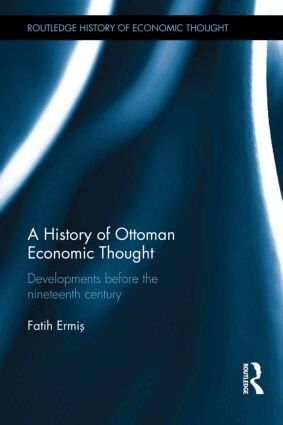
    History of Ottoman Economic Thought

    Developments Before the Nineteenth Century

    AvFatih Ermiş

    Inbunden, Engelska, 2013

    Del i serien Routledge History of Economic Thought

    2 493 kr

    Beställningsvara. Skickas inom 10-15 vardagar. Fri frakt över 249 kr.

    Fler format och utgåvor

    E-bok

    1 004 kr

    E-bok

    973 kr

    Häftad

    845 kr

    Beskrivning

    The Ottoman Empire (1299-1923) existed at the crossroads of the East and the West. Neither the history of Western Asia, nor that of Eastern Europe, can be fully understood without knowledge of the history of the Ottoman Empire. The question is often raised of whether or not economic thinking can exist in a non-capitalistic society. In the Ottoman Empire, like in all other pre-capitalistic cultures, the economic sphere was an integral part of social life, and elements of Ottoman economic thought can frequently be found in amongst political, social and religious ideas. Ottoman economic thinking cannot, therefore, be analyzed in isolation; analysis of economic thinking can reveal aspects of the entire world view of the Ottomans.Based on extensive archival work, this landmark volume examines Ottoman economic thinking in the classical period using three concepts: humorism, circle of justice and household economy. Basing the research upon the writings of the Ottoman elite and bureaucrats, this book explores Ottoman economic thinking starting from its own dynamics, avoiding the temptation to seek modern economic theories and approaches in the Ottoman milieu.

    Produktinformation

    • Utgivningsdatum:2013-11-13
    • Mått:156 x 234 x 18 mm
    • Vikt:590 g
    • Format:Inbunden
    • Språk:Engelska
    • Serie:Routledge History of Economic Thought
    • Antal sidor:218
    • Förlag:Taylor & Francis Ltd
    • ISBN:9780415540063

    Utforska kategorier

    • Nationalekonomi inom Ekonomi och Ledarskap
    • Ekonomisk historia inom Ekonomi och Ledarskap
    • Asiens historia inom Historia och arkeologi

    Mer om författaren

    Fatih Ermiş obtained his PhD from the Max Weber Center for Advanced Cultural and Social Studies, Germany.

    Innehållsförteckning

    • 1. Introduction  2. A Discussion of the Concepts and Terminology  3. Ideas about the Formation and Functioning of Society  4. The Concept of Household Economy  5. Regulation  6. Economic Thinking at the End of the Classical System  7. Real Economic Application  8. Conclusion